100 Rooms Escape: Logic Puzzles Behind Every Locked Door
What You're Actually Doing in Each Room
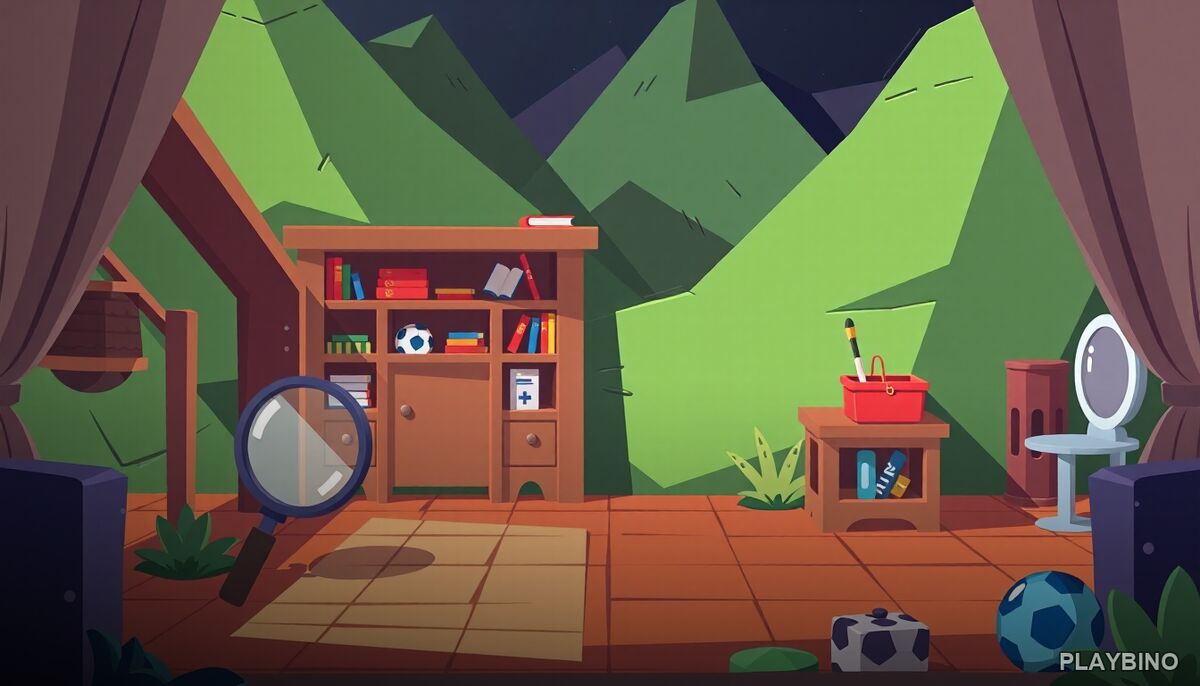
Every chamber in this game presents a self-contained problem. You arrive in a locked space with no instructions, and the only way out is to examine your surroundings closely enough to piece together what the puzzle is asking. Objects on shelves, numbers on walls, color patterns on tiles — nothing is decorative. Everything is a potential clue. Play it directly in your browser and you'll quickly notice how much the game relies on quiet observation rather than fast reflexes.
The structure is linear: solve the room, open the door, move to the next. But the puzzles themselves are anything but predictable. One room might ask you to match symbols in a specific sequence. The next could involve combining two inventory items to create a key or tool. The variety keeps the logic feeling fresh across the full hundred-room journey.
Inventory and Item Combinations
A big part of the challenge comes from managing what you've collected. Some items are used immediately. Others sit in your inventory for several rooms before their purpose becomes clear — though in most cases, each room is its own closed system where everything you need is already present.
When to Combine Items
Certain puzzles require merging two objects before either becomes useful. A rope and a hook. A key blank and a tool. The game rarely tells you this directly. You're expected to experiment. Tapping items together in the inventory is often the step players skip when they feel stuck, so it's worth trying before assuming a puzzle has no solution.
Hidden Objects and Environmental Clues
Some objects aren't immediately visible. Drawers can be opened, rugs can be lifted, and corners of the screen sometimes hide things that blend into the background. The game rewards methodical clicking over rushed scanning. If a room feels unsolvable, a second slower pass around the environment usually reveals what was missed.
How Difficulty Scales
Early rooms introduce the core mechanics gently. You'll find straightforward number locks and basic color-matching puzzles that establish how the game communicates its logic. Around the midpoint, puzzles start layering multiple steps — you might need to solve a visual riddle to get a code, use that code to open a box, and then use the box's contents to interact with a separate mechanism.
The difficulty curve doesn't spike randomly. It builds steadily, which makes the game accessible without feeling trivial. Players who enjoy logic challenges and escape room-style thinking will find the progression satisfying rather than frustrating.
Strategy When You're Stuck
- Re-examine every surface in the room, including areas you've already searched.
- Check your inventory for unused items or untried combinations.
- Look for numbers, letters, or symbols that appear more than once — repetition usually signals a code.
- Note color patterns carefully; many puzzles encode information through sequence rather than content.
- Step back and consider whether a clue you dismissed earlier connects to something new you've found.
Patience is the real skill here. The puzzles are designed to be solvable without outside help, and most breakthroughs come from reconsidering something already visible rather than finding something new.
The Escape Room Format in a Browser Game
The single-player, logic-driven format works well in a browser context. Sessions can be short — one or two rooms — or extended across a longer sitting. There's no timer pressuring you, which lets the puzzle-solving feel contemplative rather than stressful. The satisfaction comes from the moment of clarity when scattered clues suddenly connect into a solution.
Players who enjoy this kind of methodical challenge might also find G2M Prisoner Escape worth exploring — that escape-room experience follows a similar logic-first format with its own distinct puzzles and atmosphere.
Who This Game Suits
100 Rooms Escape fits players who like thinking through problems at their own pace. It doesn't demand pattern memorization or quick decision-making. Instead, it rewards careful attention and a willingness to experiment. If you've enjoyed point-and-click puzzle games or physical escape rooms, the browser format here delivers a comparable mental workout across a genuinely long sequence of challenges. PlayBino hosts the full game with no download required, making it easy to pick up a session whenever you have time.