Addition: Bird Image Uncover – Math Puzzle with a Visual Twist
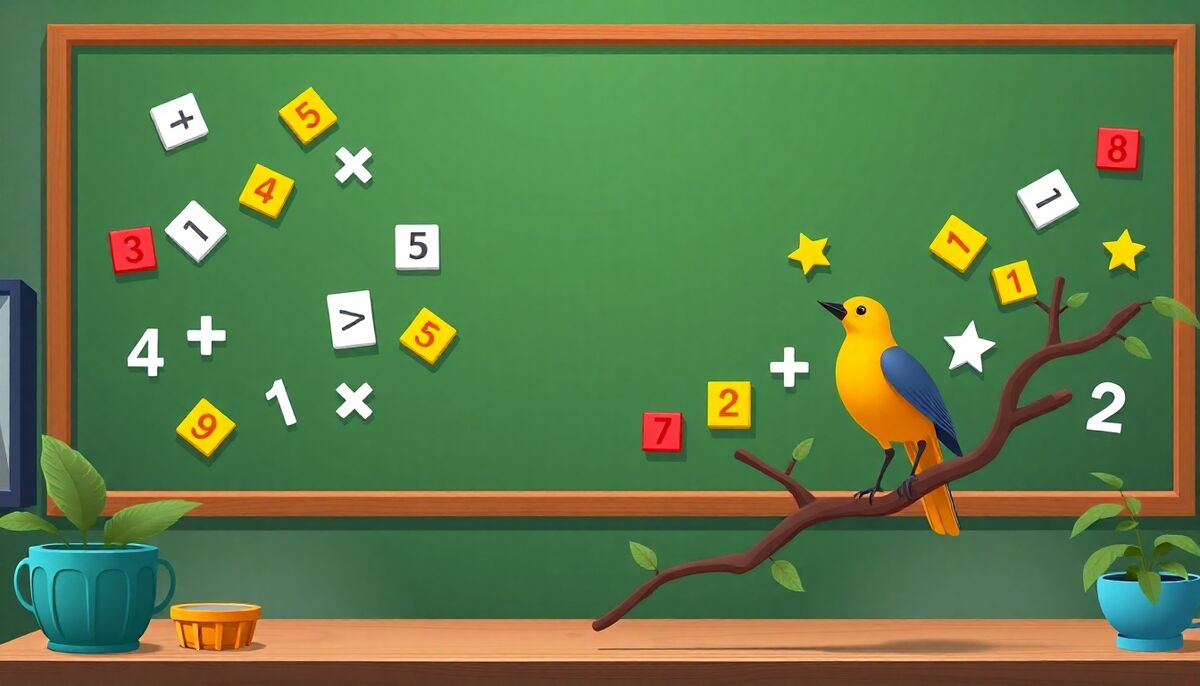
What the Game Is About
Most math practice games rely on repetition and score counters to keep players moving. Addition: Bird Image Uncover takes a different approach by hiding something worth seeing beneath every correct answer. Solve an addition problem, and a tile disappears. Get them all right, and a full bird photograph emerges from the grid. The reward is visual, not just numerical, and that shift in motivation changes how the whole experience feels.
You can play this math-meets-puzzle game on PlayBino directly in your browser, no download or account needed.
How the Tile Mechanic Works
The screen starts as a grid of covered tiles, each one hiding a portion of the bird image underneath. Each tile is paired with an addition expression. Your job is to drag the correct number bubble to the matching tile. When the answer is right, that tile clears, exposing a slice of the photo beneath.
Drag and Match Controls
The interaction is straightforward. Number bubbles appear on screen alongside the covered tiles. You drag a bubble onto the tile displaying the corresponding expression. There is no timer pressure in the traditional sense, but the incomplete image creates its own kind of urgency. You want to see what the bird looks like, and that curiosity pulls you forward through each problem.
Progressive Reveal
The reveal is not random. As you solve problems across the grid, connected regions of the image become visible. Early solves might uncover a wing tip or a patch of feathers. Later ones fill in the beak, the eye, the full silhouette. This progression gives the puzzle a narrative shape that pure equation drills lack entirely.
The Logic Behind the Design
Framing addition as a puzzle rather than a test changes the mental relationship a player has with the math. When solving an equation is the means to uncover something, accuracy feels purposeful rather than evaluated. The brain puzzle and memory elements come through in how you track which bubbles remain, which tiles are still covered, and how the partial image guides your attention across the grid.
For younger players or anyone building confidence with basic arithmetic, this structure removes the anxiety that often comes with timed drills. The single-player format keeps the focus internal, letting you work at your own pace without comparison pressure.
What Makes Each Session Satisfying
- Every correct answer produces an immediate visual change on screen
- The hidden image creates genuine curiosity that motivates problem-solving
- No wrong-answer penalty makes the experience feel exploratory rather than punishing
- The grid format gives a clear sense of progress as tiles disappear
- The final full reveal functions as a natural completion reward
Who This Game Suits
The game works well for players who find standard math drills repetitive. The logic and brain puzzle framing appeals to people who enjoy uncovering something through systematic effort. It is also a practical tool for early learners who need addition practice in a low-pressure environment. The visual payoff keeps engagement consistent from the first tile to the last.
A Related Challenge Worth Trying
If the tile-reveal format appeals to you, the same mechanic appears in a comparable puzzle built around subtraction, where the same drag-and-match structure tests a different arithmetic operation. Switching between the two makes for a well-rounded math session without changing the interface you already know.