Adventure of Darius: Shooting, Survival, and Monster Mayhem
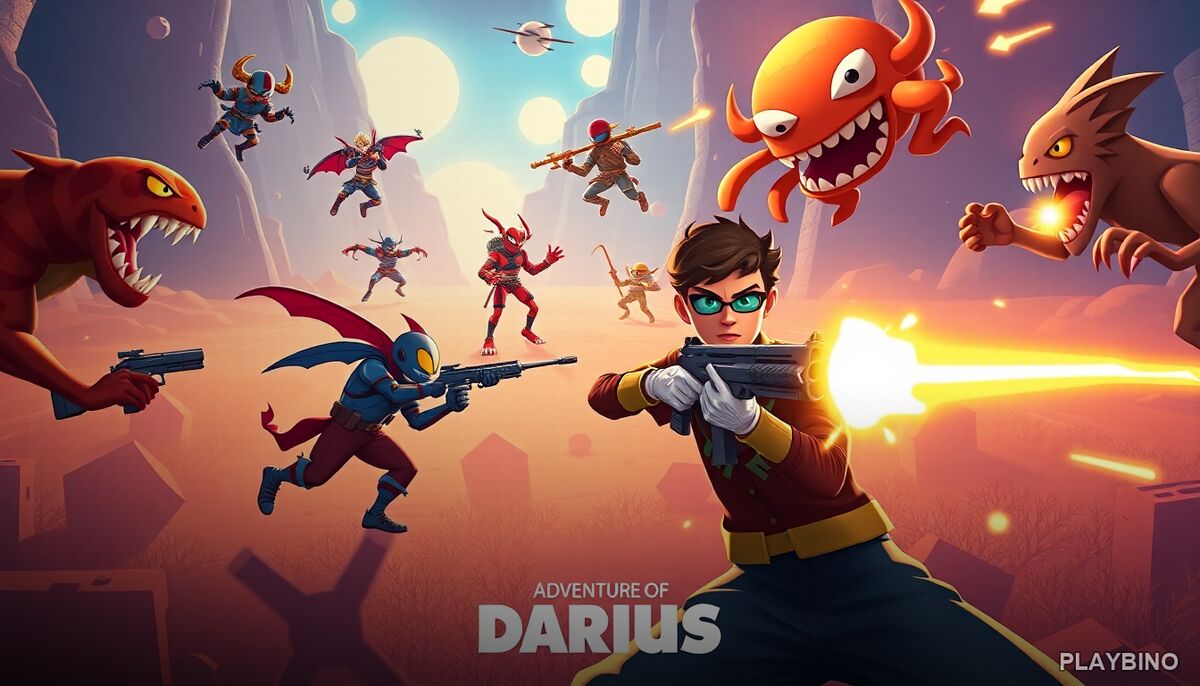
Trapped in a Hostile Dimension
Darius didn't choose to be here. Pulled into a realm overrun by dangerous creatures, he has one way out — fight through every wave until freedom is within reach. This single-player action shooter builds its tension around that premise, throwing increasingly aggressive monsters at you while keeping your resources tight enough to force real decisions.
The atmosphere shifts as you advance. Early stages feel manageable, almost like a warm-up. But the game quickly establishes that hesitation is costly. Monsters don't wait, and neither should you.
How Combat Actually Feels
The core loop is shooting, but it rarely feels mechanical. Each encounter asks you to read what's coming before committing to a shot. Enemies emerge from multiple directions, and the game rewards players who scan the screen rather than tunnel-vision on a single threat.
Timing and Aim
Precision matters more than speed here. Spraying shots without purpose drains your resources faster than the enemies drain your health. Landing clean, deliberate hits is the difference between clearing a stage comfortably and barely scraping through.
Enemy Patterns
Monsters follow recognizable patterns once you've seen them a few times. The early challenge is surviving long enough to learn those patterns. Once you do, the game shifts from reactive panic to controlled aggression — which is where it becomes genuinely satisfying.
Resource Pressure
Limited ammo or limited firepower — whatever the constraint is in a given stage — creates the kind of pressure that makes every shot feel meaningful. You can't afford to waste resources on missed attempts. This design choice pushes players toward patience, even when the screen fills with threats and instinct screams to just fire constantly.
Managing that tension is the real skill being tested. The action tag is accurate, but this isn't a mindless shooter. There's a strategy layer underneath the chaos.
Stage Progression and Difficulty
Each new stage introduces something unfamiliar. A monster type with a different movement speed, an enemy that takes more hits, or a layout that removes your usual escape routes. The game doesn't explain these changes — it expects you to adapt on the fly.
- New monster types appear without warning, requiring fast pattern recognition
- Stage layouts shift the threat angles, so positioning strategies from earlier levels don't always carry over
- Difficulty ramps steadily rather than spiking unpredictably
- Survival depends on balancing aggression with resource discipline
That steady escalation keeps the experience engaging without feeling punishing. Dying feels instructive rather than frustrating, which is a sign of solid action game design.
Who This Game Suits
Players who enjoy arcade-style shooting with a layer of tactical thinking will find a lot to work with here. It's not a long-form RPG or a deep strategy game — it's a focused, high-pressure action experience built around skill improvement. Each run teaches you something, and returning to a stage you previously failed with better pattern knowledge feels rewarding.
If you've been exploring monster-filled action games on PlayBino, MineRaid offers a different kind of combat-driven challenge worth comparing to this one — the two games share an intensity that fans of the genre tend to appreciate.
What Makes the Shooting Work
The shooting mechanics in Adventure of Darius succeed because they don't try to do too much. There are no sprawling upgrade trees or complex loadout systems to manage before a stage. The focus stays on the moment-to-moment decisions: where to aim, when to fire, and when to hold back. That simplicity is a strength. It keeps the action readable and the skill ceiling accessible without removing depth entirely.
For a browser-based action game, the balance between accessibility and challenge is handled well. New players can get into it quickly, but consistent success requires genuine improvement in timing and spatial awareness.