Ambulance Rush: Emergency Driving Through City Traffic
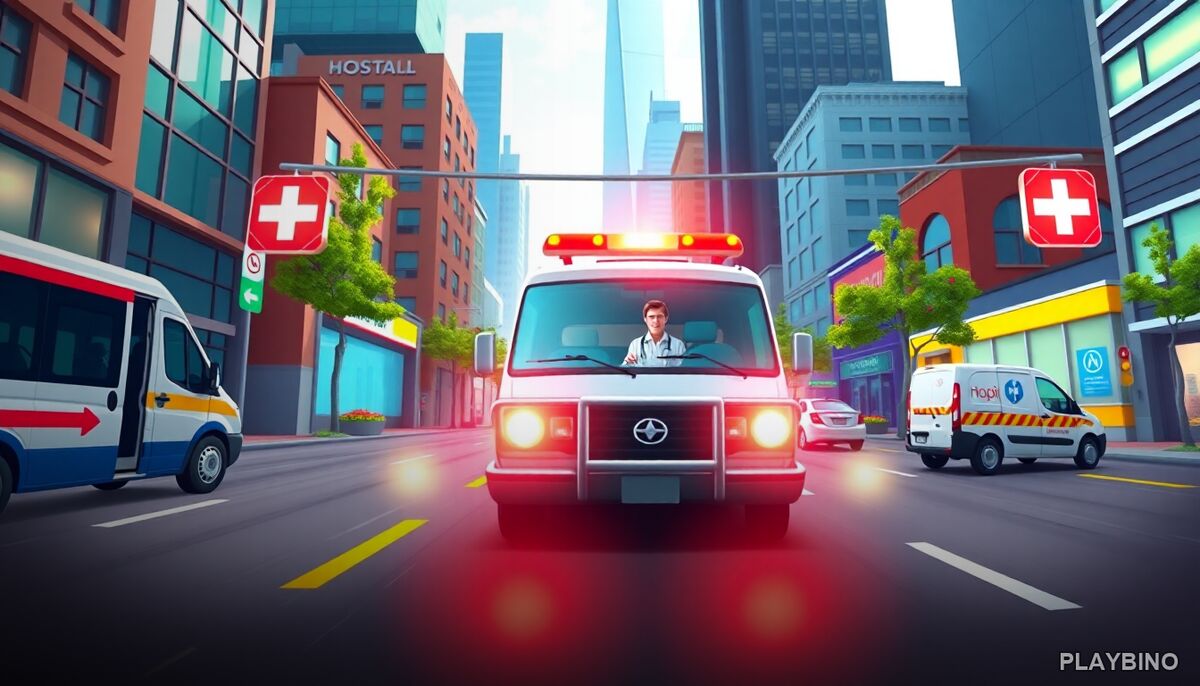
Racing Against the Clock
Most driving games let you take your time finding a rhythm. Ambulance Rush does not. From the first second, you are threading an emergency vehicle through packed city intersections, and the pressure never lets up. Every near-miss with a civilian car, every sharp corner taken too wide, chips away at the time you cannot afford to lose. Play it directly in your browser and you will immediately feel the weight of that urgency.
What You Are Actually Doing
The core loop is straightforward: get the ambulance from point A to the hospital as fast as possible without causing collisions. But the city traffic makes that simple goal genuinely demanding. Lanes shift, vehicles merge unpredictably, and the roads tighten as levels progress. You are not just pressing accelerate — you are reading the road ahead, choosing gaps, and committing to lines through intersections before they close.
Controls and Handling
The handling model rewards smooth inputs over aggressive ones. Jerky steering through a crowded block tends to clip a mirror or worse, costing seconds you cannot recover. Learning to brake early before dense clusters and accelerate cleanly out of turns is the real skill here. The simulation leans toward accessible controls, so the difficulty comes from traffic density and route complexity rather than from fighting the vehicle itself.
Scoring and Progression
Smooth driving earns better scores, which means the game actively punishes reckless play. Collisions do not just slow you down — they affect your rating for the run. As you clear levels, routes grow longer and more complex, introducing tighter urban corridors and heavier traffic patterns that demand sharper decision-making.
The City as an Obstacle Course
One of the more effective design choices is how alive the traffic feels. Intersections do not follow predictable loops. Vehicles cut across lanes, pedestrians create hesitation moments, and the general chaos of a congested city is replicated well enough that no two runs feel identical. The racing element comes not from competing against other drivers but from the relentless countdown and the unpredictable environment itself.
Strategy Tips for Better Runs
- Scan two or three car lengths ahead, not just the immediate obstacle in front.
- Use the sirens as a mental cue — if traffic is not clearing, slow down rather than force a gap.
- Prioritize the center lane on wide roads to keep your options open on both sides.
- Accept minor speed losses at tight corners