Angry Bird vs Pig: Physics Puzzle Strategy and Tips
What You're Actually Doing
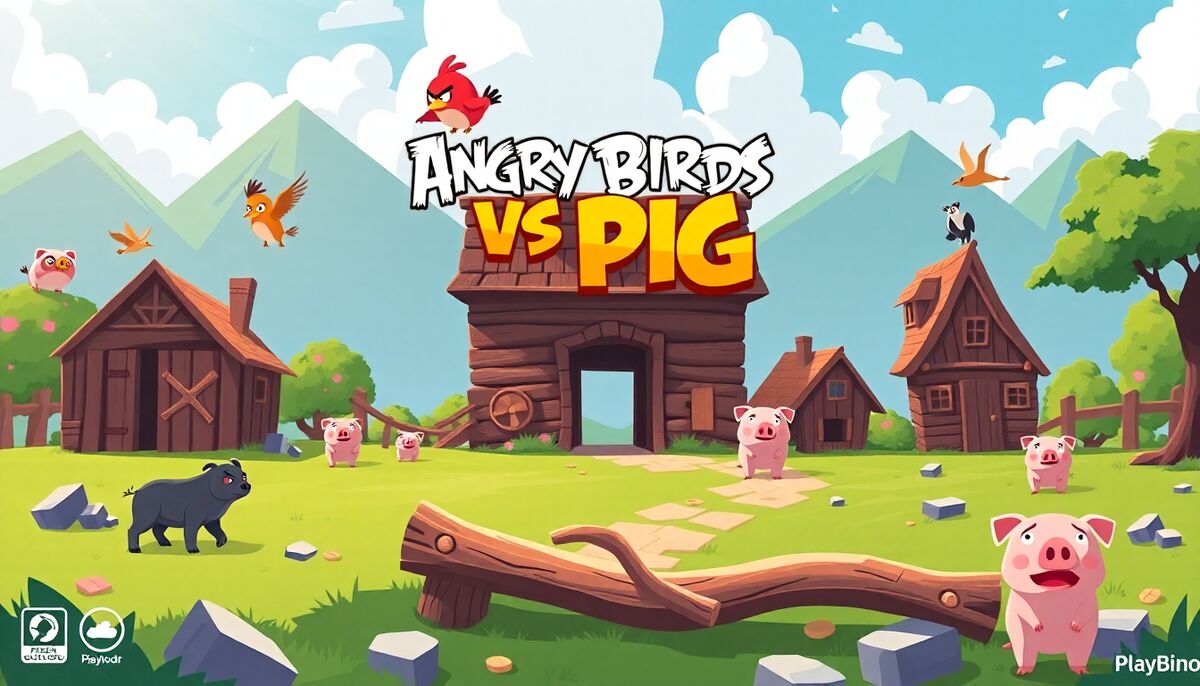
At its core, Angry Bird vs Pig is a physics-based puzzle game where every level is a small engineering problem. Pigs hide inside towers and fortresses built from wood, stone, and glass. Your job is to knock those structures down using a limited supply of birds launched from a slingshot. The catch is that ammunition runs out, so blind firing wastes your best shots.
Each launch follows a parabolic arc. You control the angle and the release point, which together determine where the bird lands and how much force it carries on impact. The full puzzle experience rewards patience over speed — a well-aimed shot into a load-bearing column does far more damage than three shots aimed at the surface.
Reading the Structure Before You Shoot
The most important skill in this game is not aim. It is observation. Before releasing a single bird, spend a moment looking at how the structure is built.
Material Weaknesses
Glass panels shatter easily. Wood planks splinter with moderate force. Stone blocks are the most resistant and often need to be dislodged rather than broken directly. Identifying which material is holding the rest of the structure together tells you where to aim first.
Collapse Logic
Physics in this game behaves consistently. A tower that is top-heavy will fall faster once its base is disturbed. Structures built on platforms can be knocked sideways if you hit the supports at the right angle. Chain reactions — where one falling section knocks into another — are how most high-efficiency clears happen. Triggering those chains is the real puzzle.
Trajectory and Angle Strategy
Flat shots work well against wide horizontal structures. High arcing shots are better for hitting pigs sheltered inside enclosed spaces or behind tall walls. The slingshot position is fixed, so your only variables are the angle of release and the timing of any special abilities certain birds carry.
When a level feels impossible with a direct approach, try an indirect one. Bouncing a shot off a surface, aiming for the gap between two sections, or targeting the ground beneath a structure can all produce results that a straightforward hit would not.
Difficulty Progression
Early levels introduce single-material structures with generous bird counts. As the game advances, layouts become multi-layered. Pigs move deeper into fortresses. Stone blocks appear more frequently. The number of available birds shrinks relative to the complexity of what you need to destroy.
- Early stages: wooden structures, open layouts, forgiving aim
- Mid-game: mixed materials, enclosed pigs, tighter angles
- Later levels: stone-heavy builds, minimal ammunition, structural puzzles
The difficulty curve stays fair. Each new challenge introduces mechanics gradually, so when a harder layout appears, you already have the instincts to approach it.
Where Puzzle Thinking Matters Most
This is a one-player puzzle and action game, which means there is no time pressure and no opponent to outpace. That freedom lets you think before each shot. Players who approach each level like a logic problem — identifying the optimal first strike, predicting how the structure will collapse, and conserving birds for stubborn pigs — will consistently clear levels more efficiently than those who rely on trial and error alone.
If you enjoy games that reward spatial reasoning and careful planning, another puzzle-based challenge worth exploring is Crazy 3, which takes a different approach to physics interaction and problem solving.
Why This Format Still Works
Physics-based slingshot puzzles remain compelling because the feedback loop is immediate and satisfying. You aim, you launch, something collapses — or it does not, and you understand exactly why. That clarity makes failure instructive rather than frustrating. PlayBino hosts this game in a browser format that keeps the experience accessible without any downloads, so you can jump into a level and work through it at your own pace. The puzzle design respects your intelligence, and the physics feel consistent enough that every miss teaches you something useful for the next shot.
"