Animal Preserver: Draw Barriers, Rescue Animals, Earn Stars
What You're Actually Doing
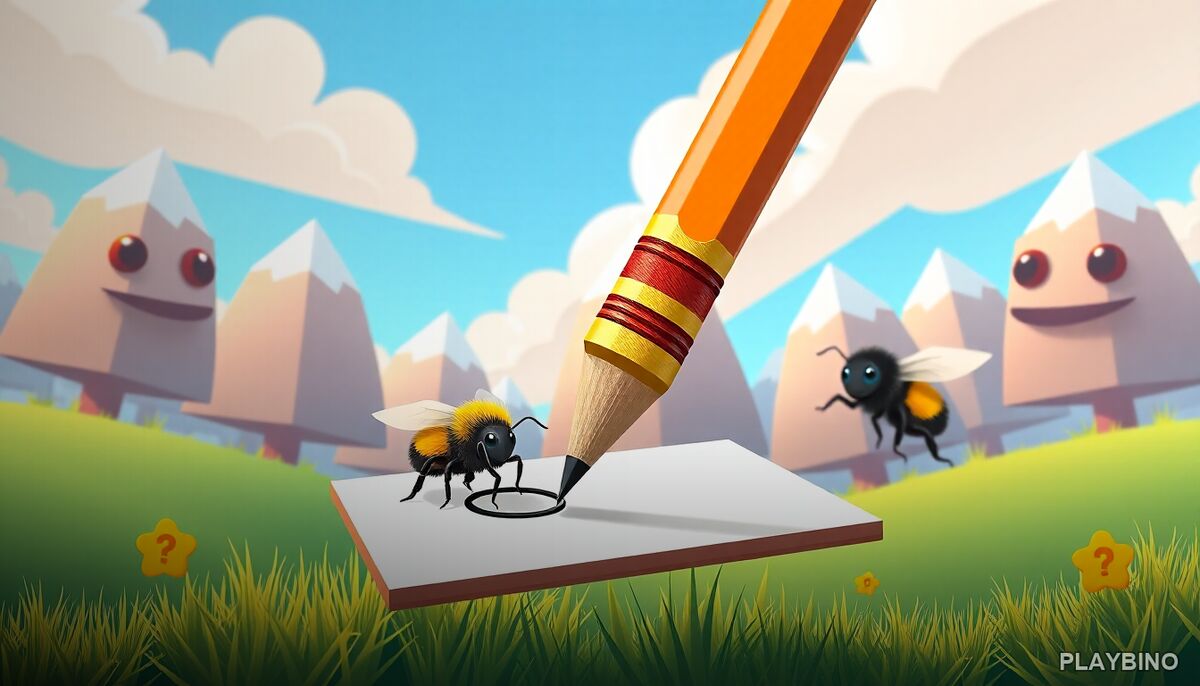
Animal Preserver drops you into a deceptively simple scenario: animals are surrounded by aggressive bees, and your only defense is a line you draw with your own hand. No weapons, no timers ticking loudly in the corner — just geometry and judgment. You trace barriers around each creature to create a safe zone, and the bees bounce off whatever boundary you've constructed. The satisfaction of watching a swarm deflect harmlessly off a well-placed line is immediate and oddly rewarding.
The puzzle strategy angle becomes clear fast. The browser version of this challenge rewards efficiency over speed. Drawing more lines than necessary still saves the animal, but it costs you stars — and stars are how you know you've actually solved the puzzle well.
The Star Rating System
Each level scores you based on how few strokes you use. This single mechanic transforms what could be a casual scribbling exercise into a genuine logic puzzle. You start eyeing the layout before drawing anything, asking which animals share space, whether one barrier could protect two at once, and where the bees are likely to travel.
Planning Before Drawing
The most useful habit in Animal Preserver is pausing before the first stroke. Study the positions of the animals and the bee swarms. A diagonal line that shields multiple creatures simultaneously is worth far more than two separate enclosures. The geometry of protection matters here — angles, coverage area, and proximity all factor into an efficient solution.
When to Sacrifice Stars
Sometimes a level's layout makes a perfect three-star solution genuinely difficult to see. In those cases, completing the rescue with four or five strokes still clears the level and lets you move forward. You can always return for a cleaner attempt once you understand the bee movement patterns better.
How the Drawing Mechanic Feels
The controls are direct: click and drag to draw a line, release to set it. Lines are solid barriers — bees do not pass through them. The physics of the bouncing bees add a layer of unpredictability that keeps the puzzle from feeling purely static. A barrier that looks adequate on paper might leave a small gap that a bee finds eventually, so clean, deliberate strokes matter more than fast ones.
The clean visual design works in the game's favor. There's no visual clutter competing for attention, which means your focus stays entirely on the spatial problem in front of you.
Level Progression and Difficulty Curve
Early levels introduce one or two animals in open space — straightforward enough to understand the system. As the game progresses, arrangements become tighter, animals cluster in awkward positions, and the bee swarms grow denser. The puzzle design avoids throwing complexity at you all at once. Instead, each new configuration asks a slightly different spatial question, which keeps the single-player experience feeling fresh across multiple sessions.
- Early levels: open layouts, single barriers usually sufficient
- Mid-game: multiple animals requiring shared or adjacent barriers
- Later levels: tight geometry, fewer obvious solutions, higher bee density
- Star challenges: require revisiting levels with a more efficient approach
Strategy That Actually Helps
A few habits separate three-star runs from messy completions. First, look for animals that are naturally close together — a single curved or angled line can often enclose two at once. Second, consider the bee entry points. If bees approach from one side, a barrier on that edge alone may be enough without fully enclosing the animal. Third, shorter lines placed precisely tend to outperform long sweeping ones in terms of star efficiency.
Save Juan, another browser game built around protecting a character from threats, uses a different mechanic but shares the same core instinct — read the danger, place your defense, and keep the solution tight. It's worth a look if this style of spatial puzzle appeals to you.
Who This Game Suits
Animal Preserver works well for players who enjoy logic puzzles with a tactile, drawing-based input. The one-player format means there's no pressure from opponents, only the internal pressure of wanting a cleaner solution. PlayBino hosts the game directly in the browser, so there's no installation involved — just open and play. If you find yourself replaying levels to shave off one extra line, that's the game doing exactly what it was designed to do.
"