Baby Learns Transportation: A Fun Brain Game for Young Explorers
What Young Players Actually Do
Baby Learns Transportation is a child-focused puzzle and simulation game built around hands-on mini-activities. Rather than sitting through explanations, kids interact directly with vehicles and travel scenarios. They load cargo onto trains, prep planes for takeoff, and help keep city roads running smoothly. Each task is short, visual, and designed to hold a young child's attention without overwhelming them.
The game moves at a gentle pace, which matters a lot for its audience. There are no timers creating pressure, no fail states that frustrate, and no complex instructions to decode. Children simply tap or click their way through each scene, responding to cheerful prompts and watching things come to life on screen. You can try this interactive learning experience on PlayBino directly in a browser without any downloads.
The Mini-Game Structure
Each level presents a single focused task tied to a specific type of transportation. One scene might involve organizing items before a train departs. Another puts kids in charge of an airport runway activity. A third drops them into a city street scenario where they guide traffic safely.
Variety of Vehicles
The game covers a solid range of transportation types, giving children repeated exposure to different vehicles in context:
- Trains and cargo loading
- Airplanes and pre-flight preparation
- City road vehicles and traffic management
- Everyday transport seen in neighborhood settings
This variety keeps the experience from feeling repetitive. Each new scene introduces a different visual environment and a slightly different interaction style, which supports curiosity-driven exploration.
Feedback and Encouragement
Completing a task triggers positive animations and sounds. This kind of immediate, rewarding feedback is central to how young children stay engaged. The game never punishes mistakes harshly. Instead, it gently guides kids back toward the correct action, which builds confidence rather than frustration.
Brain and Coordination Development
Although Baby Learns Transportation is clearly designed for entertainment, the puzzle and simulation elements serve a real developmental purpose. Dragging cargo to the right location, matching objects to their correct spots, and following a simple sequence of steps all require basic observation and coordination. These are low-stakes brain challenges that feel like play while quietly building skills like pattern recognition and hand-eye coordination.
The simulation layer adds context. Kids aren't just moving shapes around — they're doing something that mirrors real-world logic, like loading a train before it departs or checking that a plane is ready before it flies. That connection to real life makes the activities feel meaningful even to very young players.
Visual and Audio Design
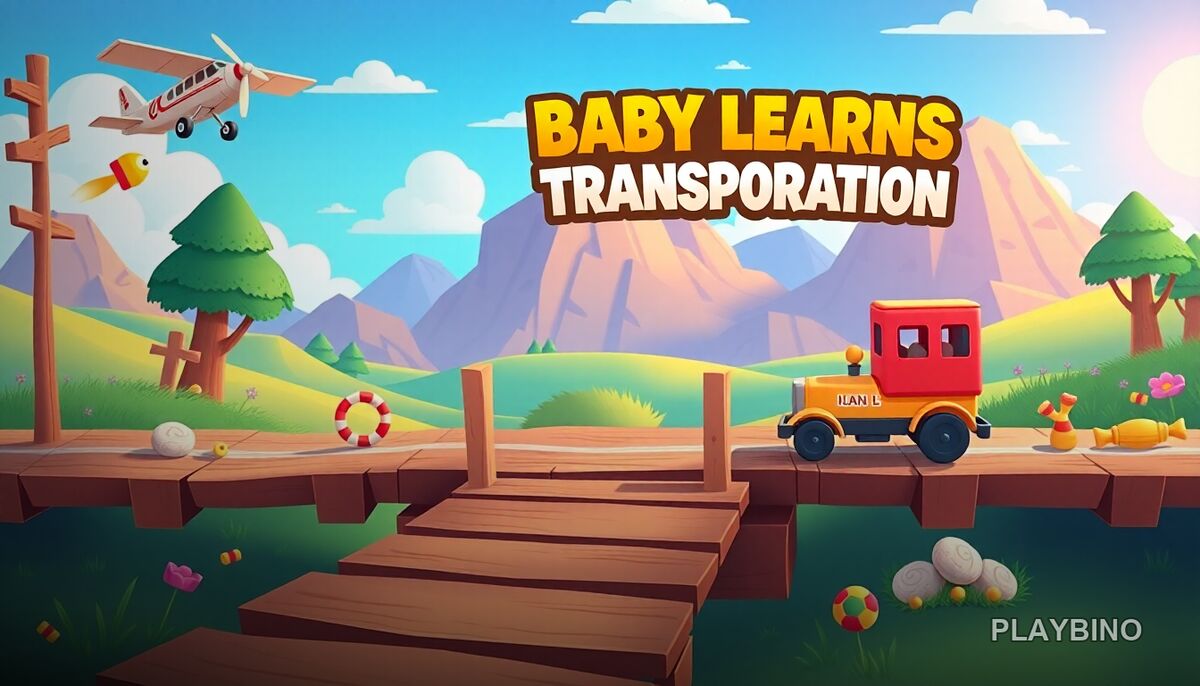
The art style leans into bright, saturated colors with rounded character designs and exaggerated, friendly animations. Nothing looks threatening or confusing. The visual language is consistent across all mini-games, so children quickly understand what kind of interaction each screen is asking for.
Sound design reinforces every action. Clicks, completions, and transitions are all accompanied by cheerful audio cues that feel rewarding without being overstimulating. The overall tone stays warm and encouraging throughout.
Who This Game Suits Best
Baby Learns Transportation works well as a short-session activity for toddlers and preschool-age children, especially those who are curious about vehicles, travel, or how things work. Parents looking for screen time that has a light educational angle will find the format approachable. The one-player, browser-based setup also makes it easy to use on a tablet or desktop without any setup.
If your child enjoys this style of interactive learning, Baby Panda Dream Job explores a similar concept through role-play and job-themed activities that follow the same gentle, curiosity-first design philosophy.