Baby Panda Earthquake Safety: Teaching Kids Emergency Preparedness Through Play
What This Game Is About
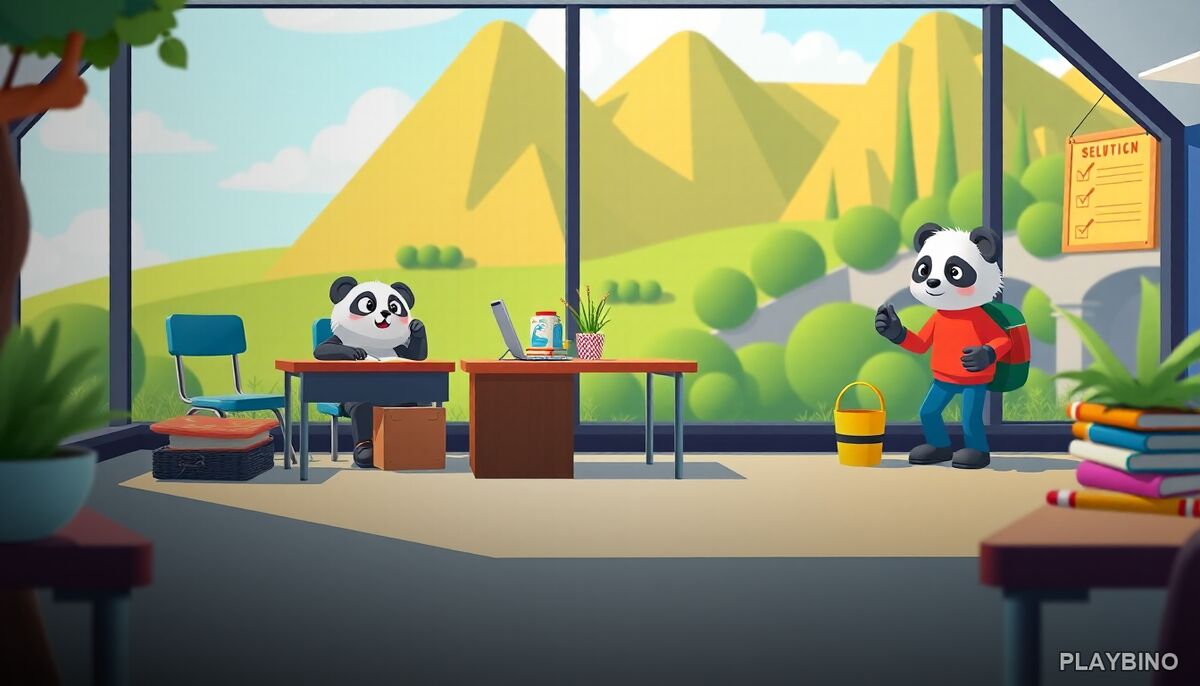
Most games aimed at young children focus on color matching or simple clicking. Baby Panda Earthquake Safety takes a different approach by turning emergency preparedness into an interactive simulation. The premise is straightforward: guide Baby Panda through dangerous situations when tremors strike, choosing the right shelter and avoiding hazards before falling objects cause harm. Play it directly in your browser and you'll quickly see how much thought went into making safety concepts accessible for small children.
Three Environments, Three Sets of Challenges
The game spreads its lessons across three distinct locations, each with its own layout and hazard logic. This structure keeps the experience from feeling repetitive while also reinforcing that earthquake safety rules apply everywhere, not just at home.
Home
The home scenario introduces heavy furniture, bookshelves, and kitchen items that can topple during a tremor. Young players learn to move away from tall cabinets and find sturdy cover quickly. The familiar setting makes the lesson feel relevant rather than abstract.
Supermarket
Tall shelving units loaded with products make the supermarket the most visually chaotic scenario. The challenge here is reading the environment fast — there are more objects in motion and fewer obvious safe zones. Players need to think about where items might fall and position Baby Panda accordingly.
School Building
The school setting introduces multiple rooms and corridors, adding a layer of spatial decision-making. Children playing this scenario are essentially rehearsing what they might actually do in their own school, which gives the puzzle simulation a real-world connection that other games in the genre rarely achieve.
How the Gameplay Mechanics Work
The core loop is simple enough for young children to follow but still requires active thinking. When a tremor begins, players must quickly identify a safe zone — under a sturdy desk, away from windows, clear of falling objects — and move Baby Panda there before the shaking causes damage. Timing matters. Hesitation leads to bad outcomes, and the game uses that consequence to reinforce the lesson without being frightening.
The brain and puzzle elements come through in how players must read each room before acting. It is not random clicking. There are correct answers, and the game rewards players who observe the environment and respond with purpose. Repeated play across the three scenarios helps build instinctive recognition of danger spots.
Visual Design and Age-Appropriate Tone
The colorful art style and friendly character design keep the subject matter from feeling stressful. Baby Panda is expressive and easy to connect with, which matters when the content involves emergency scenarios. The game avoids alarming imagery while still communicating real stakes through cause and effect. Falling objects are shown clearly, safe zones are visually distinct, and the pacing gives children enough time to process what they see before needing to act.
This balance between educational content and engaging presentation is what separates Baby Panda Earthquake Safety from purely informational approaches to child safety. The simulation format means children are learning by doing rather than just watching or reading.
Who Benefits Most From Playing
- Young children aged 3 to 7 who are beginning to learn about safety rules
- Parents looking for screen time that has a clear educational purpose
- Teachers or caregivers who want to introduce emergency preparedness in a low-pressure way
- Children who respond better to interactive learning than to verbal instructions
The game works well as a starting point for conversations about what to do during an earthquake. After a few rounds, children can often explain the logic behind the choices they made, which is a strong sign that the simulation is doing its job.
A Different Kind of Physics Puzzle
If the idea of environment-reading and cause-and-effect gameplay appeals to you, Faraday Game Casual Physics takes a different angle on physics-based challenges and is worth exploring alongside this title. The two games share a thoughtful, brain-engaging approach even though their audiences differ. Baby Panda Earthquake Safety remains one of the more focused educational simulations available on PlayBino, and its combination of puzzle logic, scenario variety, and child-friendly design makes it genuinely useful rather than just entertaining.