Ball Hit Domino: Chain Reaction Puzzle Strategy and Tips
What Ball Hit Domino Is About
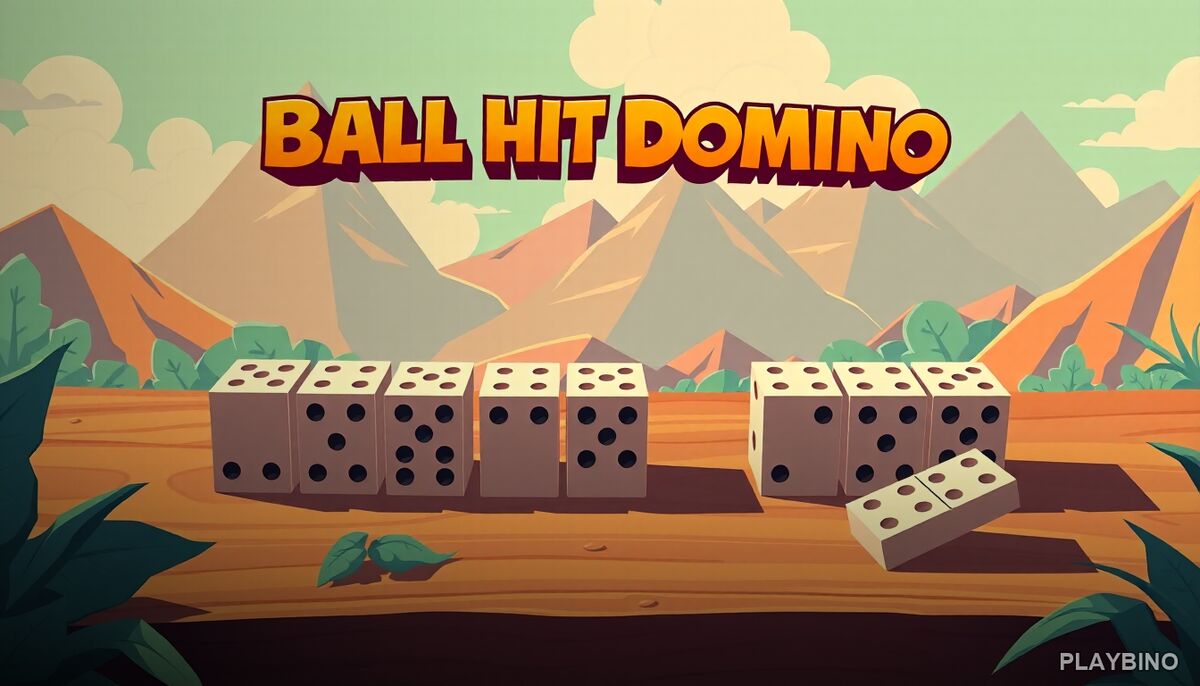
Physics puzzles live or die by how satisfying the feedback feels. Ball Hit Domino gets this right from the first level. You place dominoes across a board, release a ball, and watch — or wince — as the chain either completes beautifully or collapses two pieces short of the goal. The concept is simple, but the execution demands real spatial thinking. Play it directly in your browser and the drag-and-release mechanic makes sense within seconds, even if mastering the layouts takes considerably longer.
Placement and the Physics Behind It
The core loop revolves around two decisions: where you place each domino, and in what order. The ball follows a fixed path, so the first domino it strikes sets everything in motion. From there, spacing matters enormously. Place pieces too far apart and the chain dies. Too close and the angles go wrong, sending pieces sideways instead of forward.
Spacing and Angle
Each domino has a tipping radius. When one falls, it needs to land close enough to the next piece to push it over. On flat surfaces this is straightforward, but Ball Hit Domino introduces slopes, corners, and platforms that change how pieces fall. A domino on a slope tips faster and covers more horizontal distance, which can be an advantage or a trap depending on what comes next.
Working With Limited Pieces
Every level gives you a fixed number of dominoes. You rarely have extras to spare. This forces deliberate placement rather than trial-and-error flooding of the board. Counting your pieces before placing the first one often saves multiple failed attempts.
How Later Levels Change the Challenge
Early stages act as a tutorial in disguise. The layouts are generous, the paths are mostly linear, and a rough placement still produces a working chain. That changes around the midpoint of the game. Barriers appear that block direct lines, requiring you to route the chain around obstacles. Narrow gaps demand precise positioning, and some stages split the path so that two separate chains must meet at a junction point simultaneously.
The difficulty curve feels honest rather than punishing. Each new obstacle type gets introduced with enough space to understand it before the game starts combining them. Experimentation is part of the design — failed runs show exactly where the chain broke, making the next attempt more informed than random.
Puzzle Logic and Skill Overlap
Ball Hit Domino sits at the intersection of puzzle and skill genres, which its tags reflect accurately. The puzzle element is the layout planning: reading the board, counting pieces, identifying the critical gaps. The skill element is execution — placing dominoes at the right angle, especially on curved or elevated sections where a small drag error shifts the whole sequence.
Players who enjoy logic-based challenges will find the planning phase rewarding. Those drawn to satisfying physical feedback will appreciate how the completed chains look and sound. Both aspects reinforce each other, which keeps the gameplay loop from feeling repetitive even across many levels.
Strategy Tips Worth Knowing
- Start from the end of the chain and work backward. Knowing where the final domino needs to land helps you calculate spacing for every piece before it.
- On sloped sections, place dominoes slightly closer together than you would on flat ground — they cover less horizontal distance when falling at an angle.
- If a level includes a barrier, identify the gap or route around it first. Build that section before filling in the easier straight segments.
- Watch the ball path carefully before placing anything. Some levels have the ball curving or bouncing, which affects which domino it strikes first.
- Failed runs are data. Note exactly which domino stopped the chain and adjust only that section rather than resetting your entire layout.
A Similar Physics Challenge to Try
Doroppuboru takes a comparable physics-first approach to browser puzzles, and that game's breakdown on PlayBino covers the mechanics in detail if you want to see how a different ball-and-placement concept handles progression and level design. The two games share a focus on spatial reasoning and chain logic, making them natural companions for anyone who enjoys this style of one-player puzzle.