Beach Volleyball 3D: Fast-Paced 3D Sports Action in Your Browser
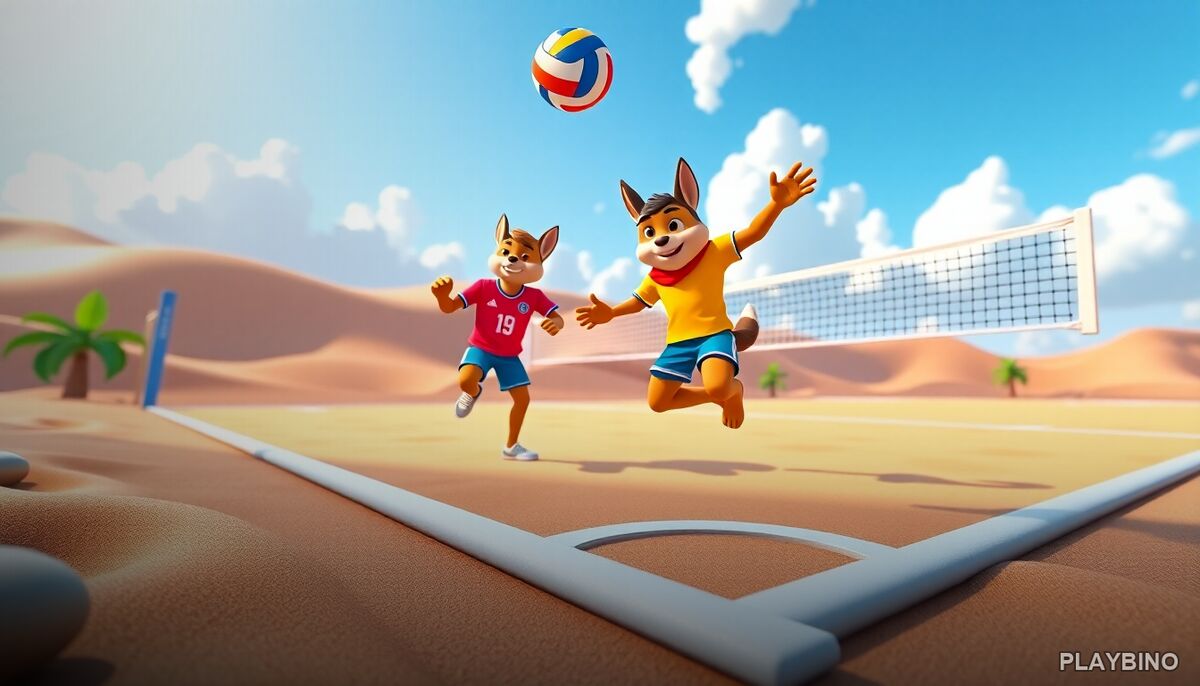
What the Game Is About
Sandy courts, a blazing sun overhead, and a net separating you from an opponent who isn't going to hand you anything — that's the setup. Beach Volleyball 3D drops you into short, high-intensity matches where the first team to three points wins. You control one player while an AI partner handles the opposite side of your court, so the pressure on your individual reactions is real. Play it directly in your browser and the pace hits immediately — there's no warmup.
How the 3D Court Changes the Game
Most browser sports games flatten the action into a side-on view, but the 3D perspective here is a genuine mechanical advantage. You can read ball trajectories as they arc over the net, judge whether you need to sprint forward or hold your ground, and anticipate where an opponent's spike is going to land. Depth perception becomes part of your skill set rather than a visual gimmick.
This matters especially on defense. A flat camera hides whether a ball is dropping short or sailing deep. The 3D angle removes that ambiguity, which means your mistakes are more clearly your own — a missed save comes from bad timing or positioning, not from a misleading camera.
Match Structure and Pacing
Short Matches, High Stakes
Three points decides a match. That number sounds small until you realize how quickly momentum can swing. One mistimed jump gives the opponent two points before you've settled in. The brevity is intentional — it forces every single play to matter and keeps the action-to-downtime ratio very high.
AI Opponent Behavior
The AI doesn't stand still or make predictable errors. It reads your positioning and adjusts its shots, so you can't rely on hitting to the same corner repeatedly. You'll need to vary your angles, mix spikes with softer placements, and occasionally fake a direction to create an opening. The AI partner on your side covers ground automatically, but it won't bail you out of a badly misjudged sprint.
Core Mechanics Worth Understanding
- Jumping and timing: Spikes require you to jump at the right moment relative to the ball's position. Too early and you'll swing at air. Too late and the contact point is wrong.
- Positioning: Staying in the right zone of the court lets you react to both short drops and deep shots. Drifting too far forward leaves the baseline exposed.
- Defensive saves: Getting under a hard spike takes quick lateral movement. The 3D view helps you read incoming angle, but your reaction speed is what closes the gap.
- Serve placement: Serves aren't just a formality. A well-placed serve can force the opponent into an awkward return, giving you a favorable first attack.
Strategy on the Court
Because matches are so short, aggressive play has real value — but recklessness gets punished fast. The most effective approach is controlled aggression: commit to spikes when you have a clear angle, but don't overextend on defense when the ball is already beyond reach. Your AI partner handles some coverage, so learning to trust that positioning without second-guessing it frees you to focus on your own zone.
Reading the opponent's body language before contact is the highest-level skill here. If they're set up wide, a line shot becomes likely. Anticipating that and shifting a step early can turn a hard rally into a clean block or dig. Volleyball rewards pattern recognition, and even in a quick browser format, that principle holds.
A Similar Challenge to Try
Volleyball fans looking for a different take on the format might want to check out another volleyball experience on PlayBino — Extreme Volleyball pushes the sport into more arcade territory, which makes for an interesting contrast to the grounded 3D mechanics here. Both reward timing and positioning, but the feel of each rally is notably different.
"