The Big Hit Run: Urban Sprint Tactics and Survival Guide
What Kind of Game Is This?
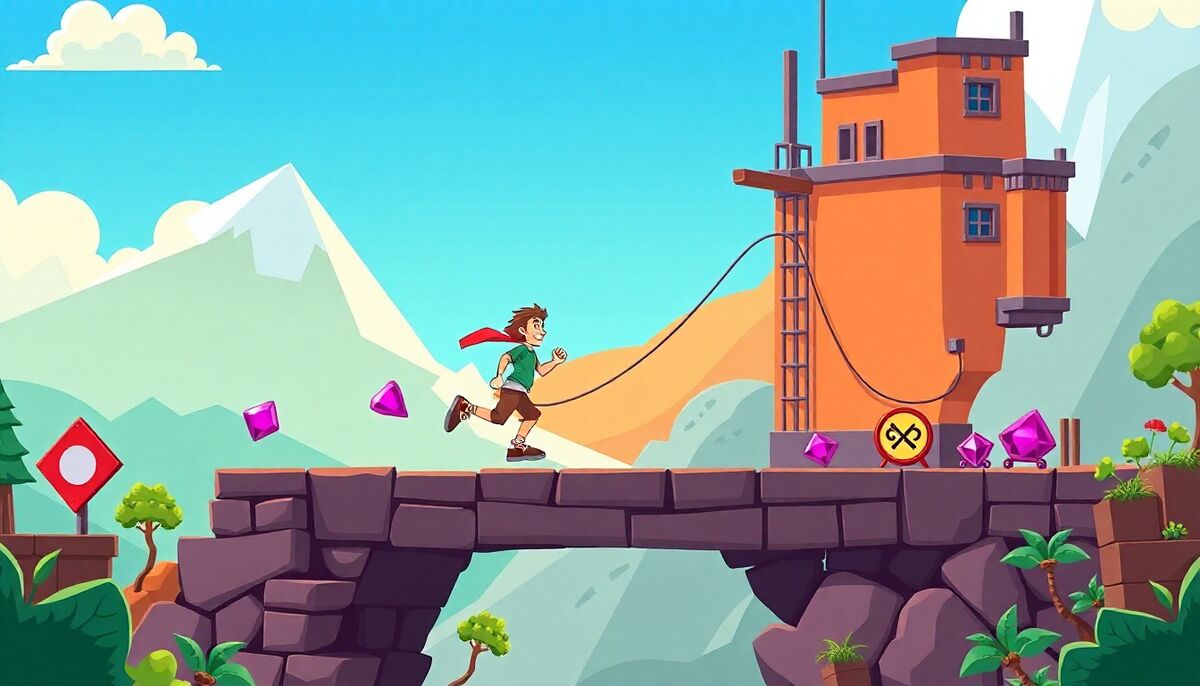
The Big Hit Run drops you into a relentless urban sprint where the city never slows down and neither can you. It sits firmly in the endless runner and arcade space, built around one core demand: react faster than the obstacles appear. Barriers come at you in rapid succession, and the only tools you have are a jump and a slide. That simplicity is exactly what makes it intense. You can try the full run on PlayBino directly in your browser without any download.
The Core Loop and What Drives It
Each run follows a familiar but addictive rhythm. You sprint forward automatically while the environment throws barriers, gaps, and low obstacles at you. The split-second decision between leaping over something or sliding under it becomes almost instinctual after a few attempts. Fail once and you restart, but the layout shifts enough between runs to keep things from feeling stale.
Gems are scattered across each route, and collecting them is a genuine risk-reward decision. Going for a gem cluster often means committing to a path that leaves less margin for error. That tension between safe movement and greedy collection is where most of the replay value lives.
Obstacle Patterns and Timing
Reading the Rhythm
The game has a rhythm to it. Obstacles tend to cluster in short bursts followed by brief breathing room. Learning to identify those windows is more useful than raw reaction speed alone. After several runs, you start recognizing sequences rather than reacting to each hazard individually, which is when scores start climbing.
Jump vs. Slide Decisions
Some obstacles require a jump, some require a slide, and a few demand you read them correctly under pressure. Mistiming a slide when a jump was needed ends the run immediately. Practicing both inputs until they feel automatic is the fastest way to push further into a session. The controls are simple, but clean execution under speed is the real skill ceiling.
Power-Ups and How to Use Them
Power-ups appear at intervals and offer temporary advantages that can carry you through sections that would otherwise end a run. Rather than saving them mentally for a difficult stretch, it helps to recognize which power-up you picked up and adjust your aggression accordingly. Some power-ups give you protection against a single mistake, which is the right moment to chase gem clusters you would normally avoid.
- Temporary invincibility lets you run through obstacles without penalty
- Score multipliers make gem-rich sections far more valuable
- Speed boosts increase intensity but also compress reaction windows
Cityscape Variety and Difficulty Curve
The visual environments shift between runs, cycling through different urban settings that keep the backdrop from becoming monotonous. More importantly, the obstacle density increases as a run extends. Early sections are forgiving enough to find your footing, but the game escalates quickly. Surviving past the midpoint of a long run means the pace has already ramped up significantly, and every additional second requires sharper focus.
If you enjoy reflex-based arcade challenges with a score-chasing loop, another quick skill challenge worth trying is Space Fall, which takes a different approach to the same fast-reaction genre.
Who Will Get the Most Out of It
Players who enjoy arcade games built around improving personal bests will find a lot to return to here. The short run length means a session can last two minutes or twenty depending on how deep you want to go. The action stays consistent, the scoring rewards risk-taking, and the endless runner format means there is always one more attempt worth making.