Big Team: Build Your Crowd and Reach the Spaceship
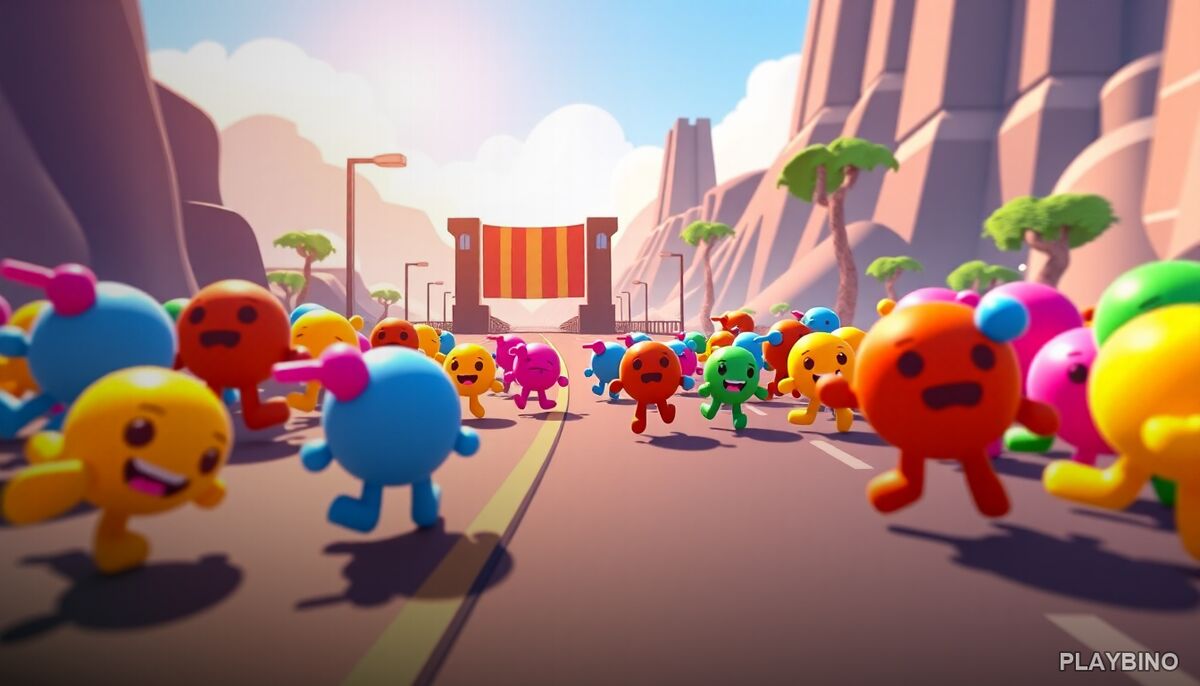
What Big Team Is About
The premise is simple but immediately compelling: you lead a growing crowd of followers toward a waiting spaceship, collecting people who match your color while steering clear of hazards that can wipe out half your team in seconds. The bigger your group, the better your odds of reaching the launch platform — but a larger crowd also makes tight navigation far more demanding. Play the browser version and you'll notice within the first run how quickly the game shifts from casual to intense.
Movement and Crowd Control
The controls are built around swipe-style directional input, letting you shift your formation left and right with smooth, responsive movement. What makes this more than a standard endless runner is the physical weight of your crowd. A small group is nimble and easy to thread through gaps. A large group moves with momentum, and a single mistimed swipe can send half your followers into an obstacle.
Positioning Under Pressure
As your crowd grows, the effective width of your formation increases. Obstacles that were easy to avoid with a small group suddenly demand earlier reactions and more deliberate routing. The game rewards players who read the path ahead rather than reacting at the last moment. Anticipating where the hazards cluster and pre-positioning your crowd is the difference between arriving at the spaceship with a strong team or arriving with almost nothing.
Recruitment vs. Safety
Every run forces a constant trade-off. Chasing a cluster of color-matched followers near the edge of the path might mean brushing an obstacle and losing numbers. Staying conservative keeps your crowd intact but leaves recruits behind. Finding the right balance between aggressive collection and safe routing is the core skill loop the game builds around.
How Obstacles Change the Run
Hazards in Big Team aren't just walls to dodge. Some are positioned to punish wide formations, others appear in sequences that force rapid direction changes. The action and skill tags in the game's design are most visible here — the obstacle patterns escalate as the run continues, demanding faster reads and tighter movement. A crowd that felt manageable at mid-run can become a liability when the spacing between hazards tightens.
Why the Crowd Size Matters So Much
Reaching the spaceship with a larger group isn't just a visual reward. The entire structure of the game is built around crowd size as a resource. Losing followers to obstacles isn't just a setback — it directly affects your ability to absorb future mistakes. A thin group has almost no margin for error in the later sections of a run. This creates a natural tension where every decision carries real consequence, which is what keeps the endless runner format engaging beyond the first few attempts.
- Larger crowds are harder to steer through narrow gaps
- Color-matched followers add to your total; mismatched ones may reduce it
- Obstacle density increases as the run progresses
- Final crowd size at the spaceship determines run success
Who This Game Suits
Big Team works well for players who enjoy action-arcade challenges with a light strategic layer. The skill ceiling is real — experienced players will learn to read obstacle patterns and manage their crowd width efficiently, while newer players will find the early runs forgiving enough to understand the mechanics. The endless runner structure means sessions are short and restartable, which makes it easy to pick up for a few runs without a long commitment.
If crowd-based action appeals to you, the Deadly Hunters game on PlayBino offers another action-focused challenge worth exploring alongside this one.