Blockade Escapade: Strategy, Timing, and Escape Routes Explained
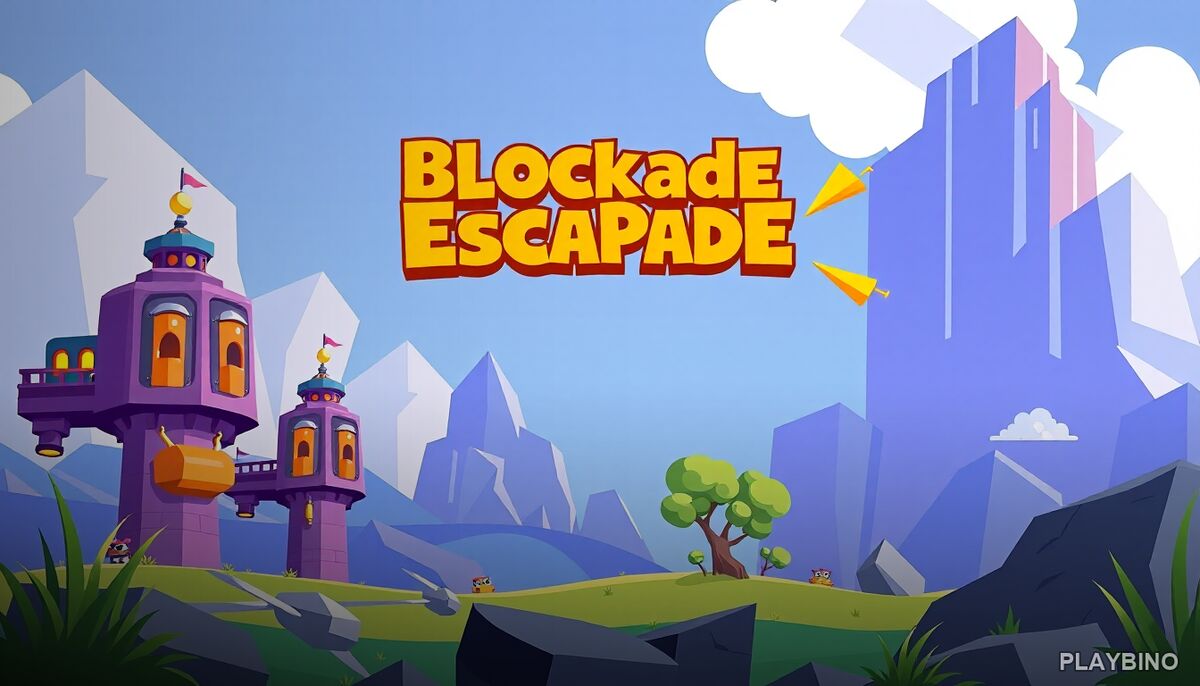
What Blockade Escapade Is About
Not every puzzle game asks you to think and react at the same time. Blockade Escapade does both. Each level places you inside a layout filled with moving barriers and patrolling opponents, and your job is to find a way through without getting caught. The challenge starts manageable and gradually tightens until every second of hesitation costs you a run. Play it directly in your browser and the tension becomes clear almost immediately.
Reading the Layout Before You Move
The most important habit in Blockade Escapade is observation. Rushing forward without studying the stage usually ends in failure. Each level has a specific rhythm: barriers cycle through positions, patrols follow fixed paths, and gaps open and close on a predictable schedule.
Enemy Patrol Patterns
Opponents do not move randomly. They follow set routes, which means watching them for a full cycle before committing to a path is almost always worth the extra seconds. Identifying when a patrol turns away or pauses gives you the window you need to advance.
Barrier Timing
Moving obstacles operate on loops. Some barriers sweep across wide sections of the stage while others block narrow corridors briefly. Learning the interval of each blockade in a level is the core puzzle mechanic, and it separates players who clear stages cleanly from those who rely on luck.
Power-Ups and When to Use Them
Scattered across each level are power-ups that provide short-term advantages. These might slow surrounding obstacles, grant brief invincibility, or create a distraction. The key is not grabbing every power-up immediately. Some are positioned in risky spots, and collecting them too early can waste the benefit before you reach the hardest section of the stage.
- Prioritize power-ups that sit along your planned escape route
- Save movement-altering effects for dense blockade sections
- Avoid detours for power-ups unless the stage layout makes them low-risk
- Combine power-up timing with natural gaps in patrol cycles for maximum effect
How Difficulty Scales Across Stages
Early levels in Blockade Escapade introduce mechanics one at a time. A stage might feature only moving barriers with no patrols, letting you focus on timing alone. Later stages layer both systems together and shrink the safe zones considerably. The margin for error compresses steadily, which creates a satisfying sense of progression without the difficulty feeling arbitrary.
Superman Rush, another action-focused browser challenge, takes a different approach to obstacle navigation but shares that same quality of demanding precise timing and spatial awareness as difficulty increases.
Strategy That Actually Works
Plan the Full Route First
Before moving, trace a mental path from your starting position to the exit. Identify which barriers you need to wait on and which sections can be crossed quickly. A complete route in mind reduces the chance of getting stuck mid-stage with no clear next step.
Accept Failed Attempts as Data
The game is designed around iteration. A failed run is not wasted time. Each attempt reveals how a patrol behaves at a specific moment or how long a barrier stays open. Players who treat failures as information rather than setbacks clear levels significantly faster.
Who This Game Suits Best
Blockade Escapade works well for players who enjoy strategy puzzles with an action component. The one-player format keeps the focus entirely on reading the environment and executing a plan. If you find satisfaction in spotting a pattern, building a route, and then pulling it off cleanly, the game delivers that loop consistently across its stages. PlayBino hosts the full game with no download required, making it easy to pick up a level whenever you have a few minutes to spare.