Blocks Move n HIT: Ricochet Puzzle Logic That Actually Challenges You
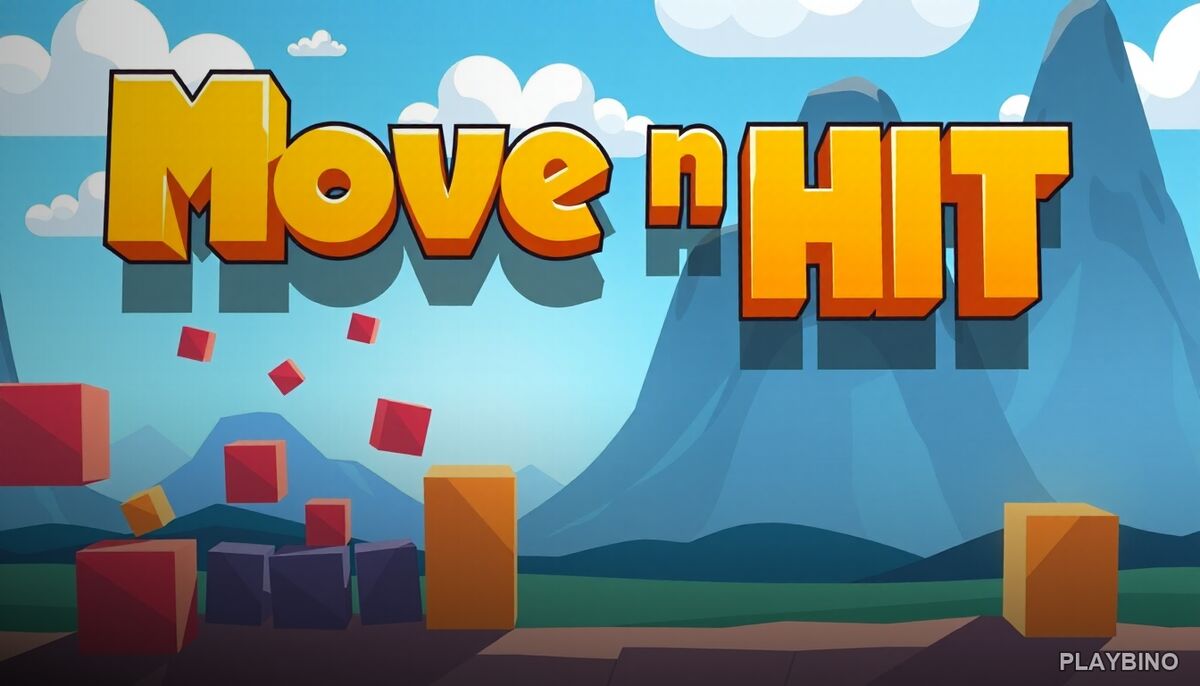
What Kind of Puzzle Is This?
Not every puzzle game asks you to think in straight lines — but Blocks Move n HIT literally does. The core idea is simple: a block slides in one direction and keeps moving until it hits something. That collision redirects it. Your job is to figure out the sequence of moves that guides the block exactly where it needs to go. Try it in your browser and the first few levels will feel almost obvious. Then the walls start multiplying.
How the Sliding Mechanic Works
The block doesn't stop mid-grid. Once you push it, it travels the full length of its path until a wall intercepts it. That wall then becomes the pivot point, and the block's new direction depends entirely on the angle of impact. This means you're not just picking a direction — you're predicting a chain of events.
Early on, the rebounds are straightforward. One push, one bounce, done. But as levels progress, you'll find yourself planning three or four moves ahead, mentally tracing the block's path before committing. The stone barriers aren't obstacles to avoid — they're the mechanism you use to reach corners and gaps that a direct path could never reach.
Predicting the Bounce
The key skill here is spatial reasoning. Before each move, visualize where the block will land after the first bounce, then follow that trajectory to the next wall. Players who rush tend to waste moves and end up stuck. Slowing down and tracing the path mentally is what separates a clean solution from a repeated failure.
Level Design and Escalating Complexity
The puzzle design in Blocks Move n HIT follows a satisfying curve. Early stages introduce the mechanic without overwhelming you. Mid-game levels add more walls and tighter geometry, forcing you to reconsider which barriers to use and in what order. Later levels feel genuinely hard — not because the rules change, but because the arrangements demand precise planning.
What makes the design work is that every solution feels logical in hindsight. There's no guesswork. The answer was always there