Brick Game Classic: Falling Block Puzzle Strategy and Tips
What the Game Is About
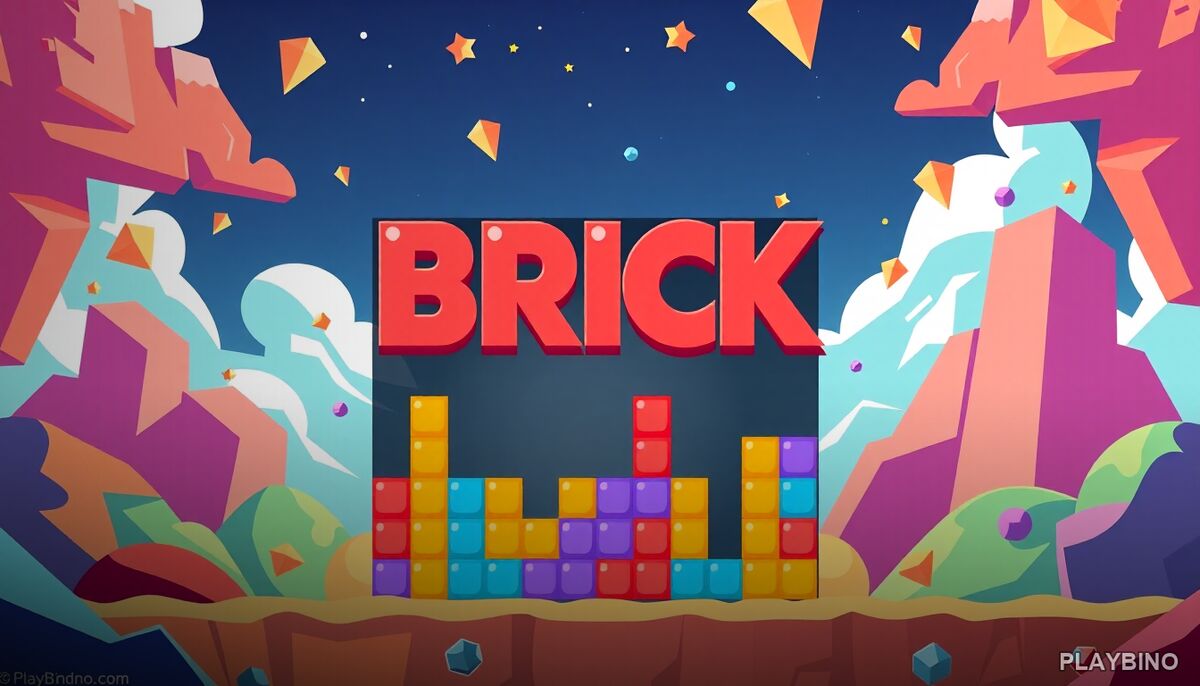
Falling block puzzles have a long history in arcade gaming, and Brick Game Classic captures that same satisfying loop in a clean browser format. Geometric shapes drop from the top of the screen one at a time. Your job is to rotate and position each piece so that it fills horizontal rows without leaving gaps. Complete a row and it disappears, adding points and buying you more room. Let the stack climb too high and the game ends.
The rules are minimal, but the mental load builds quickly. You can play this falling block puzzle directly in your browser without any download or setup, making it easy to jump into a session whenever you have a few minutes.
How the Piece Placement Works
Each piece arrives at the top of the screen and begins descending at a fixed speed. You have a limited window to rotate it and slide it left or right before it locks into place. The seven standard geometric shapes each behave differently, and part of the skill is learning how each one fits against the pieces already stacked below.
Rotation and Positioning
Rotating a piece changes how it occupies horizontal space. A vertical bar clears a single column cleanly but needs a narrow gap to drop into. An L-shaped piece can fill awkward corners depending on which way it faces. Getting comfortable with all rotation states matters more than raw speed, especially in the early stages when you have time to think.
Gaps and Their Consequences
Leaving a gap beneath a locked piece is the core mistake to avoid. Once a hollow space is buried under several rows, clearing it becomes nearly impossible without the exact right piece arriving at the right moment. Good players scan the existing stack before each piece arrives and plan where it should land, not just where it fits most easily.
Pacing and Difficulty Curve
The game starts at a manageable pace that gives new players time to find their footing. As the score climbs, pieces descend faster, compressing the window for decision-making. What felt like a comfortable rhythm at level one becomes a scramble by level five or six. This gradual escalation is what keeps sessions engaging rather than repetitive.
The pressure spike when the stack reaches the upper half of the screen is where most runs end. Recovering from a cluttered board at high speed requires clearing multiple rows in quick succession, which demands both accurate placement and fast reactions.
Scoring Logic
Clearing one row at a time adds points, but clearing multiple rows simultaneously multiplies the reward. Deliberately setting up a situation where four rows clear at once is the highest-value play in the game. It requires patience and a willingness to hold back certain pieces rather than placing them immediately.
- Single line clear: steady, reliable points
- Double or triple clear: better efficiency per piece
- Four-line clear: maximum points per action
- Speed bonus: later levels reward faster decisions
Chasing multi-line clears while managing a rising stack is the central tension that gives the puzzle its depth.
Strategy for Longer Runs
Keeping the stack flat and low is the most consistent approach. Resist the temptation to fill one side of the board faster than the other, as this creates uneven terrain that becomes harder to manage. Prioritize pieces that flatten the surface, and use awkward shapes to fill corners rather than stacking them on top of existing peaks.
Players who enjoy spatial reasoning and grid-based challenges may also find this shape-fitting puzzle worth exploring alongside it. The two games share similar logic around placement and spatial awareness but approach the concept from different angles.
Why the Minimalist Design Works
There are no animations demanding attention, no timers beyond the falling speed, and no distracting visual effects. The interface strips the experience down to the grid, the incoming piece, and the score. That focus is deliberate. Every session on PlayBino starts immediately, and the absence of clutter means your attention stays on the puzzle rather than the presentation. For a single-player arcade puzzle that rewards concentration and planning, the format holds up well across short and extended sessions alike.
"