Brick Together: The Block Puzzle That Punishes Careless Pushes
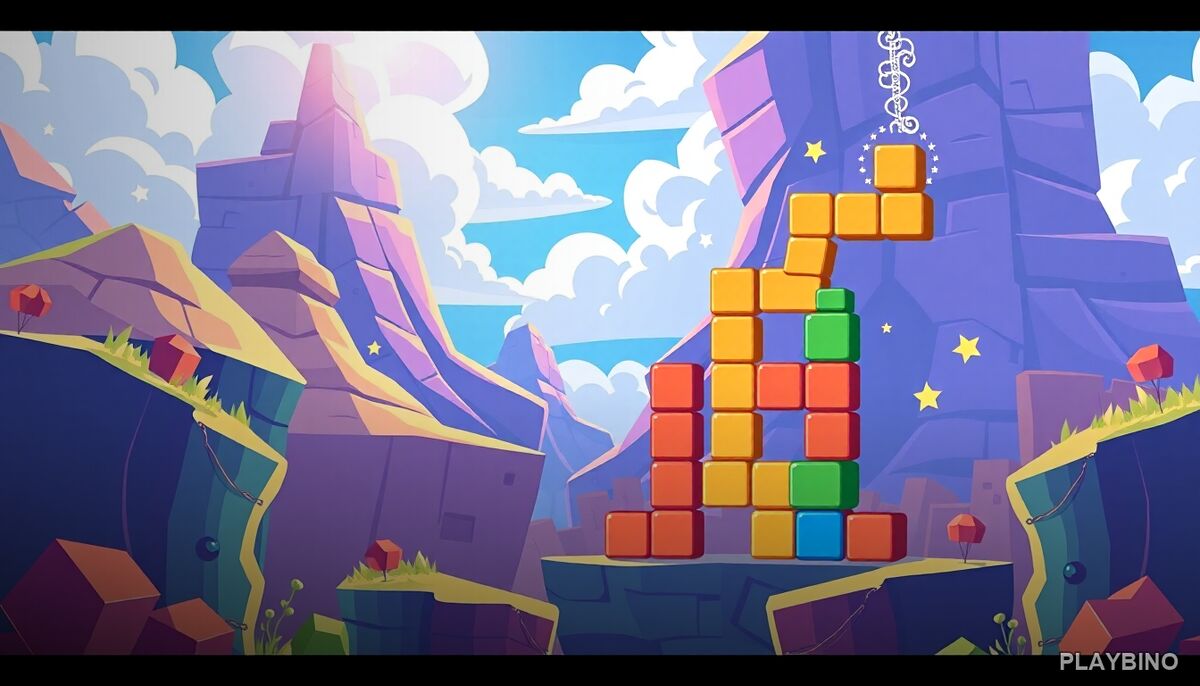
What You're Actually Doing
Most block puzzles ask you to match and clear. Brick Together flips that expectation. You push a block into a cluster of the same color, and everything connected collapses — except the block you actually moved. That one survives. Your job is to leave exactly one block of each color standing on the board. Try the full challenge in your browser and the mechanic will click within the first two or three moves.
The rules sound almost too simple. Push a block. Same-colored neighbors fuse and vanish. One stays. But the moment the board fills up with four or five colors overlapping in tight spaces, that simplicity becomes a pressure cooker.
How the Core Mechanic Creates Problems
The survival rule is what makes Brick Together genuinely interesting as a logic puzzle. You don't control which block survives — it's always the one you pushed. That constraint forces you to think about direction, position, and sequence before committing to a single move.
Fusing and Collapsing
When your pushed block lands adjacent to two or more same-colored blocks, all of them collapse together. One remains. The board shrinks. But the blocks that remain can now be adjacent to other colors in new configurations. A red cluster you just reduced might now be sitting right next to a pair of blues you weren't planning to touch yet.
The Trap of Three Steps Ahead
Early levels let you figure things out reactively. Later levels don't. A push that solves your red problem can lock two blue blocks together in a way that makes them unsolvable without undoing everything. The game doesn't warn you. It just lets you make the mistake and sit with it.
This is where the brain and logic side of the game earns its tags. You're not reacting to falling pieces or racing a timer. You're reading a static board and mapping out a sequence — more like a sliding puzzle than an arcade game.
What the Board Looks Like as Levels Progress
Early puzzles use three or four colors with generous spacing. The solutions feel discoverable within a few attempts. The visual design keeps things cheerful — bright blocks, clean layouts, nothing visually noisy — which helps when the cognitive load starts increasing.
Mid-game and later levels pack more colors into tighter grids. The number of blocks per color increases, which means more potential fuse chains and more opportunities to accidentally strand a block with no valid move. The board starts looking like a logic problem rather than a casual game, and that shift happens gradually enough that most players won't notice until they're already deep into a puzzle.
Strategy That Actually Helps
- Count surviving blocks before you move. Each color needs exactly one left, so map out which blocks are candidates before pushing anything.
- Work from the outside in. Peripheral blocks have fewer neighbors, which gives you more control over where the survivor ends up.
- Identify locked pairs early. Two same-colored blocks sitting isolated from the rest of their color will need a very specific push sequence to resolve without trapping each other.
- Use the undo function without guilt. The game supports stepping back, and using it to test a hypothesis is part of the puzzle logic, not a cheat.
The Moment It Clicks
There's a specific kind of satisfaction in Brick Together that's hard to describe until you experience it. The board looks chaotic. You try a move, undo it, try another angle, and then suddenly the sequence becomes obvious — not all at once, but one color at a time, like a knot unraveling. That moment is what the game is built around.
Players who enjoy constraint-based puzzles — where the rules are fixed and the solution space is narrow — will find this format rewarding. It shares DNA with number-logic puzzles like Futoshiki, another constraint-driven brain puzzle worth exploring if this style of thinking appeals to you.
Who This Game Suits
Brick Together works best for players who like puzzles with clean rules and no randomness. There's no luck involved. Every board has a solution, and finding it is a matter of reading the layout correctly. The cheerful visuals make it approachable, but the underlying logic is legitimately demanding by the later stages. If you find yourself replaying a level multiple times, that's the game working as intended — not a difficulty spike, just a harder sequence waiting to be untangled.