Bus School Park Driver: Precision Parking Behind the Wheel of a School Bus
What This Game Is About
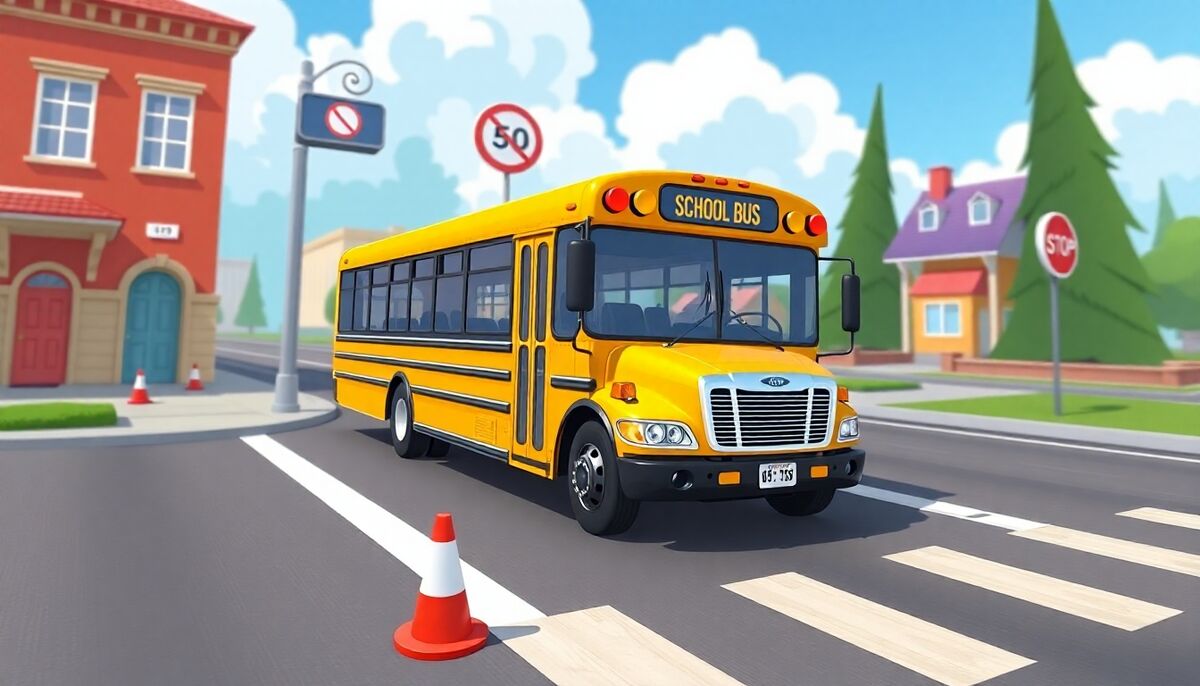
Parking a car is already tricky. Parking a school bus is something else entirely. Bus School Park Driver drops you behind the wheel of a full-length yellow bus and asks you to navigate narrow lots, squeeze past parked vehicles, and reverse into marked zones without clipping a single obstacle. You can play this parking simulation on PlayBino directly in your browser with no downloads required.
The premise sounds simple, but the execution demands real spatial awareness. The bus has a long wheelbase and a wide turning radius, which means small steering mistakes compound quickly. What looks like a straightforward pull-in becomes a multi-point maneuver the moment you realize the lane is two feet narrower than expected.
How the Controls Feel
The control scheme is intentionally stripped back. Acceleration, braking, and steering are the only inputs you manage, which keeps the focus entirely on technique. There are no complicated gear systems or camera toggles to distract from the core challenge.
Steering and Turning Radius
The bus responds realistically to steering input. Tight turns require you to set up your approach from further back than you might expect. Cutting corners too early sends the rear of the bus into barriers, so learning to read the available space before committing to a turn is the central skill the game builds.
Reversing
Several levels specifically require reversing into a parking zone. This flips your steering intuition and forces you to think about the rear of the vehicle rather than the front. Early levels give you room to correct mistakes, but later stages tighten the margins significantly.
Level Design and Difficulty Curve
The game structures its levels as a progressive skill ladder. Early missions introduce wide lots with generous boundaries. As you advance, the environments get busier — more parked vehicles, narrower entry points, and tighter marked zones that demand precise final positioning.
Time constraints add pressure without feeling unfair. You have enough time to plan your approach carefully, but not enough to make repeated mistakes and recover. The combination of spatial pressure and a ticking clock is where the simulation element really shows itself.
- Narrow lane navigation that forces deliberate steering
- Reverse parking challenges that test spatial judgment
- Increasing obstacle density across later levels
- Strict boundary zones that penalize sloppy positioning
- Time limits that reward efficiency over trial and error
Strategy That Actually Helps
The biggest mistake new players make is steering too late. With a vehicle this long, you need to begin your turn earlier than instinct suggests. Give yourself a wider approach angle when entering a parking space, especially when reversing.
Watch the rear corners of the bus, not just the front. Most collisions happen at the back end during turns because players fixate on steering the nose. Treating the rear as its own obstacle to manage changes how you read each level.
When a level has a time limit, resist the urge to rush. A slow, clean approach almost always beats a fast one that requires multiple corrections. Each correction costs more time than the speed you saved.
Who This Game Suits
If you enjoy driving simulations that reward patience and spatial thinking over reflexes, this game lands in a satisfying spot. It is not an action racer — there are no crashes to cause chaos or power-ups to collect. The satisfaction comes entirely from executing a clean park after reading the space correctly.
Players who have tried a similar car parking challenge will recognize the core loop but find the bus format adds a distinct layer of difficulty. Managing a longer vehicle changes every calculation.
Progression and Replay Value
Completing each level cleanly unlocks the next, and the sense of progression feels earned rather than handed to you. Tighter spaces in later missions mean skills you developed early get genuinely tested. Going back to replay earlier levels after completing harder ones shows how much your spatial reading has improved, which makes the progression feel meaningful.