CapsuleMatch: Fast PvP Arena Action for Two Players
What CapsuleMatch Is About
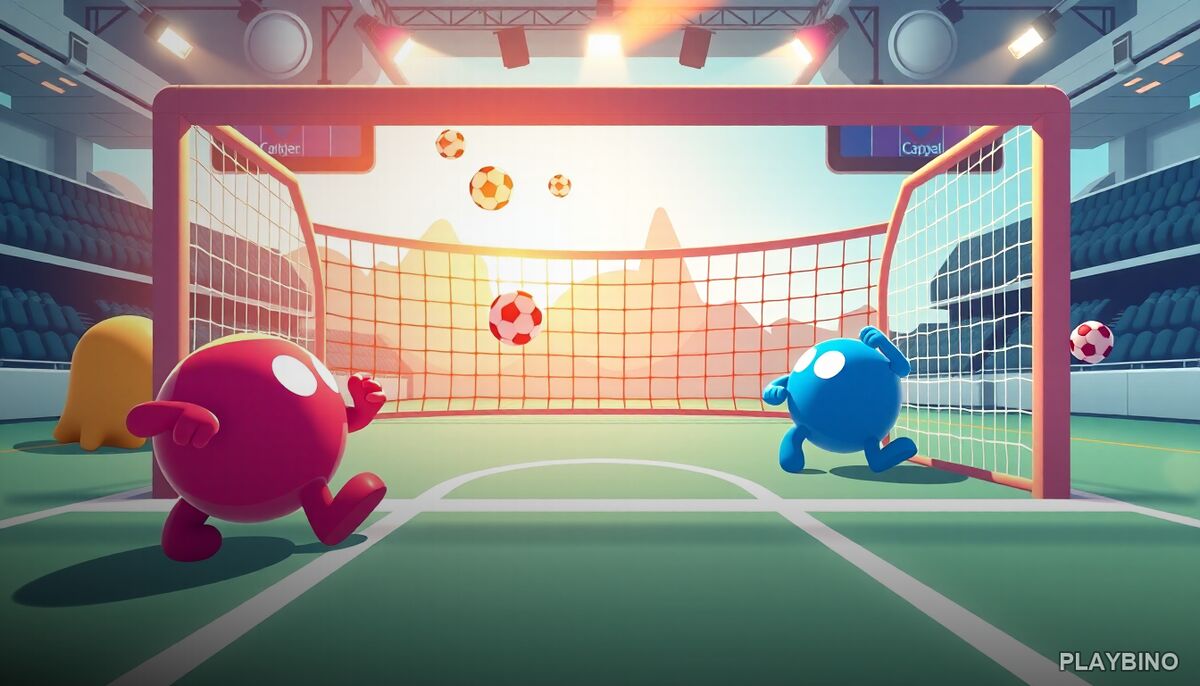
Two players. One arena. First to five goals wins. CapsuleMatch strips competitive action down to its core and then layers in enough chaos to keep every round unpredictable. Each player controls a capsule on their side of the field, pushing, angling, and shooting a ball toward the opponent's net while keeping their own goal covered. The pace is relentless, and a single lapse in positioning can flip the score in seconds.
If you want to feel the pressure of a live PvP duel without loading a heavyweight title, this browser arena game delivers exactly that kind of tension in a compact, instantly playable format.
Arena Movement and Ball Control
The capsule moves fluidly around your half of the field, and the key skill is learning how your angle of approach changes the ball's trajectory. Hitting the ball dead-center sends it straight. Catching it on the edge redirects it at sharper angles, which is where most goals come from. New players tend to rush the ball directly; experienced players start reading the bounce and setting up diagonal shots that are harder to block.
Positioning Under Pressure
Because the arena is shared and both players are always active, leaving your goal completely open is a constant risk. The tension comes from deciding when to push forward and when to hold back. A well-timed defensive retreat can cancel out an opponent's momentum just as effectively as a strong offensive push.
Timing Your Shots
Shooting too early gives your opponent time to react. Waiting too long means losing possession. The rhythm of CapsuleMatch rewards players who can read the ball's speed and commit to a strike at the right moment rather than just chasing it around the arena.
Power-Ups and How They Change the Match
Scattered across the field, power-ups are the wildcard element that separates close matches from blowouts. Three types appear regularly:
- Speed boost — closes gaps fast and lets you chase down loose balls before your opponent reaches them.
- Defensive shield — blocks incoming shots for a short window, giving you a chance to reset when you're under pressure.
- Size increase — expands your capsule, making it easier to intercept the ball and harder for the opponent to slip past you.
Grabbing a power-up at the wrong moment can actually hurt you. Picking up a size increase while you're already out of position just makes you slower to recover. Knowing when to go for a power-up and when to ignore it is a real strategic layer that becomes obvious after a few matches.
The PvP Dynamic
CapsuleMatch is built entirely around the two-player format. There's no single-player mode to ease into — you're immediately in a competitive match, which makes the learning curve steep but also keeps the stakes high from the first second. Playing against a real opponent sitting next to you adds a social dimension that arcade-style browser games rarely capture this cleanly.
The race to five points means matches stay short and decisive. Comebacks are possible because momentum shifts quickly, especially when power-ups are in play. A player down 4-1 can chain a speed boost into two fast goals and suddenly the match feels alive again.
Who Plays Best Here
Players who enjoy action-focused PvP with simple rules but real depth in execution will get the most out of CapsuleMatch. It rewards spatial awareness, quick decision-making, and the ability to read an opponent's movement rather than just reacting to the ball. If you've ever enjoyed air hockey, rocket-style soccer games, or any fast two-player competitive format, the feel here will be immediately familiar.
Pixel Sumo offers a different take on two-player competition if you want to explore another quick-match PvP format on PlayBino with a different set of mechanics and arena rules.
Match Flow and Replayability
Because rounds are short and the score resets each game, CapsuleMatch has a natural rematch pull. Losing by one goal almost always triggers another round. The combination of skill-based movement, unpredictable power-up timing, and the direct head-to-head format means no two matches play out the same way. The arena stays the same, but the decisions inside it never repeat exactly.