Car Park Simulator: 72 Levels of Precision Parking
What This Game Is About
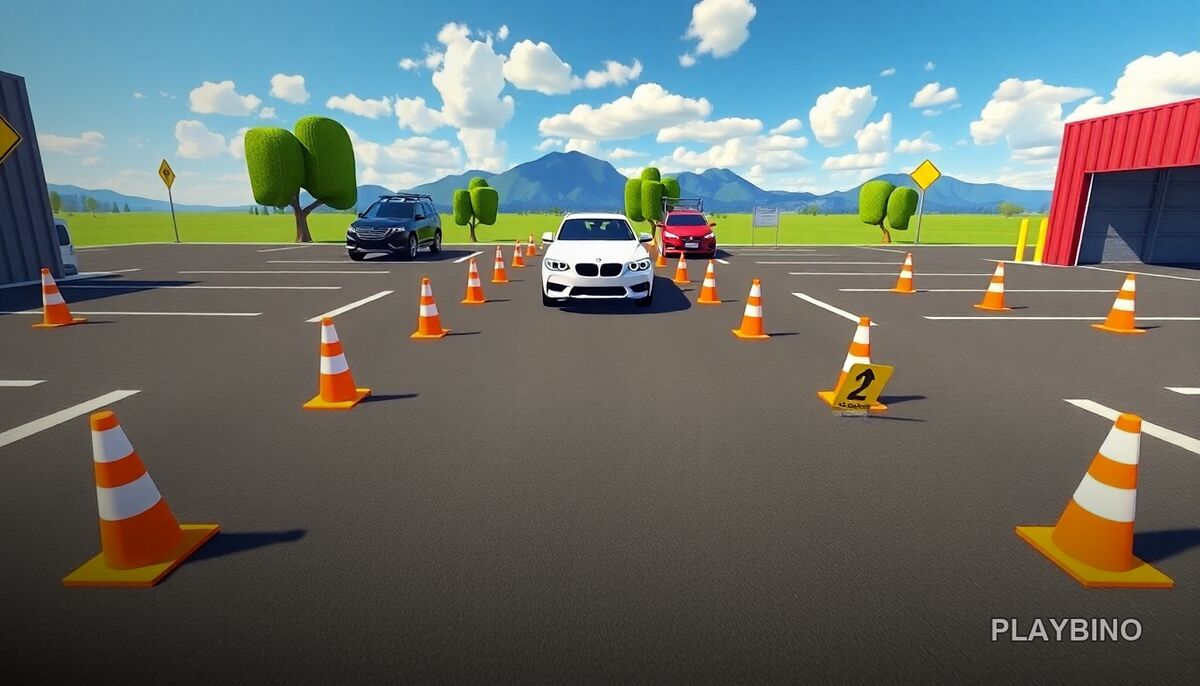
Parking a car sounds simple until the space shrinks to a sliver and obstacles crowd every angle. Car Park Simulator builds its entire experience around that tension, placing you in progressively tighter lots and demanding clean, controlled maneuvering through 72 distinct levels. The challenge is less about speed and more about reading the space before you move.
If you want to jump straight in, this precision parking simulation is available directly in your browser on PlayBino with no downloads required.
How the Controls and Physics Feel
The steering responds in a way that rewards gradual input over sharp corrections. Overcorrecting is one of the most common mistakes early on, especially when reversing into narrow bays. The vehicle has realistic turning radius behavior, which means wide turns need planning and tight spots require multiple small adjustments rather than one sweeping motion.
Reversing and Angle Management
Many levels require backing into marked zones at an angle. Getting comfortable with reverse steering — where left input moves the rear of the car right — is essential. Players who take a moment to position the car before committing to a reverse maneuver consistently perform better than those who rush the approach.
Collision Awareness
Brushing a wall or clipping a barrier counts against you. The game tracks collisions, so smooth lines matter. Slowing down near obstacles and using small steering corrections keeps the car within safe margins even in the tightest passages.
Level Structure and Difficulty Curve
The first handful of levels introduce open lots with generous spacing, giving you time to understand the controls without pressure. By the mid-game, layouts introduce narrow corridors, awkward entry angles, and parked vehicles that shrink your working space considerably. Later stages layer in time limits and moving obstacles that shift the challenge from pure spatial reasoning to quick decision-making under pressure.
- Early levels: open bays, forward parking, minimal obstacles
- Mid levels: reverse parking, tight corridors, angled spaces
- Late levels: time pressure, moving hazards, complex multi-step maneuvers
The progression feels deliberate. Each new mechanic is introduced gradually rather than dropped without context, which makes the difficulty curve feel earned rather than arbitrary.
Spatial Awareness as the Core Skill
More than any other skill, spatial awareness determines how quickly a player improves. Understanding where the car's corners are relative to nearby objects, anticipating how a turn will play out before executing it, and recognizing when to stop and reposition rather than push through — these habits separate clean runs from collision-heavy attempts.
Repeated practice on the same level builds muscle memory. A stage that feels impossible on the first attempt often clicks after two or three tries once the correct approach line becomes clear. The game rewards patience over aggression.
Who This Game Suits
Players who enjoy simulation and puzzle mechanics will find a satisfying loop here. The satisfaction comes not from fast reflexes but from executing a clean park after careful planning. It also works well as a short-session game — individual levels are brief, so progress feels steady even in five-minute play windows.
If car-based obstacle challenges appeal to you, another vehicle-focused browser challenge worth exploring is Obby: Training by Car, which takes a different approach to car-and-obstacle gameplay.
Strategy for Tougher Stages
On levels with time pressure, resist the instinct to rush. A fast but collision-heavy run often scores worse than a slightly slower clean attempt. Identify the target bay first, plan the approach line, and commit to it. On stages with moving obstacles, watch the pattern for a full cycle before entering — most obstacles follow predictable loops that create clear windows to pass through safely.
Developing a habit of small steering corrections rather than large inputs will carry you through the hardest layouts the game offers.