Car Stunt Ramp Challenge: Physics, Ramps, and High-Speed Landings
What This Game Is About
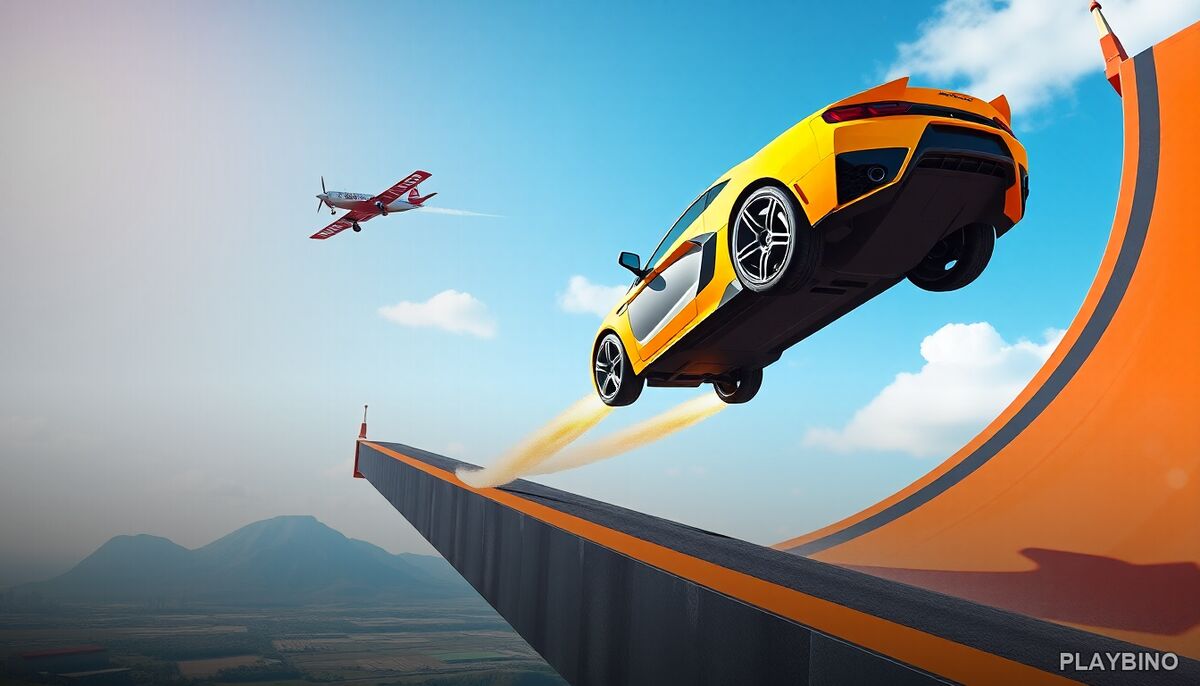
Some racing games are about lap times. Car Stunt Ramp Challenge is about something more chaotic and satisfying: launching a high-performance vehicle off a towering ramp, spinning through the air, and somehow sticking the landing without wrecking. The physics engine is the centerpiece here, calculating every rotation, every impact angle, and every moment of airtime with enough accuracy that a bad approach genuinely feels like your fault.
You can play Car Stunt Ramp Challenge directly in your browser without any downloads, and the courses scale in difficulty fast enough to keep even experienced stunt drivers working for clean runs.
How the Courses Are Structured
Early tracks introduce the core loop: build speed, hit the ramp at the right angle, manage your rotation mid-air, and land with enough stability to keep moving. That sounds straightforward until the game starts stacking complications.
Ramp Angles and Velocity Windows
Some ramps reward raw speed. Others have a narrow velocity window where going too fast sends you tumbling past the landing zone, and going too slow means you drop short. Reading each ramp before committing to an approach is a real skill, and the game does not spell out the correct speed for you. You figure it out through repetition and crash analysis.
Sequences and Chained Stunts
Later courses stop treating each ramp as an isolated obstacle. Instead, they chain multiple launches together, where a poor landing from the first ramp bleeds into a bad approach on the second. Managing momentum across a full sequence becomes the main challenge, and it demands both consistency and adaptability.
Vehicle Behavior During Flight
Not all cars handle the same way once they leave the ramp. Heavier vehicles are harder to rotate quickly but tend to land more stably. Lighter builds spin faster but can overcorrect in the air. Understanding how your chosen vehicle behaves at different rotation speeds changes how you approach each course.
Split-second adjustments mid-flight are possible, and learning when to correct versus when to commit to a rotation is one of the more satisfying skills the game teaches. Overcorrecting is a common mistake early on, and it usually ends in a rough landing or a complete wipe.
What Makes Each Run Feel Different
- Ramp placement at awkward angles forces different approach lines each time
- Speed management matters more than reflexes on most tracks
- The physics system punishes sloppy landings even when they look close
- Course progression introduces new ramp types that require adjusted technique
- Attempting more ambitious maneuvers adds risk but makes clean completions more rewarding
Strategy for Cleaner Runs
Timing Your Acceleration
Flooring the throttle from the start is not always the right call. Some ramps sit far enough down the track that you have time to build speed gradually, which gives you more control over your final velocity at the lip. Identify where the ramp starts and work backward to decide when to accelerate hard.
Reading the Landing Zone
Before each attempt, look at where the landing zone is and how much space you have. A flat landing surface rewards stable, low-rotation approaches. Angled or narrow zones require more precise flight control. Adjusting your rotation target based on the landing geometry cuts down on unnecessary crashes.
A Similar Stunt Experience Worth Trying
If the ramp-and-landing format clicks for you, this breakdown of Car Stunt King covers another browser stunt game that pushes the concept further with its own course design and vehicle challenges. Both games share the same core appeal: physics-driven stunts where skill and repetition actually pay off.