Cartoon Bricks Vip: Angles, Chain Reactions, and Satisfying Clears
What Kind of Game Is This?
Cartoon Bricks Vip sits at the crossroads of arcade energy and puzzle thinking. The setup is straightforward: a board filled with numbered bricks, a ball launcher at the bottom, and the goal of reducing every brick's number to zero. Each hit subtracts one, so high-numbered bricks require multiple passes. The challenge isn't just hitting bricks — it's hitting the right ones, in the right order, with the right angle.
The one-touch controls keep everything focused on strategy. You aim, you release, and you watch the ball ricochet across the board. Play it directly in your browser and the simplicity becomes apparent immediately — but so does the depth hiding underneath it.
The Angle System and Why It Matters
Most of the decision-making in this game happens before the ball leaves the launcher. The angle you choose determines which bricks get hit, how many bounces the ball takes, and whether you trigger a chain reaction or waste a shot on a single brick.
Ricochet Logic
Walls are your best tool. A ball that bounces off a side wall can travel across the entire board, hitting bricks on both sides of the screen in one run. Learning to read the geometry — predicting where the ball will land after two or three bounces — is what separates a good shot from a great one.
High-Number Bricks
As stages progress, bricks appear with much larger numbers. These can't be cleared in a single round. The smart approach is to route shots through these high-value targets repeatedly over several turns, chipping them down while also clearing the smaller bricks that build up around them.
Stage Progression and Difficulty Curve
The early stages introduce the mechanics gradually. Layouts are open, brick numbers are low, and there's room to experiment. By the mid-game, the board becomes more crowded and the numbers climb fast. Later stages introduce tighter formations where a single misplaced shot can leave a cluster of bricks untouched at the top of the screen — which spells trouble when they inch downward.
Hundreds of stages mean the difficulty never plateaus for long. Each new set of levels tends to introduce a layout twist that forces a slightly different approach, keeping the puzzle element fresh rather than letting it become purely mechanical.
Visual Style and Arcade Feel
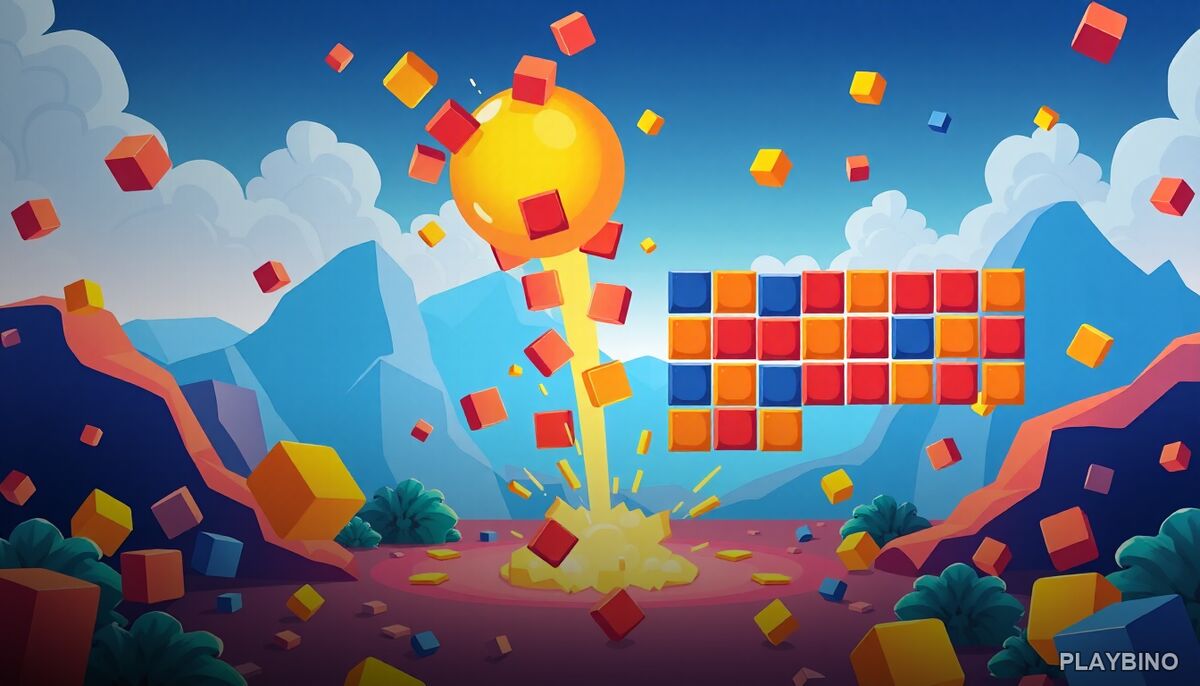
The cartoon aesthetic does real work here. Bright colors make it easy to distinguish brick values at a glance, and the glowing effects on chain reactions give each successful volley a satisfying visual punch. It never feels cluttered despite the busy boards — the design keeps the important information readable at all times.
The arcade energy comes through in the pacing. There's no slow-down between shots, and the ball moves with enough speed that watching a well-angled ricochet unfold feels genuinely rewarding. That moment when a single shot clears a dozen bricks in sequence is the kind of payoff that keeps players returning to the next stage.
Who This Game Suits
- Players who enjoy single-player puzzle games with a spatial reasoning element
- Anyone looking for a casual arcade experience that still rewards careful thinking
- People who like incremental progression through a large number of stages
- Fans of ball-bouncing mechanics and satisfying chain reactions
It works well in short sessions — a few stages at a time — but the stage count and steady difficulty increase also support longer play without the experience becoming repetitive.
A Different Kind of Arcade Challenge
If the arcade side of Cartoon Bricks Vip appeals to you, the classic movement-based tension in Snake: Remix offers a completely different kind of single-player challenge worth exploring on PlayBino. The mechanics are unrelated, but both games share that quality of being instantly accessible while hiding real strategic depth beneath the surface.