Catch Him: Chase Mechanics, Power-Ups, and Survival Strategy
The Chase Concept
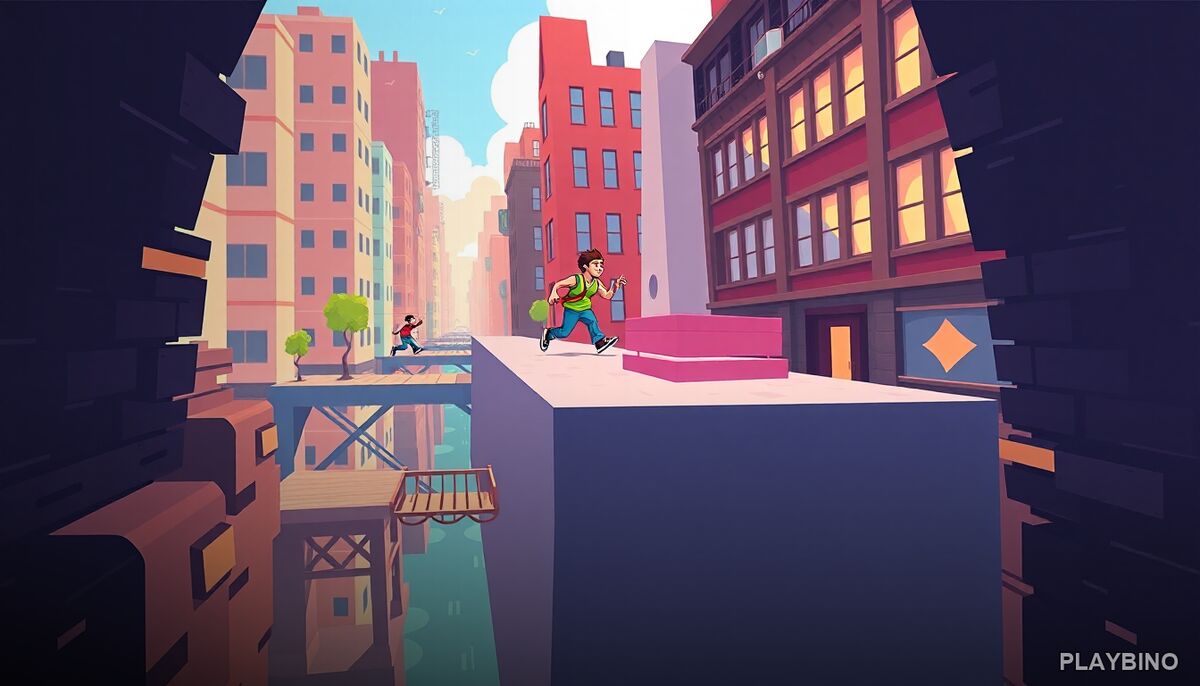
Most endless runners put you in front of obstacles and ask you to survive. Catch Him flips that dynamic — you're the pursuer, not the one running away. The thief is always ahead, weaving through a crowded city environment, and your job is to close the gap before he vanishes. That single shift in framing changes how the whole game feels. You're not just reacting to obstacles; you're reading a moving target while also managing your own path through traffic, barriers, and tight corners.
The setup is simple enough to understand immediately, but the execution demands real focus. start a run here and you'll notice within the first few seconds that the thief doesn't move predictably — he cuts left, ducks right, and accelerates when you get close.
How the Pursuit Actually Works
At its core, this is an action arcade game built around closing distance. The thief moves at a set pace that gradually increases as you progress through different urban settings. Your character follows a lane-based path, but you have to make quick lateral decisions to avoid obstacles that slow you down. Hit a barrier or get caught in a crowd, and the thief extends his lead. Let that gap grow too wide, and the chase ends.
Obstacles and Hazards
The city streets are not empty. Pedestrians, parked vehicles, barriers, and sudden turns all create friction between you and your target. Some obstacles are fixed and predictable once you learn the level layout. Others appear with less warning, especially as the game accelerates. The key is to stay in motion and avoid full stops — a brief slowdown is recoverable, but a hard collision usually costs you the chase.
Power-Up Timing
Scattered across each route are power-ups that temporarily boost your speed or give you other short-term advantages. The temptation is to grab every one you see, but placement matters. Some power-ups require a detour that costs you more distance than the boost recovers. The better play is to prioritize power-ups that appear directly in your path or when the thief has already extended his lead significantly.
Reading the Thief's Movement
The thief doesn't just run in a straight line. He anticipates your position and makes directional changes designed to break your momentum. Early levels follow loose patterns that you can start to read after a few attempts. Later urban settings introduce sharper turns and denser crowds, which makes predicting his next move harder. Watching his trajectory rather than reacting to each individual turn gives you a slight edge — you can pre-position yourself instead of always playing catch-up.
Progression and Difficulty
Each level increases the thief's base speed and introduces new environmental complexity. The city settings change visually and structurally, with some areas featuring narrow corridors and others opening into wide intersections with multiple lane choices. That variety keeps the chase feeling fresh rather than repetitive, even though the core mechanic stays consistent throughout.
- Speed increases with each successful level
- New obstacle types appear in later urban environments
- The thief's evasion patterns become less predictable over time
- Power-up frequency adjusts as difficulty scales
Who This Game Suits
If you like arcade games that reward pattern recognition and quick reflexes rather than pure memorization, the format here works well. The endless runner structure means there's no fixed endpoint — you're always pushing to beat your previous distance or catch time. Jelly Haven, another browser game with its own arcade rhythm, offers a different kind of quick-session challenge if you want to switch things up between runs.
Catch Him on PlayBino runs entirely in the browser with no download required. Sessions are short enough to fit into a break but engaging enough that replaying for a better result feels natural. The pursuit format gives it a distinct identity within the endless runner genre — one where the goal isn't just survival, but actually winning the chase.