Colored Rings: Untangle the 3D Puzzle One Hoop at a Time
What Kind of Puzzle Is This?
Colored Rings sits firmly in the brain and logic puzzle category, but it approaches the genre from a three-dimensional angle that most flat puzzles never attempt. Instead of sliding tiles or matching colors on a grid, you are working with physical space. Rings interlock in real 3D clusters, and your job is to figure out which one can move first without tightening the knot for everything else. The challenge is spatial, patient, and genuinely satisfying when a tangle finally comes apart.
If you want to jump straight in, the full puzzle experience is available on PlayBino without any download or installation.
The Core Mechanic: Rotation and Separation
The gameplay loop is straightforward to describe but harder to execute. A cluster of vibrant interlocked rings appears on screen, and you rotate the entire structure to find angles where individual hoops can slide free. The rotation mechanic is central to everything. You are not just pulling rings apart randomly — you are hunting for the precise orientation where a specific ring has a clear path out of the formation.
Spatial Reasoning Over Speed
This is not a reflex game. There is no timer pressuring you into mistakes. The challenge is purely cognitive: identifying which ring sits on the outside of the tangle, understanding how it connects to its neighbors, and rotating the cluster until that exit angle reveals itself. Players who enjoy logic puzzles and three-dimensional thinking will find this mechanic deeply engaging.
Order Matters
One of the subtler elements of the puzzle design is sequence. Pulling the wrong ring first can lock other hoops into tighter positions, making subsequent moves harder. Part of the skill is reading the structure before touching anything — tracing the path of each ring mentally before committing to a move. The game rewards observation as much as action.
How Difficulty Scales Across Levels
Early levels introduce two or three rings with simple overlaps, giving new players time to understand how the rotation and separation system works. As you progress, the clusters grow larger and the weaving patterns become more intricate. Later levels can feature rings threaded through each other in ways that look impossible at first glance. The escalation feels natural rather than sudden, which keeps the puzzle logic approachable even as the complexity increases.
What Makes the 3D Environment Work
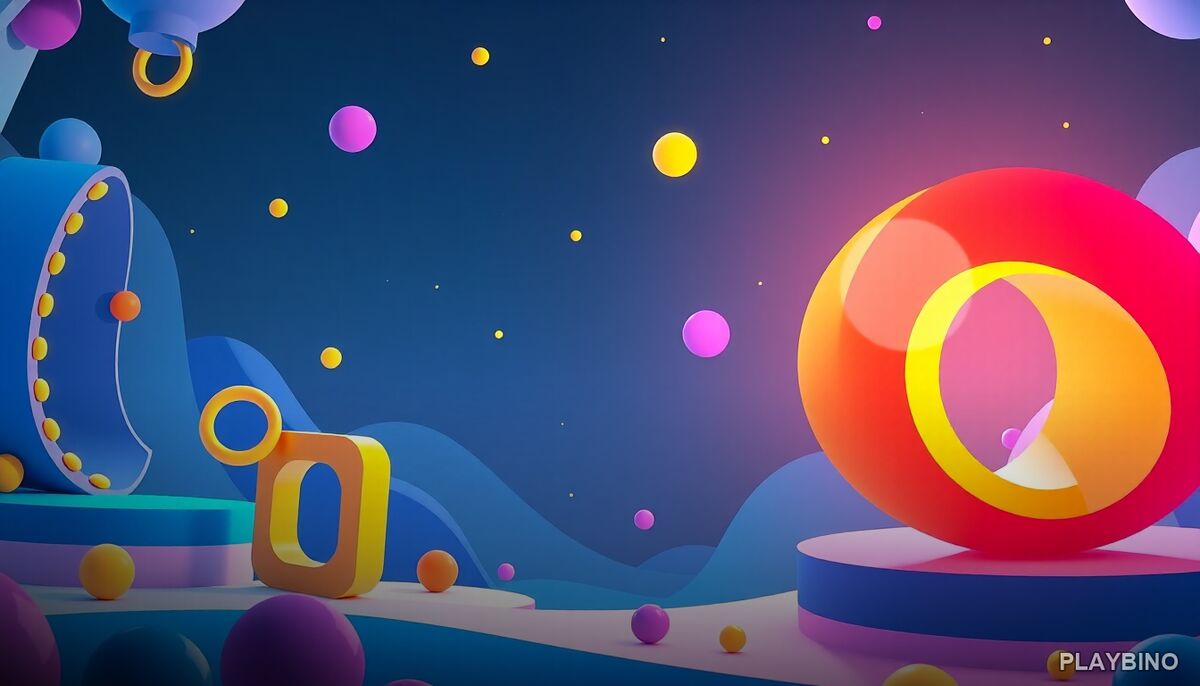
Many puzzle games use a 3D visual style purely for aesthetics, but here the three-dimensional environment is functional. Rings that appear tangled from one angle can reveal a clear separation point when you rotate the cluster thirty degrees. The visual design uses distinct colors on each ring, which helps players track individual hoops through complex overlaps without losing their place. The rendering is clean enough that spatial relationships stay readable even in dense formations.
Who This Game Suits
Colored Rings works well for anyone who enjoys single-player brain puzzles that require careful observation rather than quick reactions. The one-player format keeps the focus entirely on the logic challenge. There is no competitive pressure, no score multiplier for speed — just the satisfaction of methodically dismantling a tangle that initially looked unsolvable.
Players who enjoy puzzle games built around unconventional mechanics might also find value in this alternative logic challenge, which approaches brain puzzles from a completely different angle.
Strategy Worth Knowing Before You Start
- Rotate the full cluster slowly before attempting any move — a full 360-degree scan often reveals an obvious starting ring.
- Target outer rings first