Counter Craft 5: Surviving the Zombie Waves on Dust 2
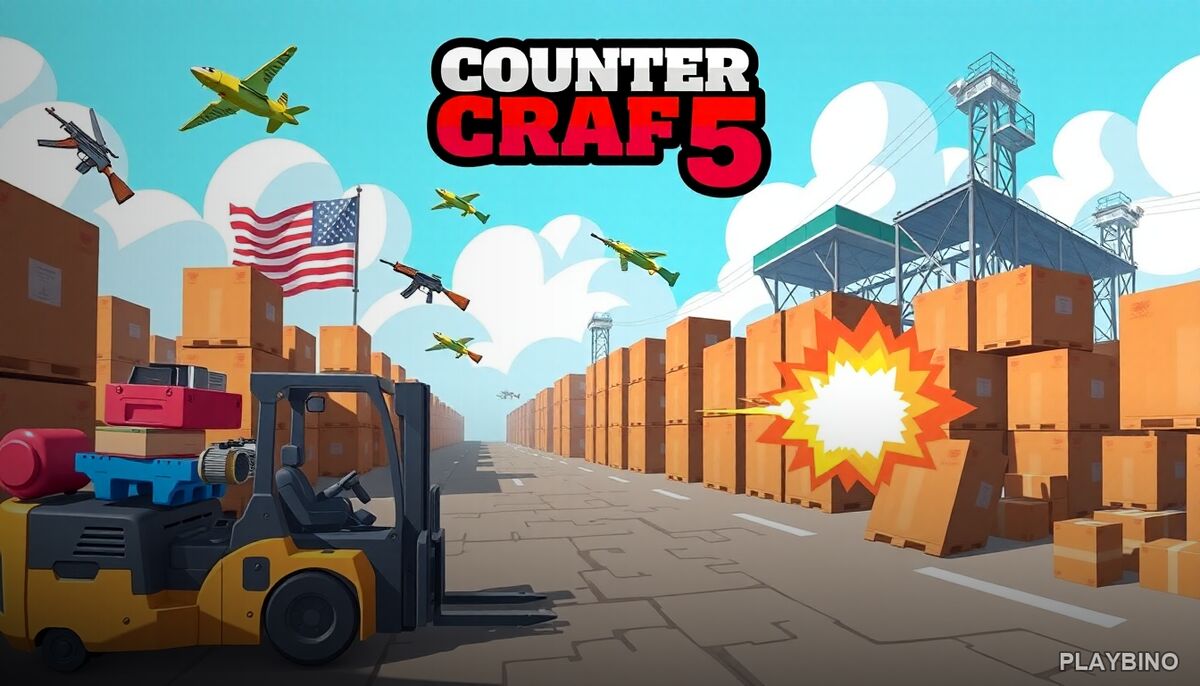
Blocky Carnage on a Familiar Map
Dust 2 is one of the most recognizable layouts in shooter history, and Counter Craft 5 turns it into a zombie survival arena with voxel-style visuals that make every explosion and undead figure pop against the structured environment. The blocky aesthetic is not just cosmetic — it shapes how you read the battlefield, track enemy clusters, and identify cover. Play it directly in your browser and the combination of familiar geometry and pixelated chaos hits differently than a standard zombie shooter.
Wave Structure and Pressure
The game operates on a wave-based progression system. Each round sends more zombies from multiple entry points, and the undead grow increasingly persistent as you advance. Early waves give you room to breathe and experiment with positioning. Later waves demand fast decisions — where to stand, which direction to prioritize, and when to fall back.
Ammunition is finite, so spraying without aim will leave you exposed mid-wave. The pressure to conserve shots while maintaining enough aggression to clear clusters is the central tension of every run.
Positioning Matters More Than Speed
Because Dust 2 has corridors, open sites, and choke points, where you stand defines what you can survive. Holding a narrow lane limits the angles zombies can approach from. Moving into open areas creates crossfire risk but can open up TNT chain reaction opportunities. Neither approach is always correct — reading each wave before committing to a position is the smarter play.
TNT and Chain Reactions
Scattered TNT boxes are one of the most rewarding mechanics in the game. A well-timed shot into a box near a zombie cluster clears multiple targets at once, saving ammunition and buying space. The placement of these boxes across the map is not random — learning where they sit relative to common zombie paths turns explosive shortcuts into a consistent strategy rather than a lucky bonus.
Chain reactions, where one explosion triggers another nearby box, are possible and satisfying when they land. They require spatial awareness and a quick read of the crowd, which adds a layer of strategy beyond raw shooting accuracy.
Weapons and Arsenal Progression
Handling Differences
Each firearm in the expanding arsenal behaves differently. Some weapons suit close-range crowd control while others reward precise mid-range shots. Experimenting with different guns as they unlock is encouraged — sticking to a single weapon through every wave will eventually leave gaps in your coverage.
Resource Management Under Pressure
Ammo management is not just about conserving shots. It involves knowing when a reload animation leaves you vulnerable, which weapon to switch to when one runs dry, and whether a TNT detonation can substitute for a burst of gunfire. Players who treat resource management as a core skill rather than an afterthought will last significantly longer in later waves.
Who This Game Suits
Counter Craft 5 works well for players who like action games with a strategic layer. Pure reflex shooters will find the ammo economy and positioning demands add meaningful decisions on top of the shooting. Strategy-minded players will appreciate that the map layout, TNT placement, and wave patterns reward planning. The 1-player format keeps the focus entirely on personal improvement and score chasing.
- Voxel visuals on the Dust 2 layout create a distinctive zombie survival setting
- Wave-based progression with increasing zombie density and aggression
- TNT boxes reward spatial awareness and chain reaction planning
- Multiple firearms with distinct handling encourage experimentation
- Ammo conservation and positioning are as important as shooting speed
A Different Zombie Shooter to Try Next
Zombie shooting on PlayBino comes in several flavors beyond the voxel arena format. Super Mario Shooting Zombie takes a completely different visual and structural approach to the same undead-elimination concept — that browser zombie challenge is worth a look if you want to compare how two very different games handle the same core premise.
"