Crazy Golf III: 23 Holes of Precision Putting and Puzzle Design
What Kind of Game Is This?
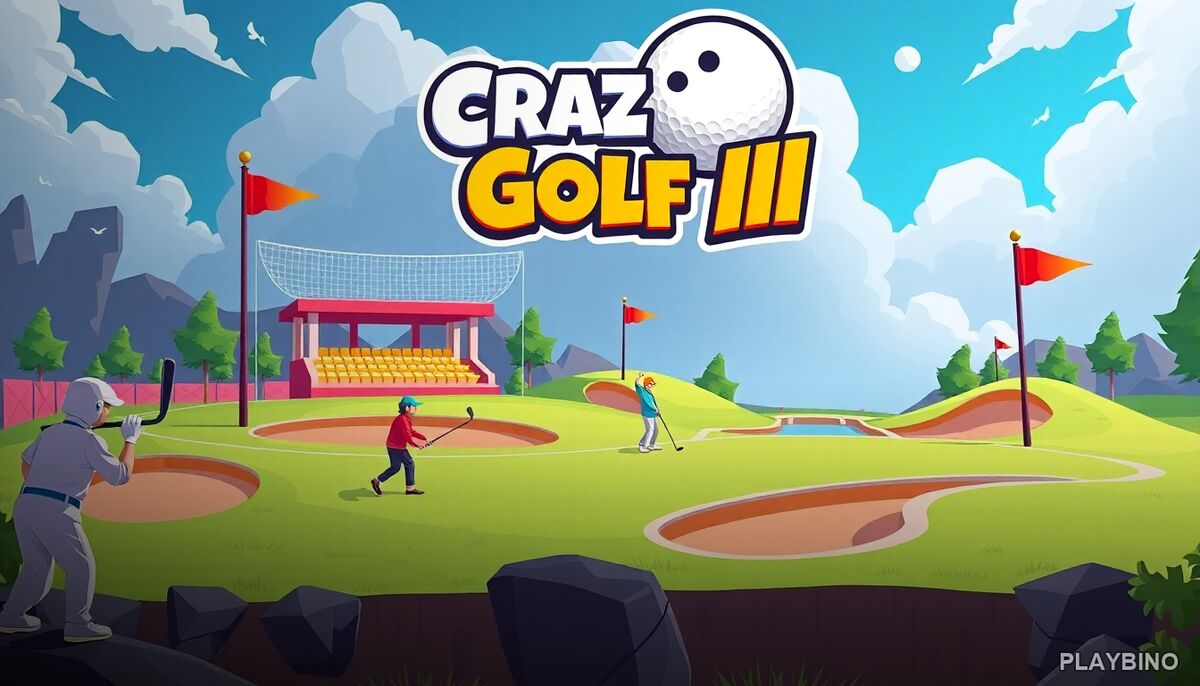
Miniature golf in browser form sounds simple, but Crazy Golf III earns its title. Across 23 hand-crafted holes, the game layers slopes, curves, walls, and elevation changes into layouts that demand real thought before each swing. It sits comfortably in the puzzle and skill category — not because there are timers or enemies, but because every hole is essentially a spatial problem waiting to be solved. Play it directly in your browser and the first few holes ease you in gently, but the course design gets progressively more demanding.
Reading the Course Before You Swing
The most important habit in Crazy Golf III is pausing before you pull back the club. Each hole presents a unique terrain layout, and rushing into a shot almost always costs you strokes. The game rewards players who take a moment to trace the ball's likely path mentally — identifying where a slope will redirect momentum, where a wall can be used as a bank, and where tight corners require a softer touch.
Elevation and Slope Logic
Slopes are the core mechanical challenge. A ball rolling downhill carries more speed than expected, while uphill shots need extra power to reach the cup. Some holes place the flag at a lower elevation than the tee, which tempts players into overshooting. Learning to calibrate power based on vertical change is one of the most satisfying skills to develop across the 23 holes.
Using Walls and Angles
Several holes are designed around bank shots — intentional ricochets off walls to reach otherwise inaccessible positions. Recognizing these moments separates average scores from hole-in-one attempts. The physics feel consistent enough that once you understand how the ball bounces, you can plan multi-wall routes with reasonable confidence.
Power Control and Shot Timing
The putting mechanic uses a drag-and-release system. Pulling further back increases shot power, and the visual indicator helps estimate distance. However, the real skill is in the release — letting go at the right moment to match the intended direction. On straight holes, this is forgiving. On angled or obstacle-heavy layouts, a few degrees off target can send the ball into a hazard or completely past the cup.
- Short holes near walls: use minimal power and aim for controlled bounces
- Long straight holes: full power shots work, but watch for subtle terrain curves
- Elevated targets: add 20-30% more power than the distance alone suggests
- Tight corner holes: aim for the inner wall first, not directly at the flag
Scoring Strategy Across 23 Holes
Par varies by hole, and the game tracks your cumulative score across the full course. Some holes have a par of 2, rewarding players who can execute a clean two-shot sequence. Others sit at par 3 or 4, giving more room for error but also more opportunity to go under par with smart play. Hole-in-ones are genuinely achievable on several layouts — particularly the shorter holes with clear sightlines — and they feel earned rather than lucky when they happen.
Unblocked Golf Challenge is another browser golf game worth comparing. That comparable golf experience takes a different approach to course design, so it's useful context if you want to see how the genre varies across titles on PlayBino.
Who This Game Suits
Crazy Golf III works well for players who enjoy single-player puzzle challenges that reward observation and patience rather than fast reflexes. The colorful outdoor environments keep the tone light, and there's no penalty for retrying a hole — which makes experimentation feel low-stakes. If you find yourself replaying holes specifically to improve your score rather than just finish them, the game has done its job. The 23-hole structure gives enough variety to stay engaging without overstaying its welcome.