Crazy Room 3D: Puzzle Logic Inside a 3D Space
What Kind of Puzzle Is This?
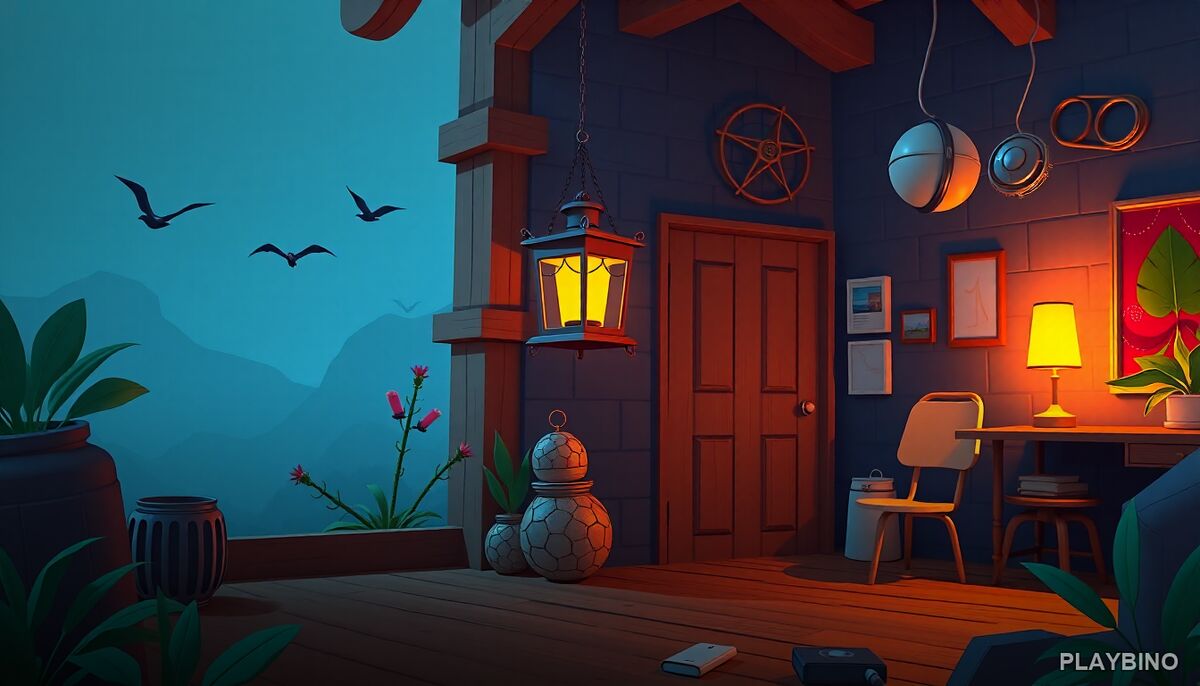
Crazy Room 3D belongs to the object-interaction genre of brain puzzles, where the challenge isn't reflexes or speed but observation and logic. Each room presents a collection of seemingly unrelated items, and your job is to figure out which combinations trigger something new. The three-dimensional environment makes this feel distinct from flat point-and-click puzzles — rotating your view is part of the solving process, not just a visual feature.
If you want to jump straight in, try the puzzle directly in your browser and see how the first room sets the tone before reading further.
How the Object Interaction Works
The core mechanic is experimentation. You pick up or interact with scattered objects and test them against each other or against the environment. Some pairings produce immediate results — a visual transformation, a sound cue, or a newly revealed item. Others require you to think about what the object represents rather than what it literally is.
Reading the Room
Before touching anything, it pays to observe the full space. The 3D perspective lets you rotate the camera, and details visible from one angle may be completely hidden from another. A shadow, a label, or a small prop on a shelf can be the key that unlocks the next step. Treating observation as an active skill rather than a passive starting point is what separates quick completions from long frustrating loops.
Lateral Thinking Over Trial and Error
While some solutions feel intuitive once you spot the right clue, others push you toward lateral thinking — connecting ideas that don't have an obvious physical relationship. The game rewards players who pause and consider the logic of the room's theme rather than randomly clicking everything. That said, random experimentation does occasionally produce accidental breakthroughs, which keeps the pacing from feeling too rigid.
Room Progression and Difficulty Curve
Each completed room introduces a fresh set of objects and a new spatial layout. Early rooms establish the interaction language — what kinds of combinations are possible and how the game signals that something has worked. Later rooms layer in more steps, requiring you to solve smaller sub-puzzles before the main solution becomes accessible.
The difficulty curve is gradual rather than steep. You're rarely stuck in a way that feels unfair; more often, the solution is nearby but just out of frame or slightly outside the angle you've been using. That balance between challenge and accessibility is one of the stronger design choices here.
Why the 3D Perspective Matters
Most browser-based logic puzzles work on a flat plane, which limits how much spatial information the designer can hide. The 3D environment in this game changes that dynamic significantly. Objects can be placed behind other objects, underneath surfaces, or at heights that require a deliberate camera adjustment to spot. This makes the act of looking — not just the act of combining — a genuine puzzle mechanic.
Players who enjoy spatial reasoning and visual problem-solving will find this format more satisfying than standard 2D escape-style puzzles. Blocks 3D takes a different approach to three-dimensional puzzle logic, and that game's spatial challenge is worth exploring once you've worked through a few rooms here.
Who This Game Suits
- Players who enjoy logic and brain puzzles over action or speed
- Anyone who likes escape-room style thinking without a timer
- Casual players looking for a single-player challenge with clear progression
- People drawn to spatial reasoning and 3D environments
Crazy Room 3D is available on PlayBino without any download or installation. The 1-player format means the pace is entirely yours — no pressure, no countdown unless the room design introduces one. It's a clean, focused puzzle experience built around curiosity and observation.