Dark Assassin: Castle Traps, Timing, and Survival
What Kind of Game Is This
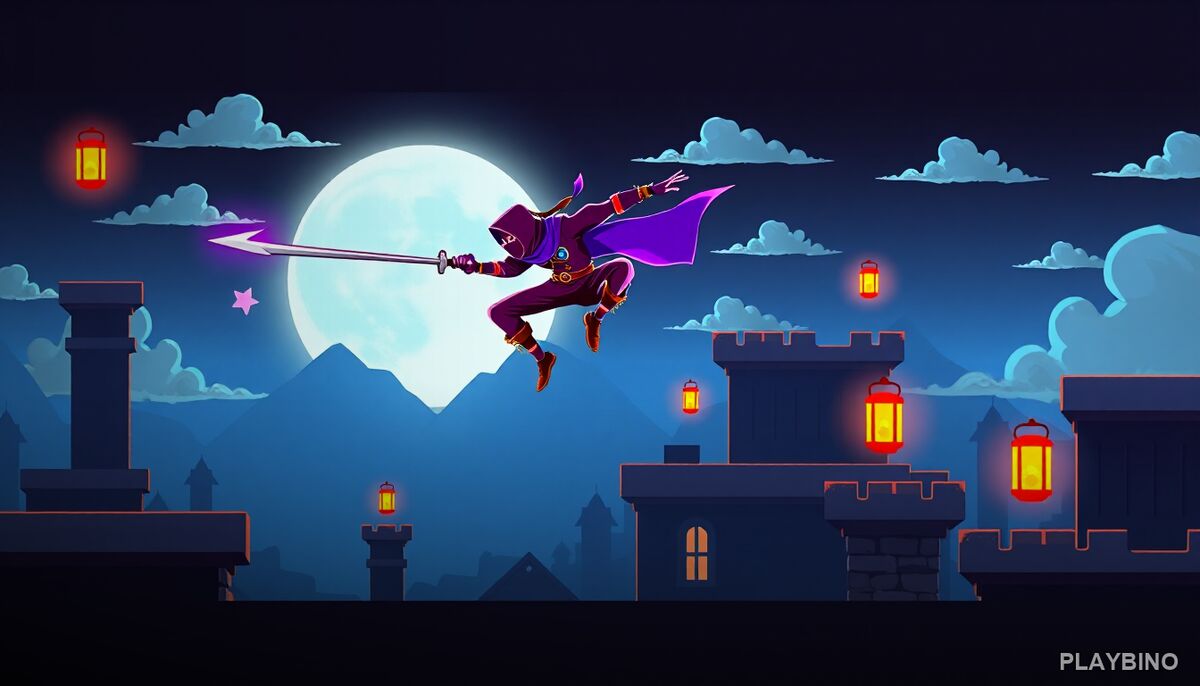
Dark Assassin places you inside a crumbling, shadowy castle where every room is built to kill you. The premise is simple: find the hidden key, survive the path to it, and reach the exit. What makes it demanding is that neither the key nor the exit is handed to you easily. The castle is packed with traps, narrow ledges, and hazards that punish rushed movement and reward careful observation. If you enjoy action games with a strong skill component, this ninja platformer on PlayBino delivers a focused and unforgiving challenge.
The Core Loop
Each level follows the same structure: enter a chamber, locate the key, collect it, then find and reach the exit. That loop sounds manageable until you realize the key is almost always placed in the most dangerous part of the room. Spikes, swinging blades, moving platforms, and patrolling enemies guard every route. Once you grab the key, the exit opens, but getting back out alive is often just as difficult as reaching the key in the first place.
Hazards and Traps
The trap design is deliberate. Patterns repeat with slight variations, which means observation pays off. Watching a blade swing two or three times before committing to a jump is not hesitation, it is the correct strategy. Rushing through any section almost guarantees a reset. The dark visual style reinforces this, making each room feel genuinely threatening rather than decorative.
Enemy Movement
Some chambers include enemies with fixed patrol routes. Learning those routes is part of the puzzle. Unlike the traps, enemies require you to time your movement around a second variable, which adds a layer of complexity to rooms that already have active hazards. The combination of static traps and moving enemies is where the game's difficulty peaks.
Controls and Feel
The controls are kept minimal by design. Movement, jumping, and positioning are all you manage. There are no special abilities, no attack moves, and no upgrade system to lean on. That simplicity is intentional. The game wants your full attention on the environment, not on managing a skill tree. A ninja who moves cleanly and times jumps correctly will progress. One who rushes will not.
What the Difficulty Actually Demands
Dark Assassin is not a reflex game in the traditional sense. The traps are fast, but they are also readable. The real demand is patience. Players who stop, study the room, and identify the safest window for each movement will find the difficulty manageable. Players who treat it like a fast action game will reset constantly. The tension comes from knowing exactly what to do and then executing it without error.
- Study trap timing before moving through any section
- Collect the key before looking for the exit, not simultaneously
- Use the dark atmosphere as a cue, brighter areas often signal hazards ahead
- Treat each failed attempt as a map of what not to do
Atmosphere and Level Design
The castle setting does real work here. The dark color palette and ambient tension make the game feel heavier than a typical browser platformer. Levels are compact but dense, which keeps the pacing tight without making any single room feel like a slog. As you progress, chamber layouts become more complex and trap combinations more layered, so the learning curve stays active throughout.
Players who like pressure-based skill games with an escape or survival structure might also enjoy another browser challenge built around narrow escapes and tight movement. The genre shares a lot of the same tension and timing demands.
Who This Game Suits
Dark Assassin works best for players who enjoy methodical action, where success comes from reading patterns rather than raw speed. The ninja theme and castle setting give it atmosphere, but the gameplay is fundamentally about precision and composure under pressure. If you have patience for trial-and-error progression and satisfaction in clean execution, this one holds up across multiple levels.
"