Digital Circus Dart: Precision, Timing, and Carnival Chaos
What You're Actually Doing
At its core, Digital Circus Dart is a one-player skill game built around a single repeated action: throwing darts at spinning targets. That sounds simple, and the opening rounds are forgiving enough to get you comfortable. But the game layers in enough variables — target spin speed, distance changes, and an unpredictable character named POMNI — that the challenge builds quickly. Try the full challenge and you'll notice within a few throws that raw clicking isn't enough. Timing and restraint matter more than speed.
The POMNI Problem
POMNI is the central hazard. This quirky character pops into the throwing lane at irregular intervals, and hitting them costs you. The difficulty isn't just that POMNI appears — it's that the appearances become harder to predict as the pace increases. Early on, you can afford a cautious pause before each throw. Later, that pause shrinks, and you're forced to make faster reads on whether the lane is clear.
Reading the Pattern
POMNI doesn't move on a strict timer, but there are visual cues if you watch closely. The character tends to linger briefly before retreating, which creates a small window for a safe throw. Recognizing that window — and not rushing the release — is what separates consistent scorers from players who keep hitting the wrong target.
Target Mechanics and Scoring
Targets spin at varying speeds depending on how far into a session you are. Closer targets rotate more slowly and reward moderate points. Distant ones spin faster and offer bigger payouts, with bullseyes at the center delivering the highest score multiplier. The game doesn't force you to go for the center, but if you're chasing a high score, you'll need to hit it regularly.
Adjusting Between Throws
One of the underrated demands of this game is the adjustment between rounds. Targets don't always appear at the same distance, so your release timing from the previous throw may not apply to the next one. Players who treat each throw as a fresh read — rather than repeating the same motion — tend to perform more consistently over longer sessions.
The Carnival Atmosphere
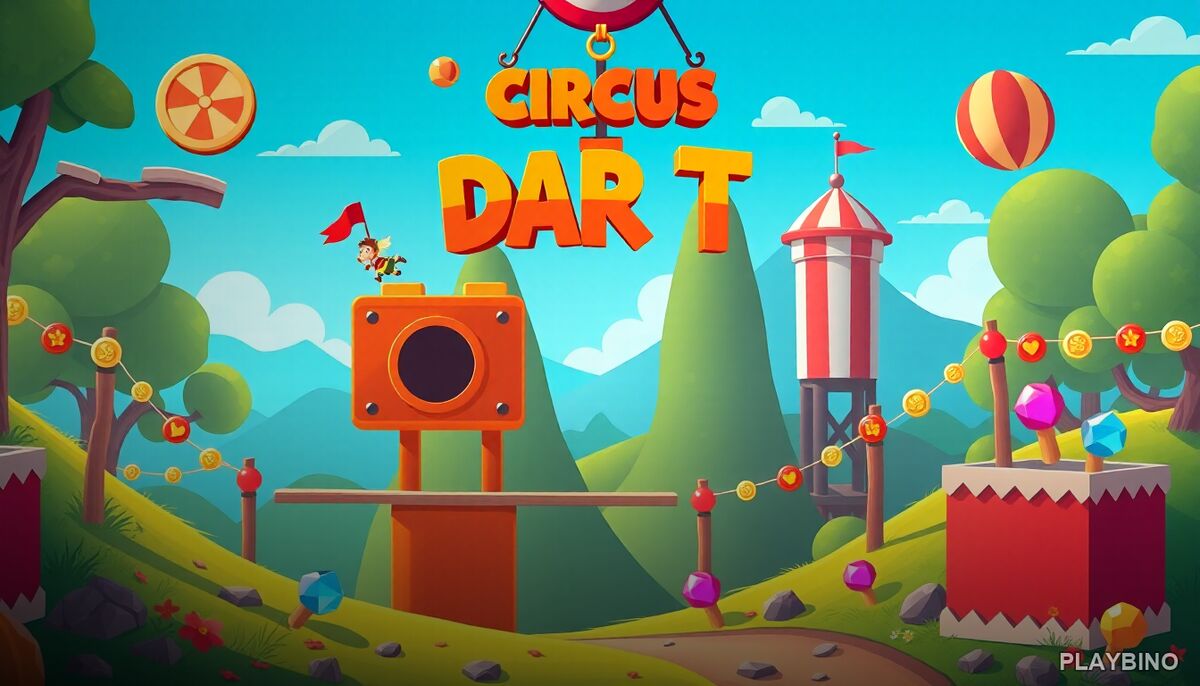
The visual design leans into a circus theme with bright colors, animated backdrops, and a lively energy that keeps the presentation from feeling flat. It's not just decoration