Dont Collide Pls: Reflexes, Timing, and the Art of Staying Alive
What Kind of Game Is This?
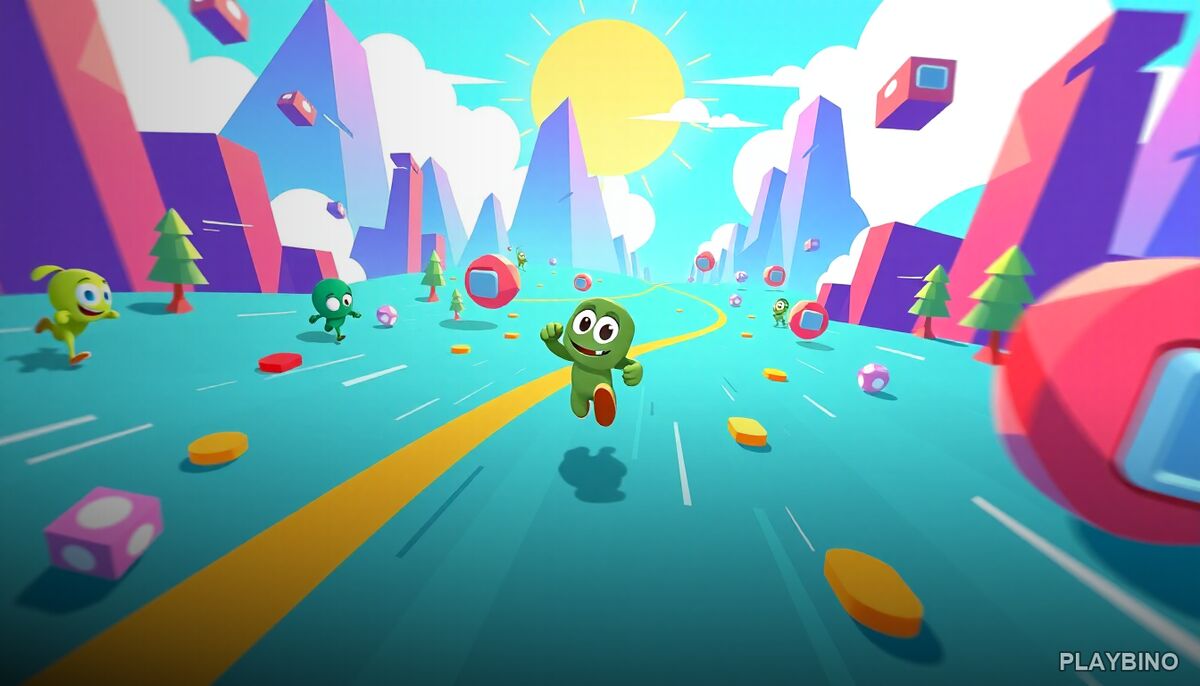
Strip away the menus, the cutscenes, and the complex upgrade trees, and what you get is something like Dont Collide Pls: a single-screen arcade challenge built entirely around one rule. Move. Collect green. Avoid red. The concept sounds almost too simple, but that simplicity is exactly what makes it work. This is an endless runner in the most focused sense — no levels, no checkpoints, just continuous movement and the pressure of keeping your streak alive.
If you want to see how long your reflexes hold up, try the full run in your browser and find out how quickly the difficulty ramps up.
The Core Loop and Why It Hooks You
Your green character moves through a field of objects at a constant pace. Green items add to your score. Red obstacles end everything immediately. There is no health bar, no second chance, and no margin for hesitation. Each run lasts exactly as long as your concentration does.
What makes this loop compelling is the feedback it creates. Every point scored feels earned. Every collision feels like a personal failure rather than bad luck. That distinction matters — it means you always believe the next run will go better, and that belief keeps you pressing restart.
Timing Over Speed
The game does not reward fast reaction times alone. It rewards reading. Obstacles appear with increasing frequency as your score climbs, and the player who survives longest is usually the one who spots patterns a half-second before they become urgent. Anticipation matters more than raw speed.
Spatial Awareness Under Pressure
As the screen fills with more objects, the available safe paths shrink. You start making micro-adjustments rather than large sweeping moves. That shift in movement style — from casual to precise — is where the real challenge lives. It turns a simple dodge game into something that demands genuine focus.
Minimalist Design, Maximum Tension
The visual language here is deliberately stripped down. Green means safe. Red means danger. There is no ambiguity, no distraction, and no visual noise to misread. This kind of minimalist design is common in arcade games that prioritize feel over spectacle, and it works well. Your attention stays exactly where it needs to be: on the moving field in front of you.
The lack of a soundtrack or complex animation also removes excuses. When you hit something red, you know it was your call. That accountability is part of what makes short-session arcade games like this one so replayable.
How the Difficulty Builds
- Early runs feel manageable — objects are spaced out and paths are clear.
- As your score increases, obstacle frequency rises and reaction windows shrink.
- The game never introduces new mechanics