Draw Climber 2: The Racing Game Where Your Drawing Skills Decide the Winner
What Kind of Game Is This?
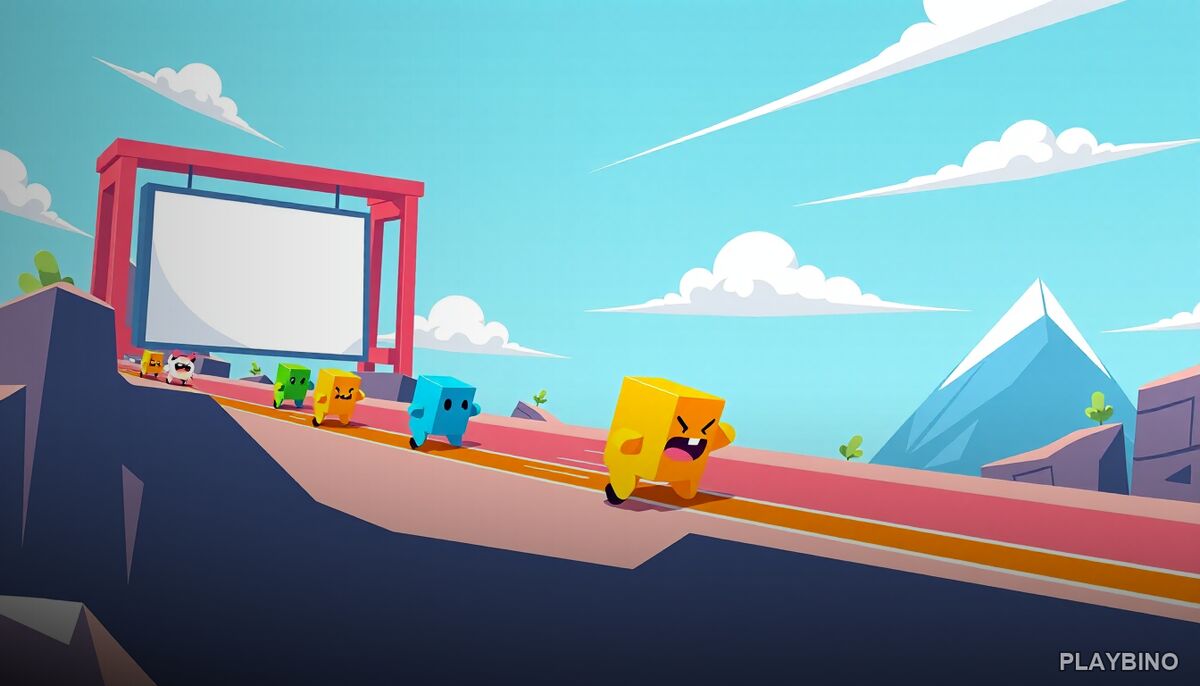
Draw Climber 2 sits in an unusual spot between racing and creative skill games. You control a block character, but movement depends entirely on the leg shape you draw before and during each race. Sketch something angular and it may roll and push efficiently. Draw something round and wobbly and your character might spin out or stall on a ramp. The concept sounds simple, but the execution creates a surprisingly personal 1-player racing experience where no two runs feel identical.
The game runs directly in a browser, and the online version loads quickly with no setup required. Races are short, which makes each attempt feel low-stakes enough to experiment but competitive enough to care about the result.
The Drawing Mechanic Explained
The core loop is straightforward: before your character moves, you draw a leg shape on screen. That shape becomes the physical limb your block uses to propel itself forward. The physics engine interprets your sketch literally, so a jagged star shape behaves differently from a smooth oval or a flat rectangle.
What Shapes Tend to Work
Sharp, angular shapes with clear points tend to grip terrain and push forward with more force. Rounded shapes roll more smoothly on flat ground but can struggle with raised platforms or gaps. Very small or thin drawings often lack the surface area to generate momentum. The game rewards players who think about geometry, even loosely, rather than just scribbling quickly.
When to Redraw Mid-Race
Obstacles change throughout each course — ramps appear, gaps open up, platforms rise. A leg shape that worked perfectly on flat ground may completely fail on an incline. The tension comes from deciding when to erase and redraw versus committing to your current shape and hoping it carries you through. Hesitating too long while your opponent moves ahead is a real risk. Quick, confident strokes almost always outperform slow, careful ones under pressure.
Course Obstacles and Terrain Variety
The obstacle design is what keeps Draw Climber 2 from feeling repetitive. Flat stretches reward momentum-building shapes. Ramps demand grip and upward push. Gaps require enough leg extension or bounce to clear the distance. Raised platforms punish shapes that are too low-profile. Each section of a course can demand a different approach, which means players who adapt their drawing on the fly tend to outperform those who find one shape and stick with it throughout.
Strategy and Skill Progression
There is a learning curve here that goes beyond just drawing faster. Over several races, players develop an intuition for which shapes handle which terrain types. Experimentation is genuinely rewarded — strange, unexpected leg designs sometimes outperform the obvious ones, which means there is always a reason to try something new rather than defaulting to the same shape every time.
- Angular and pointed shapes generate strong forward push on flat terrain.
- Wider, flatter shapes provide stability on uneven ground.
- Tall shapes can help clear gaps but may tip the character over on slopes.
- Very elaborate drawings often underperform simple, decisive ones.
- Redrawing mid-race is a skill in itself — speed matters as much as accuracy.
The 1-player format means the pressure comes from an AI opponent rather than a live competitor, but the pacing keeps races feeling urgent. The opponent moves at a consistent pace, which gives you a clear benchmark for how well your current leg design is performing.
How It Compares to Other Skill Racers
Most browser racing games rely on button timing or vehicle upgrades. Draw Climber 2 replaces those systems with a freehand drawing input, which shifts the skill requirement toward spatial reasoning and quick decision-making rather than reflexes alone. It shares the short-session energy of other arcade skill games — Type Sprint, another browser challenge built around rapid input and reaction, follows a similar rhythm of short bursts with a clear performance metric — but the drawing mechanic gives this game a distinctly creative feel.
Who Will Get the Most Out of It
Players who enjoy experimenting with physics and finding unconventional solutions will find a lot to explore here. The races are short enough that losing never feels punishing, and the variety of terrain types means there is always something new to figure out. If you find a shape that works well on one course, the next course will likely challenge that assumption. PlayBino hosts the game with no download needed, making it easy to jump in for a few quick races whenever you have a spare few minutes.