Draw to Fish Fight: Sketch Your Way Through Aquatic Battles
What Kind of Game Is This?
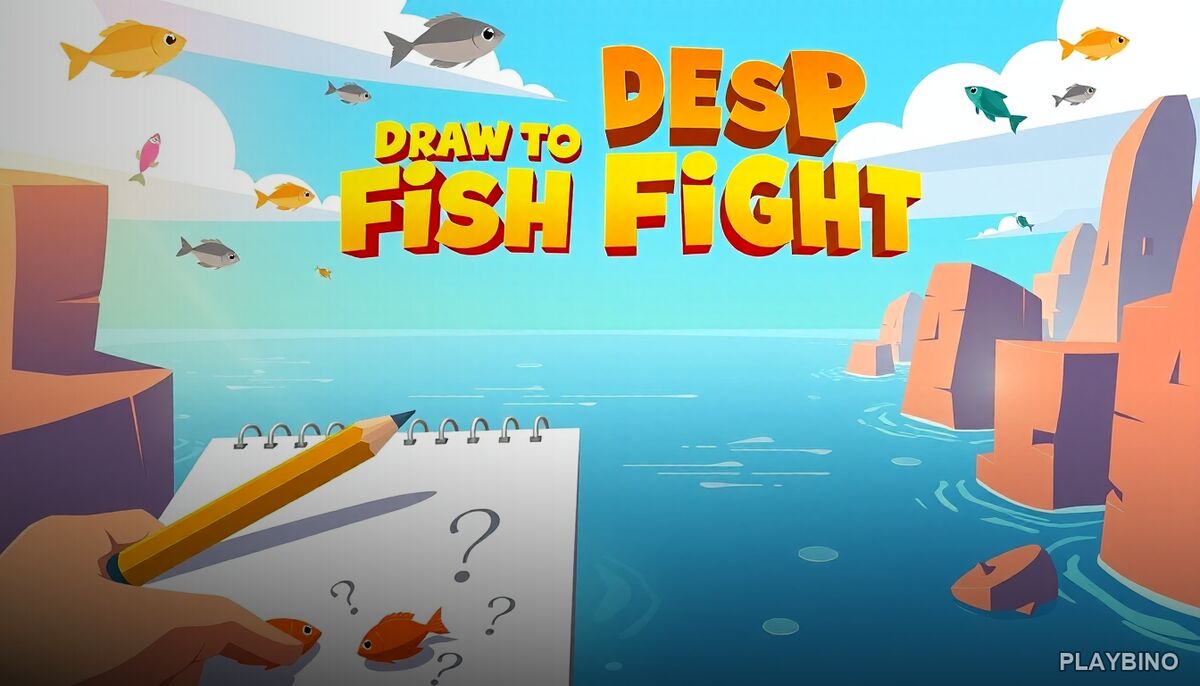
Draw to Fish Fight sits at an unusual crossroads between action and puzzle. Instead of tapping buttons or steering a character directly, you sketch lines on screen that guide your fighter through waves of approaching fish. The concept sounds simple, but the execution demands both spatial thinking and fast reactions. Play it directly in your browser and the mechanic clicks almost immediately — then the real challenge begins.
The Drawing Mechanic Explained
The core loop revolves around drawing paths in real time. Your fighter follows whatever route you sketch, which means every line you draw is both a movement decision and an attack plan. Fish approach from multiple directions, and your job is to intercept them efficiently without leaving yourself exposed.
Routing and Timing
The quality of a drawn path matters more than speed alone. A wide arc might clear a cluster of fish but leave you out of position for the next wave. A tight loop can generate a satisfying combo but only if your timing is precise. The game rewards players who read enemy movement patterns and draw with intention rather than just reacting randomly.
Adapting to Obstacles
As levels progress, obstacles appear across the water that block certain routes. This forces you to rethink your approach mid-round, sketching around barriers while still maintaining offensive pressure. That layer of spatial puzzle-solving is what separates Draw to Fish Fight from a straightforward action game.
Power-Ups and Escalating Pressure
Collectible power-ups are scattered across each stage. Picking them up mid-path requires planning your route to pass through them without sacrificing your defensive positioning. Some power-ups extend your reach, others boost attack speed, and combining them with a well-drawn combo route produces some of the most satisfying moments in the game.
Later levels introduce faster enemies and tighter spaces simultaneously. The combination punishes sloppy drawing and rewards players who have internalized efficient route shapes. Scores climb quickly when you maintain clean, purposeful paths rather than frantic scribbles.
Strategy: Defense vs. Aggression
One of the more interesting decisions the game presents is how aggressively to play. Drawing long offensive paths covers more ground and hits more fish, but it also takes longer to complete, leaving gaps in your defense. Shorter, tighter paths are safer but score less per round.
- Use wide arcs early in a wave when fish are spread out
- Switch to compact routes when enemies converge from multiple angles
- Route through power-ups only when the path doesn't compromise your positioning
- Watch for pattern repetition in enemy movement to anticipate the next cluster
The balance between these two styles shifts as the difficulty climbs, which keeps the skill ceiling genuinely high.
Who This Game Suits
If you enjoy action-puzzle hybrids that reward pattern recognition and quick spatial decisions, this one delivers consistent challenge without becoming repetitive. The drawing mechanic feels tactile and responsive, which makes replaying levels to improve your score feel worthwhile rather than frustrating.
Music Sword Beat on PlayBino takes a completely different approach to reflex-based gameplay — that rhythm-action challenge is worth a look if you like games that demand precise timing in short bursts.
Scoring and Replayability
High scores in Draw to Fish Fight depend on combo efficiency — hitting multiple fish in a single drawn path multiplies your points. Chasing those multipliers adds a layer of optimization that goes beyond simply clearing each wave. There is always a cleaner route, a better combo, a tighter line to find. That pursuit of efficiency is what keeps sessions going longer than expected.
"