Draw To Win: Egg World – Physics Puzzle Drawing Game
What Kind of Game Is This?
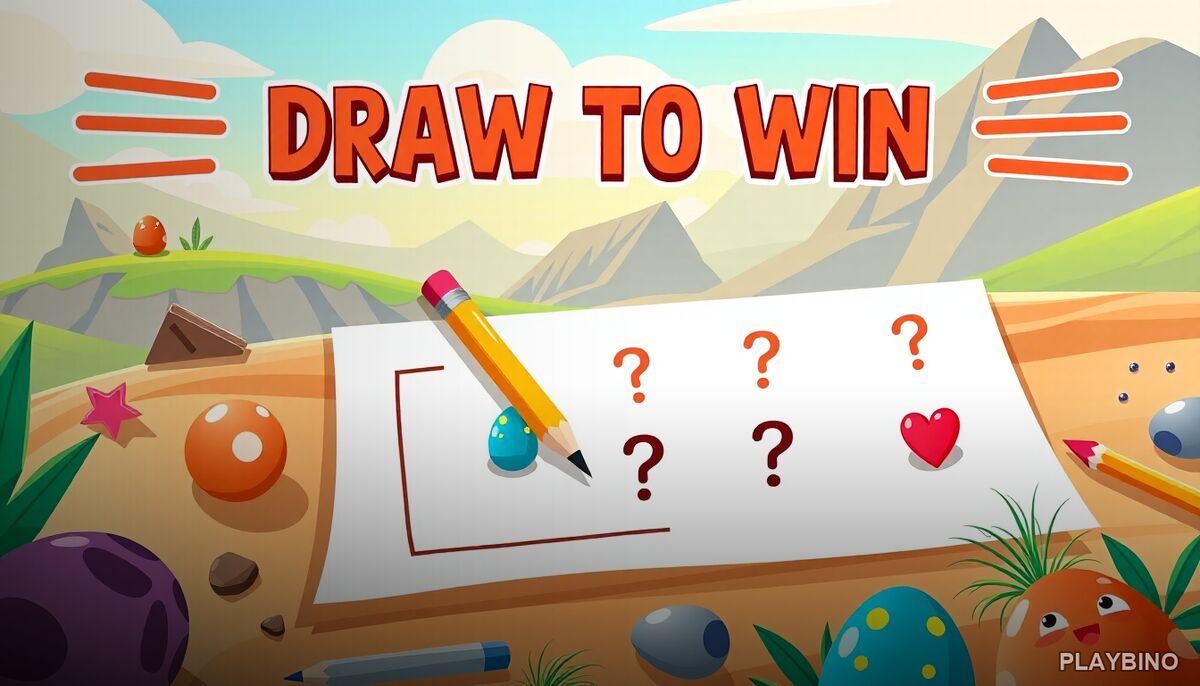
Draw To Win: Egg World is a single-player brain puzzle game where your drawings become part of the level. You sketch lines and shapes directly onto the screen, and the physics engine treats them as real objects. Ramps, walls, bridges, platforms — whatever you draw gets tested immediately against gravity, momentum, and the movement of the egg characters on screen. The concept sounds simple, but the execution demands genuine spatial thinking.
If you want to jump straight in, this physics drawing puzzle runs entirely in the browser with no download required.
The Drawing Mechanic in Practice
The core loop is straightforward: a level loads, you see an egg character and a goal, and you draw whatever you think will connect the two. The physics simulation kicks in the moment you lift your pen. That immediacy is what makes the game satisfying — there is no waiting, no animation delay. Your sketch either works or it doesn't, and you can see exactly why.
When a Straight Line Is Enough
Early levels reward simple solutions. A diagonal line to slide the egg down, a short platform to catch a falling character, a wall to redirect movement. The game eases you in without overwhelming the drawing space with too many variables.
When Complexity Kicks In
Later puzzles introduce obstacles, moving elements, and tighter spaces where a rough sketch won't cut it. You need to think about angle, length, and where your line anchors to the environment. A curved path might guide an egg around a barrier that a straight line would never clear. Some levels require drawing multiple shapes in sequence, timing each one before the physics plays out.
Spatial Reasoning as the Main Skill
Unlike tap-based puzzle games where the solution is hidden and you hunt for it, Draw To Win: Egg World makes you construct the solution yourself. That shifts the challenge entirely. You are not discovering an answer — you are engineering one. Players who enjoy geometry, visual problem-solving, or creative thinking tend to find this format particularly engaging.
There is also a satisfying feedback loop when a drawing works unexpectedly well. A rough arc that you sketched quickly turns out to guide the egg perfectly, and that moment of seeing your doodle function as a real mechanism is genuinely rewarding.
Puzzle Variety and Level Design
The egg-themed world keeps the visual tone light and playful, but the puzzle design underneath is thoughtful. Scenarios change meaningfully between levels rather than just scaling up difficulty in a linear way. One level might ask you to build a bridge, the next might require you to block a hazard, and another might involve redirecting a rolling egg through a narrow gap.
- Physics respond to line thickness, angle, and attachment points
- Some puzzles have multiple valid solutions depending on your drawing approach
- Obstacles and gaps increase in complexity across later stages
- The egg characters react naturally to slopes, drops, and collisions
Who Plays This Kind of Puzzle Game
The one-player format and brain-focused mechanics make this a good fit for anyone who enjoys quiet, creative problem-solving. It does not require fast reflexes or memorized patterns. The challenge comes from thinking spatially and being willing to redraw when your first attempt fails. That trial-and-error rhythm is part of the experience rather than a frustration.
Players who enjoy variety across different puzzle formats might also find value in another browser puzzle collection worth exploring on PlayBino — Mini Games Puzzle Collection covers a wider range of brain game styles if you want to switch things up between sessions.
Drawing Your Way Through Each Level
The appeal of Draw To Win: Egg World comes from how personal each solution feels. Two players can clear the same level with completely different drawings. That creative flexibility, combined with real physics feedback, makes each puzzle feel like a small experiment rather than a test with one correct answer. For a browser puzzle game built around imagination and logic, it holds up well across its full level range.