Eat to Evolve: Grow, Hunt, and Survive the Food Chain
What Eat to Evolve Is About
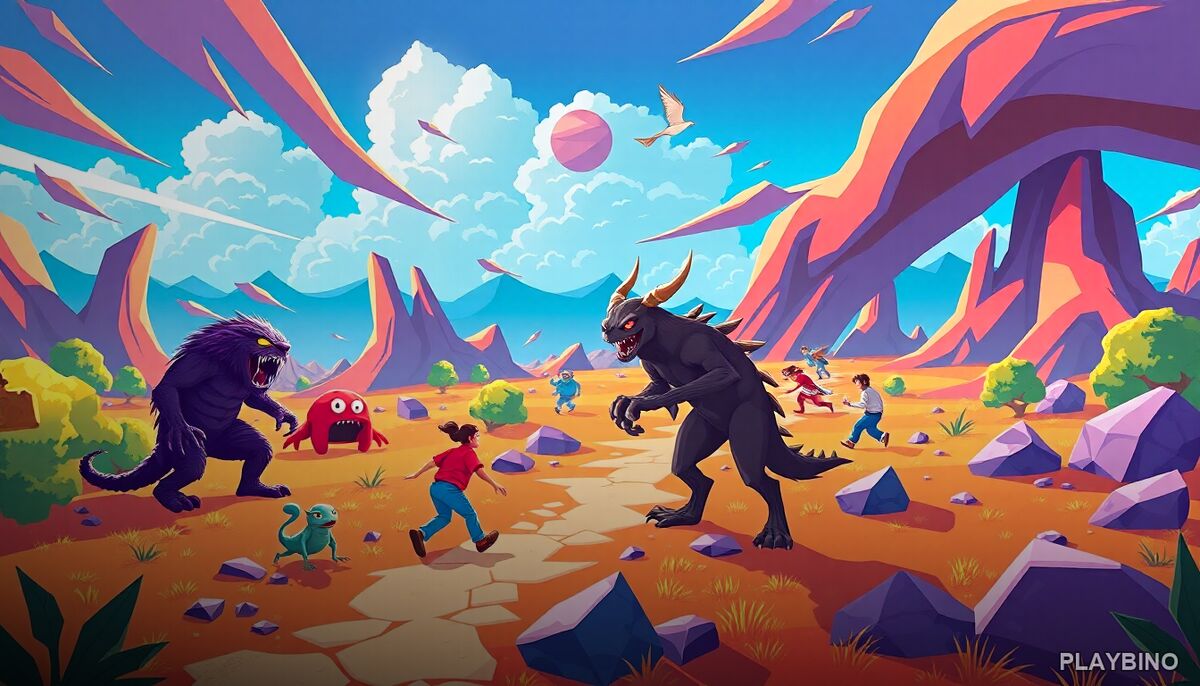
The premise is immediate and instinctive: eat smaller things, avoid bigger ones, and keep climbing. This arcade survival game wraps that loop inside a genuine evolution system where every meal changes your organism in some way. You are not just getting bigger — you are transforming, gaining new traits, and shifting into entirely different forms as you progress through the food chain.
It is a single-player action experience built around momentum. The longer you survive, the more powerful you become, but the environment scales with you. Larger predators appear as you grow, and the tension between pushing forward and playing cautiously becomes the core of every run.
How the Evolution Loop Works
Each creature you consume adds to your growth meter. Once you cross a threshold, your organism evolves into a new form — sometimes visually dramatic, sometimes subtle, but always accompanied by a shift in how you move or interact with the environment.
Traits and Abilities
Different evolutionary stages unlock different capabilities. Speed, size, attack range, and defensive traits all shift depending on what form you have reached. This means the way you hunt in an early stage is not the same as how you operate three evolutions later. Adapting your approach to each new form is part of what keeps the gameplay from feeling repetitive.
The Risk of Growing
Larger forms attract larger threats. As your organism climbs the ladder, the creatures that previously ignored you become prey — but new predators emerge that can end a run instantly. Growth is rewarding, but it also raises the stakes. There is no safe plateau.
Reading the Environment
A lot of the skill in this game comes from spatial awareness. The screen is populated with creatures of varying sizes, and you need to constantly assess what is safe to chase and what should be avoided. Misjudging the size difference between yourself and another organism is one of the most common ways a run ends early.
Scanning before committing to a chase matters. Moving toward a cluster of small prey can look appealing until a larger predator enters the same area. Knowing when to retreat and reposition is just as important as knowing when to be aggressive.
Arcade Feel and Pacing
The controls are straightforward, which puts all the weight on decision-making rather than mechanical execution. Movement feels responsive, and the game does a good job of communicating size relationships visually so you can make quick reads without needing to stop and think.
Runs are self-contained and relatively short, which makes the format work well as an arcade experience. There is a natural pull to start again after a failed run, especially when you can see exactly where the mistake happened. The rhythm of hunt, eat, evolve, and survive creates a satisfying loop that holds attention across multiple attempts.
Strategy Tips for Longer Runs
- Prioritize the edges of the screen when you are small — fewer large predators patrol those areas.
- Do not chase prey into crowded zones unless you are confident in your current size advantage.
- After evolving, take a moment to reorient before hunting aggressively — your hitbox and speed may have changed.
- When a predator is close, move in unpredictable directions rather than straight lines.
- Focus on consistent small meals early rather than risky large targets.
Similar Browser Games to Explore
The eat-and-grow format has a few variations worth exploring on PlayBino. Eat the circles : colors game takes a different mechanical angle — instead of creature-based evolution, it focuses on color matching and circle consumption. That browser challenge is worth a look if you enjoy the core loop of consuming targets but want a puzzle-leaning twist on the concept.