Escape Mystic Castle: Puzzle Logic and Room-by-Room Strategy
What Kind of Game Is This?
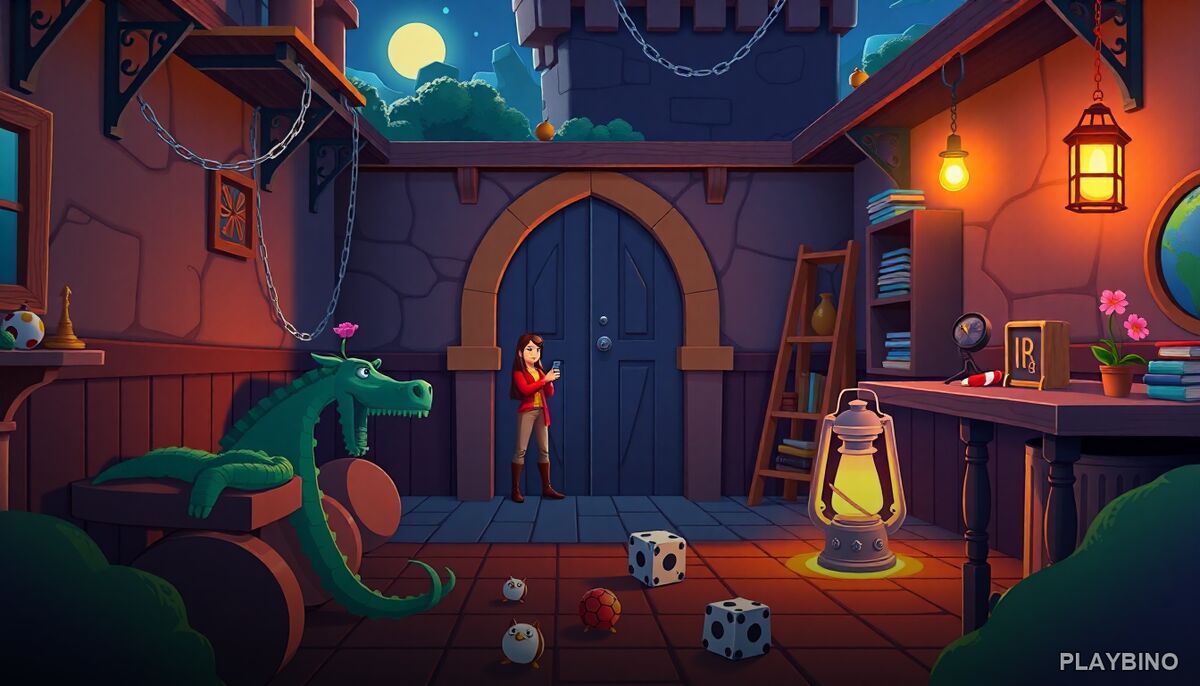
Escape Mystic Castle drops you into a dimly lit medieval fortress with no map and no instructions beyond your own curiosity. You play as a captured villager trying to piece together an escape route through chambers that hide mechanisms, cryptic symbols, and forgotten artifacts. The atmosphere leans heavily on eerie silence and shadowy stone corridors, which makes every small discovery feel meaningful. If you enjoy slow, deliberate puzzle-solving over reflex-based gameplay, this browser escape challenge on PlayBino rewards patience and careful observation.
Room Exploration and Observation
The core loop is straightforward: enter a room, examine everything, collect what you can, and look for connections between objects. Nothing in the castle is placed randomly. A strange symbol on the wall might correspond to a lock in the next corridor. A dusty artifact on a shelf could be the missing piece for a mechanism you passed two rooms earlier.
The game does not hold your hand with hints or timers in the traditional sense. Progress depends entirely on how thoroughly you examine each space. Clicking on objects reveals descriptions or triggers interactions, and some items stack or combine in your inventory to form something more useful.
Inventory Logic
Item combination is one of the more satisfying mechanics here. You might find a broken key and a handle separately, combine them, and suddenly a locked door becomes passable. The puzzle logic stays grounded enough that solutions feel earned rather than arbitrary, though some combinations require thinking laterally about what an object actually does rather than what it looks like.
The Atmosphere Does Real Work
Medieval escape room games live or die by their setting, and Escape Mystic Castle leans into its tone consistently. The stone wall textures, the muted color palette, and the sparse sound design all contribute to a sense of genuine isolation. There are no jump scares or action sequences. The tension comes from not knowing what the next room holds and whether you have the right items to deal with it.
This atmospheric approach suits single-player logic puzzles well. You are essentially reading the castle's history through its objects and architecture, which gives the puzzle-solving a narrative layer that pure abstract brain teasers lack.
Puzzle Structure and Difficulty
Early Chambers
The opening rooms introduce the mechanics gently. Locks are visible, keys are nearby, and the connections between clues are relatively direct. This section works as a tutorial without announcing itself as one.
Deeper Into the Fortress
As you move further in, the riddles become less obvious. Cryptic symbols require cross-referencing with items you collected earlier. Some mechanisms only activate after multiple steps have been completed in a specific order. The difficulty curve is gradual but real, and backtracking becomes part of the strategy rather than a frustration.
Who This Game Suits
Escape Mystic Castle fits players who enjoy logic puzzles, room escape games, and brain challenges that unfold at their own pace. It does not demand fast reactions or precise timing. What it asks for is methodical thinking and a willingness to revisit earlier areas with new information.
- Single-player format with no time pressure
- Item-based puzzle solving with inventory combinations
- Atmospheric medieval setting with consistent tone
- Progressive difficulty across connected rooms
- Logic-focused design with no random elements
Players who prefer action or multiplayer experiences may find the pace slow, but for anyone drawn to escape room logic and brain-teaser gameplay, the castle offers a satisfying challenge from start to finish. If you want to compare how the experience translates to a different format, the mobile version of the same escape puzzle covers what changes and what stays the same across platforms.
"