Fall Boys Ultimate Tournament 2024: Chaos, Courses, and Survival
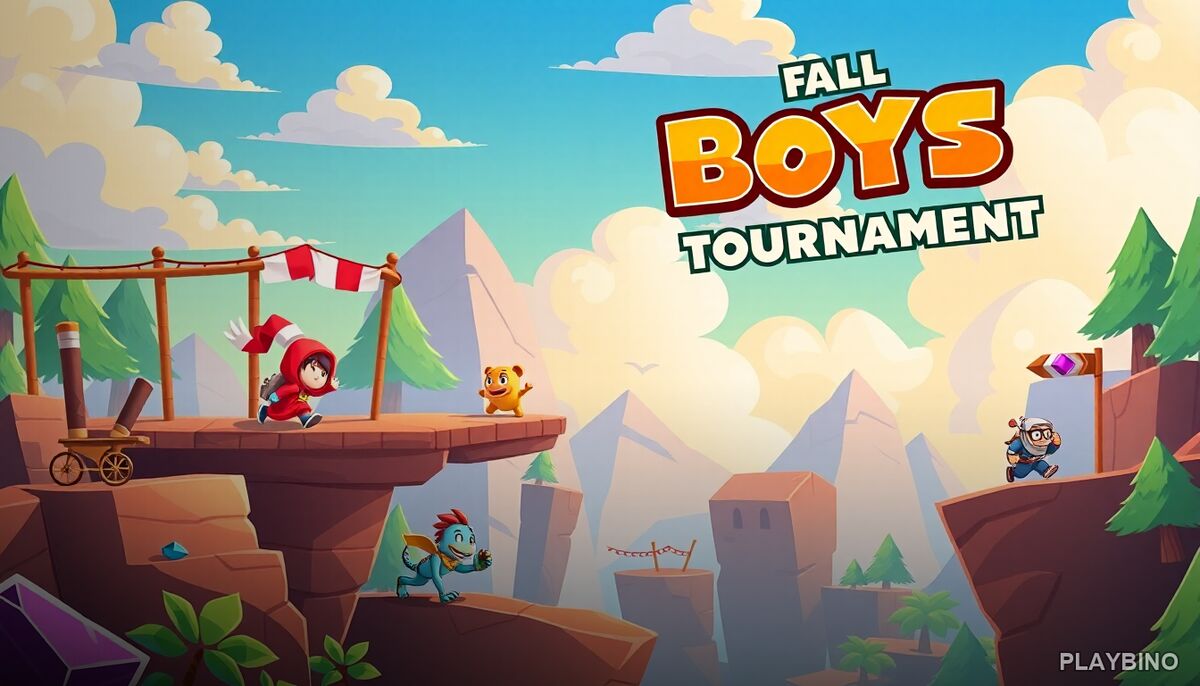
What Kind of Game Is This?
Chaotic, physical, and packed with players all fighting for the same narrow path — Fall Boys Ultimate Tournament 2024 drops you into a multiplayer arcade race where the obstacle course is as much of an enemy as every other competitor. Spinning platforms knock you sideways, swinging hammers launch you off ledges, and tiles vanish the moment you need them most. You can play this browser-based tournament directly without downloads, which makes it easy to jump in and start competing immediately.
The action racing format means there is no downtime. From the moment a round begins, you are reading the course, finding gaps, and reacting to physics that do not always behave predictably. Collisions with other players send both of you tumbling, and the crowd effect near bottlenecks can eliminate a solid run in seconds.
Course Layout and Hazards
Each stage in the tournament introduces a different set of obstacles, which keeps the game from feeling repetitive. The variety is one of its strongest qualities.
Common Obstacle Types
- Spinning platforms — rotate continuously and require you to time your crossing or risk being swept off the edge.
- Swinging hammers — move on a fixed arc, so watching the rhythm before committing to a run is essential.
- Disappearing tiles — vanish after being stepped on, making heavily trafficked paths increasingly dangerous.
- Slippery slopes — force you to sprint aggressively or slide back into the crowd below.
- Rotating walls with gaps — require you to position yourself early and squeeze through at the right moment.
Narrow Beams and Pit Crossings
Some sections suspend a thin beam over an open pit. These segments tend to create the most player collisions because everyone is funneled into the same space. Hanging back slightly to let the initial rush pass can actually save time compared to pushing into the scrum and falling.
How Survival Logic Works
The game rewards spatial awareness more than raw speed. A player who reads the course layout quickly and identifies the safest line through a section will consistently outlast someone who sprints blindly into the first available path.
Patience has real value here. Watching a swinging hammer for one full cycle before crossing costs a second but prevents a fall that costs ten. The same principle applies to disappearing tiles — the edges of tile grids often survive longer than the center because fewer players step there.
That said, hesitation near vanishing tile sections is equally dangerous. Standing still while tiles disappear beneath you is a common elimination cause for cautious players who wait too long.
Multiplayer Pressure and Positioning
The simultaneous multiplayer structure means the field thins as each round progresses. Early stages feel crowded and chaotic, while later courses involve fewer competitors and demand more precise individual execution.
Physics-based collisions make positioning genuinely strategic. Being on the inside of a turn when other players crowd the outside gives you a cleaner line. Near rotating walls, arriving slightly ahead of the main group lets you choose your gap rather than taking whatever is left.
Who Plays Best in This Format
Players who enjoy arcade racing with a survival edge, where reading the environment matters as much as reflexes, tend to find the most satisfaction here. The multiplayer chaos means no two runs feel identical, which adds replay value beyond just improving a personal time.
If you enjoy this style of elimination-based arcade competition, the Fall Guys 2024 experience on PlayBino covers a comparable format with its own course designs and obstacle logic worth exploring.
Timing and Route Decisions
The core skill loop comes down to two repeating decisions: when to commit to a crossing, and which path through a crowd to take. Both improve with repetition. After a few rounds on the same course type, the rhythm of rotating hazards becomes readable, and safer routes through high-traffic zones become obvious.
Rushing early in a round often leads to elimination at the first major hazard. Surviving to the midpoint of a course with a comfortable position is almost always more valuable than leading at the start and falling at a predictable obstacle.