Find The Odd One: Spot the Difference Puzzle Game
What the Game Actually Asks You to Do
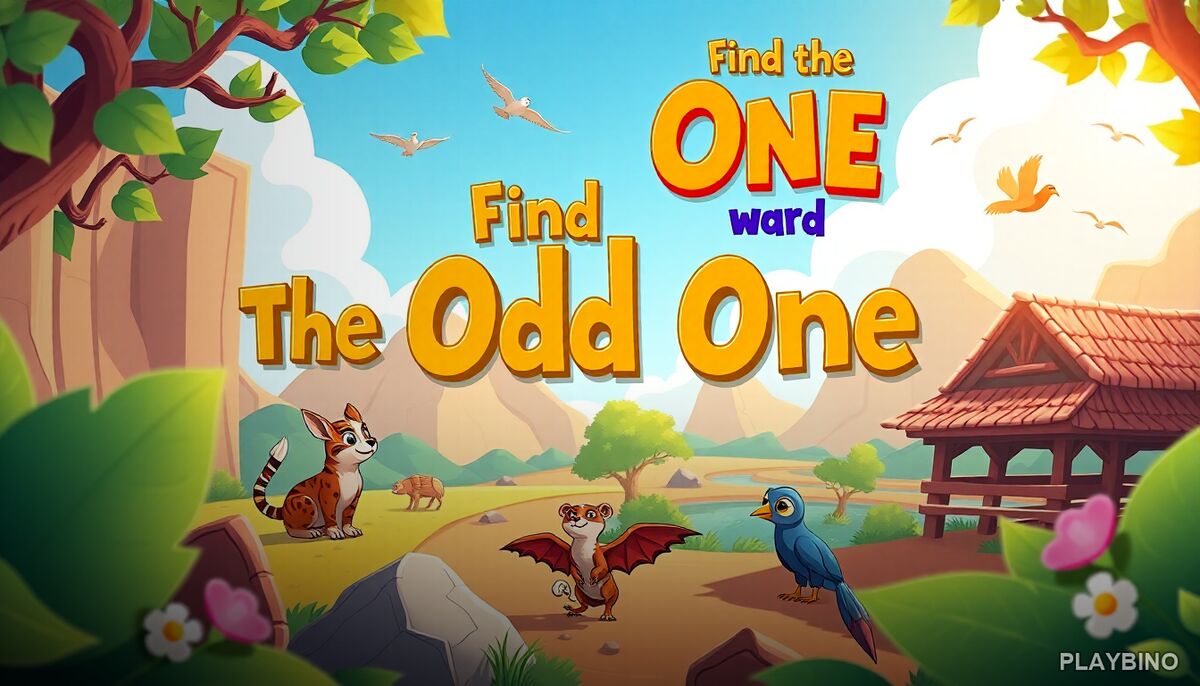
At its core, Find The Odd One is a visual logic puzzle built around a single repeating question: which one doesn't belong? Each round places a group of similar objects on screen — shapes, animals, everyday items — and one of them carries a subtle difference. Your job is to find it before moving on. You can play this browser puzzle directly without any download or setup.
The challenge sounds simple, but the game earns its difficulty through clever visual design. Items are often nearly identical, with differences hidden in color shade, size, orientation, or a small detail in the pattern. The more rounds you complete, the harder those differences become to catch.
How the Puzzle Mechanics Work
Each round presents a grid or cluster of objects. You scan the group, compare items, and tap or click the one that stands apart. There are no timers forcing rushed decisions in the early stages, which makes the experience feel more like a brain exercise than a reflex test. Accuracy is the priority here, not speed.
Pattern Recognition Over Guessing
The most effective approach is systematic comparison rather than instinct. Start by identifying what the majority of items share — color, shape, size — and then look for the one that breaks that pattern. Guessing randomly will work occasionally, but the game is designed to reward players who actually slow down and observe.
Progressive Difficulty
Early levels use obvious differences to ease you in. As you advance, the variations become more subtle. Two objects might look identical until you notice one has a slightly different outline or a missing detail. This gradual escalation keeps the logic challenge feeling fresh without becoming frustrating too quickly.
Visual Design and Accessibility
The colorful, clean art style makes the game easy to look at for extended sessions. Objects are drawn with enough clarity that the differences feel fair rather than deliberately obscure. The straightforward single-player format means there is no competitive pressure — just you, the puzzle, and the satisfaction of spotting what others might miss.
The game works well for short sessions. A few rounds take only a few minutes, making it a natural fit for quick breaks. But the escalating difficulty also supports longer play if you want to push through harder stages.
Who This Type of Puzzle Suits
- Players who enjoy brain and logic puzzles over action gameplay
- Anyone looking for a calm, focused single-player experience
- People who like visual challenges that reward careful observation
- Casual players who want something mentally engaging without complex controls
The puzzle format also works well as a mental warm-up. Many players use this type of logic game to sharpen focus before switching to more demanding tasks.
A Related Puzzle to Try Next
If you enjoy logic-based challenges that ask you to think carefully about what belongs and what doesn't, another puzzle-based game worth exploring is Remove The Puzzle, which takes a different mechanical approach to the same core idea of solving visual problems one step at a time. Both games are available on PlayBino and share that same satisfying loop of observation and decision-making.
What Makes the Satisfaction Real
The moment you spot the odd item — especially on a difficult round where the difference is nearly invisible — produces a genuine sense of accomplishment. That feeling is what keeps the game loop working. It is not about high scores or leaderboards. It is about the quiet confidence of knowing your eye caught something subtle that was designed to be missed.
Find The Odd One delivers exactly what a brain puzzle should: a clear challenge, fair difficulty scaling, and a reward that comes from actual observation rather than luck. PlayBino hosts the game in a clean browser format that keeps the focus entirely on the puzzle itself.