Fire and Water Blockman: Dual-Character Puzzle Action Guide
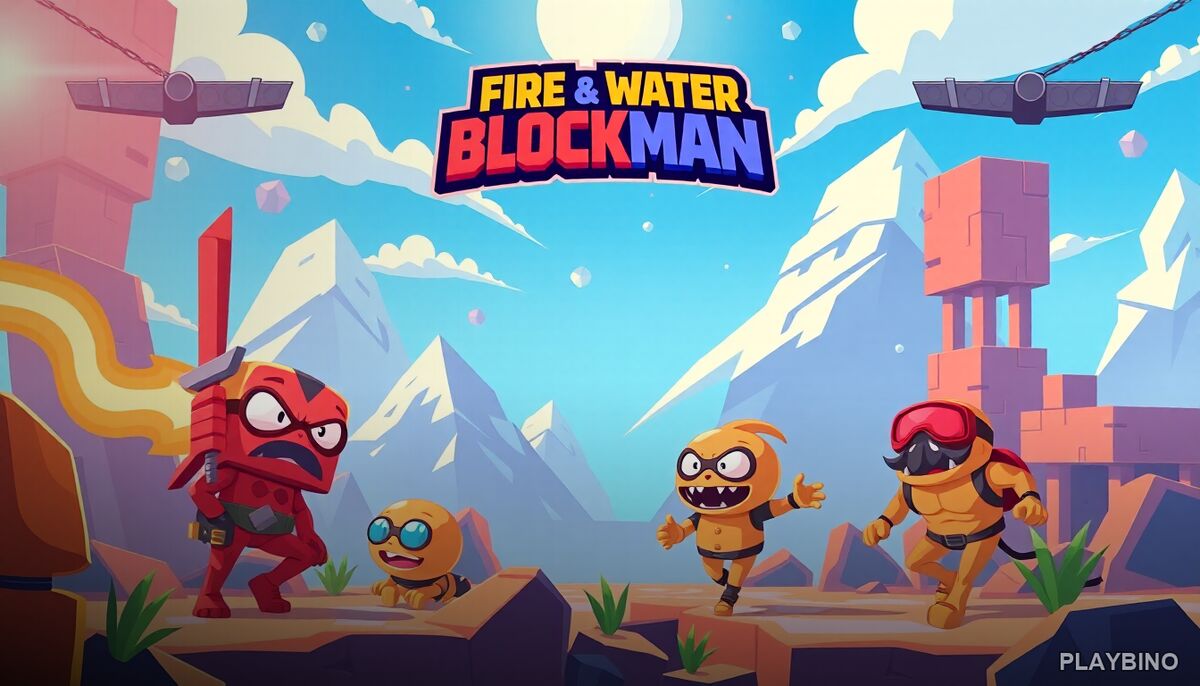
Two Characters, One Mission
Most browser arcade games ask you to control a single hero. Fire and Water Blockman flips that by putting two distinct pixel characters in your hands at once. You can run both simultaneously in solo mode, or hand one controller to a friend for proper 2-player cooperation. Either way, the game never lets you forget that neither hero can do everything alone. Play this browser arcade challenge and the difference between the two characters becomes clear within the first minute.
What Each Character Actually Does
The fire blockman is the aggressor. He clears the path, burns through enemies, and handles the constant monster spawns that fill the forest levels. Without him, the water blockman would be overwhelmed before reaching the first checkpoint.
The water blockman has a different role. Blue crystal chests scattered across each level remain completely locked to the fire character — only the water hero can open them. This creates a natural division of labor: one character fights, the other explores and collects. Neither role feels passive, because the game keeps both characters busy at all times.
Portal Pieces and Progression
Advancing through levels requires collecting portal pieces hidden across each area. These fragments are not handed to you. Some are tucked behind enemy clusters, others sit inside those blue crystal chests only the water blockman can access. Finding them all demands that both characters move through the level rather than one waiting while the other handles everything.
Combat and Movement Feel
The action side of Fire and Water Blockman is relentless. Monsters spawn continuously throughout the forest environment, meaning there is no safe moment to stop and plan carefully. Quick reflexes matter, but so does positioning. The fire character needs to stay aggressive without leaving the water blockman exposed to attacks from behind.
Timing and Coordination
In solo mode, switching attention between the two characters is the central skill. You will often find yourself moving one hero forward while keeping the other stationary, then swapping focus before an enemy reaches the idle character. In 2-player mode, communication replaces that mental juggling act, making the game feel more like a cooperative action puzzle than a reflex test.
Level Design and Exploration
Each level in the pixelated forest environment is built around the idea that both characters must explore different parts of the map. The fire blockman cannot simply bulldoze forward and assume the level is cleared. Locked chests and hidden portal pieces create reasons to backtrack, split up, and cover more ground. The level design rewards thorough exploration over rushing.
- Blue crystal chests require the water blockman to unlock
- Portal pieces are scattered and must all be collected to progress
- Enemies respawn, keeping combat pressure constant throughout
- Both characters have unique strengths that complement each other
- Solo and 2-player modes offer different coordination challenges
Who This Game Suits
Players who enjoy puzzle-action hybrids will find the complementary character design satisfying. The arcade pace keeps things moving, but the puzzle layer — deciding who goes where, which chest to prioritize, how to split attention — adds enough depth to make each level feel like a small problem to solve rather than just a combat run. Fans of 2-player cooperative games on PlayBino will appreciate how the design genuinely requires both characters rather than treating the second player as optional.
MCCraft 2 Player takes a different approach to cooperative browser gaming, and that block-building experience is worth exploring if you enjoy games built around working with a partner.
Strategy That Actually Matters
The most effective approach is to use the fire blockman as a moving shield. Keep him slightly ahead to absorb and deal with enemy spawns while the water blockman follows and handles chest collection. When a cluster of monsters appears near a blue chest, the fire character should clear the area before the water hero moves in. Splitting up too early without securing the area first is the most common way to lose ground quickly. Balancing offense with careful positioning turns each level from a chaotic scramble into something that feels controlled and deliberate.
"