FlappyCat Crazy Copters: Tap, Dodge, Repeat
What Kind of Game Is This?
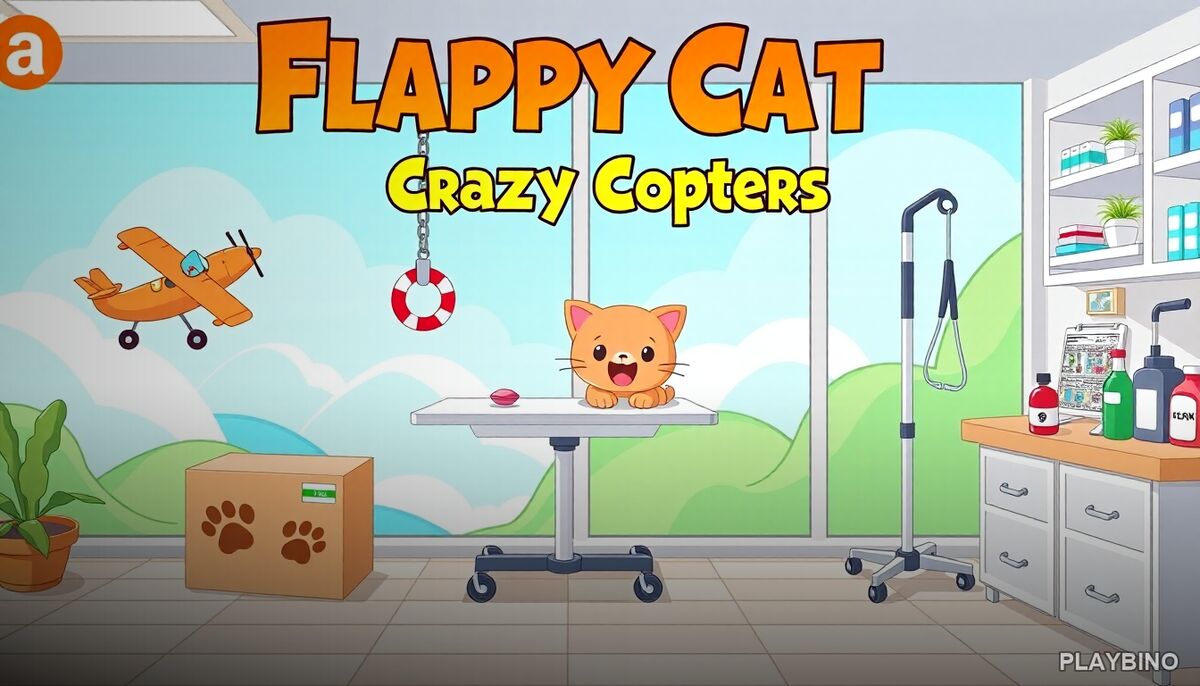
FlappyCat Crazy Copters drops you into an endless aerial obstacle course with one goal: keep a cat flying for as long as possible. The format is pure arcade — no levels, no checkpoints, no story. Just a single tap mechanic, a scrolling environment, and barriers that demand your full attention. The browser version loads instantly and throws you into the action without any setup, which suits the pick-up-and-play nature of the genre perfectly.
The Core Mechanic and Why It's Harder Than It Looks
Each tap sends the cat upward. Release the tap, and gravity pulls it back down. That's the entire control scheme — but the challenge comes from how quickly the environment punishes inconsistency. Gaps between obstacles vary in width and vertical position, so no two runs feel identical. The rhythm you build in one stretch can fall apart the moment a tighter gap appears at an unexpected height.
Timing Over Speed
The instinct is to tap rapidly whenever the cat drops too low, but that usually causes overcorrection. Tapping too fast sends the cat crashing into the ceiling or upper barrier. The better approach is to read the upcoming gap early and adjust altitude gradually rather than reactively. Patience matters more than reflexes alone.
Gap Reading
Obstacles appear without warning, so scanning ahead — even a fraction of a second — gives you enough time to position correctly. Players who stare directly at the cat tend to react too late. Shifting focus slightly forward in the screen helps anticipate where the next gap will be.
What Makes Runs Feel Different Each Time
The endless runner structure means the course never repeats exactly. Obstacle spacing tightens as runs progress, and the combination of gap heights creates situations that require different tap rhythms within the same run. Early sections feel manageable. Further in, the margin for error shrinks noticeably, and a single mistimed tap ends everything.
- Variable gap widths keep each run unpredictable
- Obstacle frequency increases as distance grows
- No power-ups or shields — survival depends entirely on control
- Single-life format creates genuine tension with every barrier
Strategy for Longer Runs
Consistency beats aggression in this game. Trying to push through tight sections with fast tapping leads to erratic altitude swings. Instead, aim to hold the cat near the vertical center of the screen as a default position. From the middle, you have equal room to move up or down when a gap demands it. Committing to a high or low position early limits your options when the next obstacle appears.
Short taps produce smaller altitude gains, which is useful for fine adjustments. Longer presses lift the cat higher but require more time to descend. Learning to mix tap lengths — rather than relying on one style throughout — is what separates short runs from longer ones.
Who This Game Suits
The single-player arcade format works well for quick sessions. There's no progression system to maintain and no penalty for starting over immediately, which makes repeated attempts feel low-stakes even when the game itself is tense. Players who enjoy reflex-based challenges and improving personal distance records will find the loop satisfying. The simplicity of the controls also means the difficulty comes entirely from execution, not from learning complex systems.
If the tap-and-dodge format appeals to you, FlappyCat Crazy Steampunk follows a similar structure with a different visual theme — that version has its own mechanics worth exploring if you want to compare how the two handle obstacle design.
Replay Value and the Distance Chase
Without a score ceiling, the only target is your previous best. That open-ended structure is what keeps the arcade loop running. Each failed attempt reveals something — a gap you misjudged, a tap you held too long, a moment where you stopped reading ahead. PlayBino hosts the game with no download required, so returning for another run takes seconds. The short session length means even a five-minute break is enough time for several meaningful attempts.