Flick n Goal: Precision Shooting in a Skill-Based Soccer Game
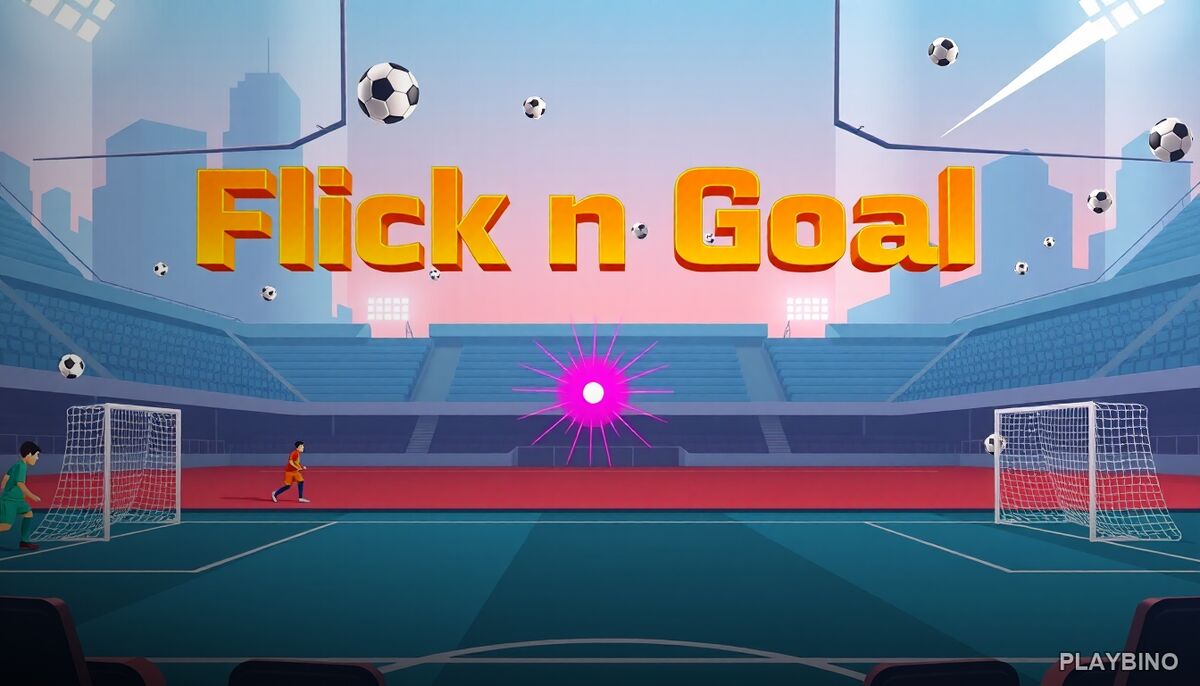
What Kind of Game Is This?
Flick n Goal strips soccer down to its most satisfying moment: the shot. There are no teams to manage, no stamina bars, no complex formations. Every round puts you in front of a goal, asks you to read the situation, and rewards you for executing the right strike with the right amount of power. The physics engine responds to how you flick, not just where you aim, which makes each attempt feel distinct.
The game fits cleanly into the skill and football category — short scenarios, immediate feedback, and a steady increase in difficulty that pushes your technique without overwhelming you. Play it directly in your browser and the first few rounds feel approachable, but the challenge builds quickly once defensive walls and distance come into play.
The Core Mechanic: Flick, Curve, Score
The control system is built around a single flick gesture. You drag and release to send the ball toward the goal, but the angle, speed, and direction of your swipe all affect the trajectory. A sharp flick sends the ball hard and low. A slower, angled swipe can introduce curve, which becomes essential when defenders are blocking the direct path.
Reading the Defense
Defensive walls are the main obstacle. They are positioned to block obvious routes, so scoring often means identifying a gap or using spin to bend the ball around the barrier. Some scenarios place the wall asymmetrically, giving you a clear side if you notice it. Others stack defenders tightly and force you to go high or use a curved trajectory to find the net.
Power and Distance
Distance affects how much power is needed, and misjudging it is one of the most common early mistakes. Too little force and the ball falls short or gets blocked easily. Too much and accuracy drops. Finding the right balance between power and placement is the central skill loop the game is built around.
How Difficulty Progresses
Early levels function as a warm-up. The goal is open, the distance is short, and the physics feel intuitive. As you advance, the scenarios introduce tighter defensive setups, longer distances, and positioning that requires curved shots rather than straight strikes. The game does not hand out goals — each successful shot reflects genuine improvement in how you read the setup and execute the flick.
There is no time pressure in most scenarios, which keeps the focus on accuracy rather than speed. You can take a moment to line up the shot, consider the wall position, and adjust your approach. That deliberate pace makes mistakes feel instructive rather than frustrating.
Why the Minimalist Design Works
The visual presentation is clean and uncluttered. No flashy animations compete for attention during your shot, and the ball's arc is easy to track. This kind of minimalist design suits a skill-based game well because it removes noise and keeps your focus on the mechanics that actually matter: aim, power, and curve.
The short match format also works in the game's favor. A single session can involve several attempts across multiple scenarios without ever feeling like a long commitment. That structure makes it easy to pick up during a short break and equally easy to keep going for longer stretches as you chase better results.
What Type of Player Will Enjoy It
- Players who enjoy physics-based precision challenges
- Anyone who likes football but prefers a focused, one-player format
- Players who enjoy improving a specific skill through repetition
- Fans of arcade-style games that reward timing over reflexes
Swipe Tower Stack — another swipe-based precision challenge — follows a similar logic of reading a situation and executing a single accurate action, so players who enjoy the feel of Flick n Goal may find that one worth trying too.
Practical Tips for Better Shots
Start by identifying whether the defensive wall is centered or offset. An offset wall almost always leaves one side open for a direct shot. If the wall is centered and tight, look at the height — a high flick with slight curve can sometimes clear the top of the wall rather than going around it.
On longer-distance scenarios, increase your flick speed rather than changing the angle too dramatically. Keeping the trajectory consistent while adjusting power tends to produce more reliable results than experimenting with completely different shot shapes. PlayBino hosts the game without any downloads or installs, so you can jump into a round, apply what you practiced, and return whenever you want to improve your technique further.
"