Football Penalty: Aim, Timing, and Pressure in Every Kick
What This Game Is About
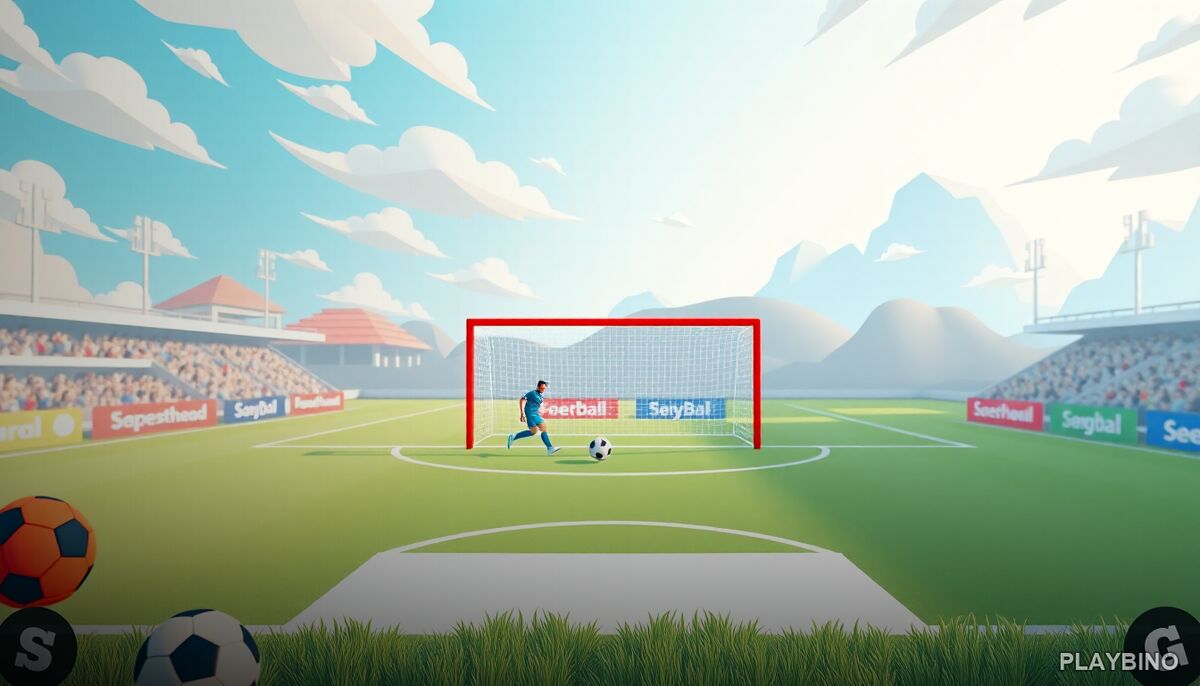
Stepping up to the spot sounds simple until the targets start moving. Football Penalty strips the sport down to its most pressure-filled moment and builds a skill-based challenge around it. Markers appear across the goal in different positions, and your job is to place each shot precisely where they land. There is no run of play, no teammates — just you, the ball, and a goalkeeper reading your intentions.
Aiming and Shot Mechanics
The core mechanic revolves around placement rather than power. Each kick requires you to adjust your aim based on where the target marker sits in the net. Early rounds give you static targets, which lets you settle into the rhythm of the controls. That comfort does not last long.
Moving Targets
As difficulty increases, markers begin shifting across the goal face. You cannot simply aim and fire — you need to track the movement, anticipate where the target will be when the ball arrives, and release at the right moment. Shots that feel perfectly timed can still miss if you misjudge the arc.
The Goalkeeper Factor
The goalkeeper is not decorative. The keeper reacts to your shot direction, so predictable patterns get punished. Varying your angles and mixing up your placement becomes necessary as the game progresses. Choosing a corner is not always the right call if the keeper is already leaning that way.
Difficulty Curve and Scoring Windows
Football Penalty builds pressure gradually. The early rounds function almost like a warm-up, giving you time to understand how aim and release interact. From there, the scoring windows tighten and the targets shrink. What felt like a generous margin in round two becomes a precise pixel-level decision by the later stages.
Every successful goal adds to your running point total. The game rewards consistency — missing targets does not just cost you a goal, it interrupts the scoring momentum you have built. Keeping a clean run across multiple kicks is where the real satisfaction comes from.
Tournament Mode and High Score Competition
Beyond the standard rounds, tournament mode raises the stakes. This format chains multiple penalty sequences together, demanding sustained accuracy rather than a single good run. One poor kick can shift your total significantly, which keeps every shot feeling meaningful even when you are well into a session.
Chasing high scores adds a competitive layer to what is otherwise a solo skill game. Knowing your previous best creates a personal benchmark that makes each attempt feel purposeful. The one-player format works well here because the pressure comes from within rather than from an opponent.
Who This Game Suits
- Players who enjoy reflex and aim-based challenges
- Football fans looking for a focused browser game without team management
- Anyone who wants a short, repeatable skill loop with clear scoring feedback
- Competitive players motivated by leaderboard-style high score chasing
If your interest leans toward foot-based skill games with a different feel, the Footbag Fanatic challenge on PlayBino takes a looser, juggling-focused approach that contrasts nicely with the precision structure here.
Strategy That Actually Helps
Rushing shots is the most common mistake. The game does not penalize you for taking an extra moment to track a moving target, so patience pays off more than speed. Watch the keeper's starting position before committing to a corner. Against static targets, vary your placement even when one angle keeps working — later rounds will require that adaptability.
In tournament mode, treat the opening kicks as a calibration phase. Use them to confirm how the controls feel in that session before pushing for the harder placements. Consistency across the full run matters more than landing one spectacular shot early.
"