Forest Tiles: Puzzle Strategy on a 9x9 Grid
What Kind of Game Is This?
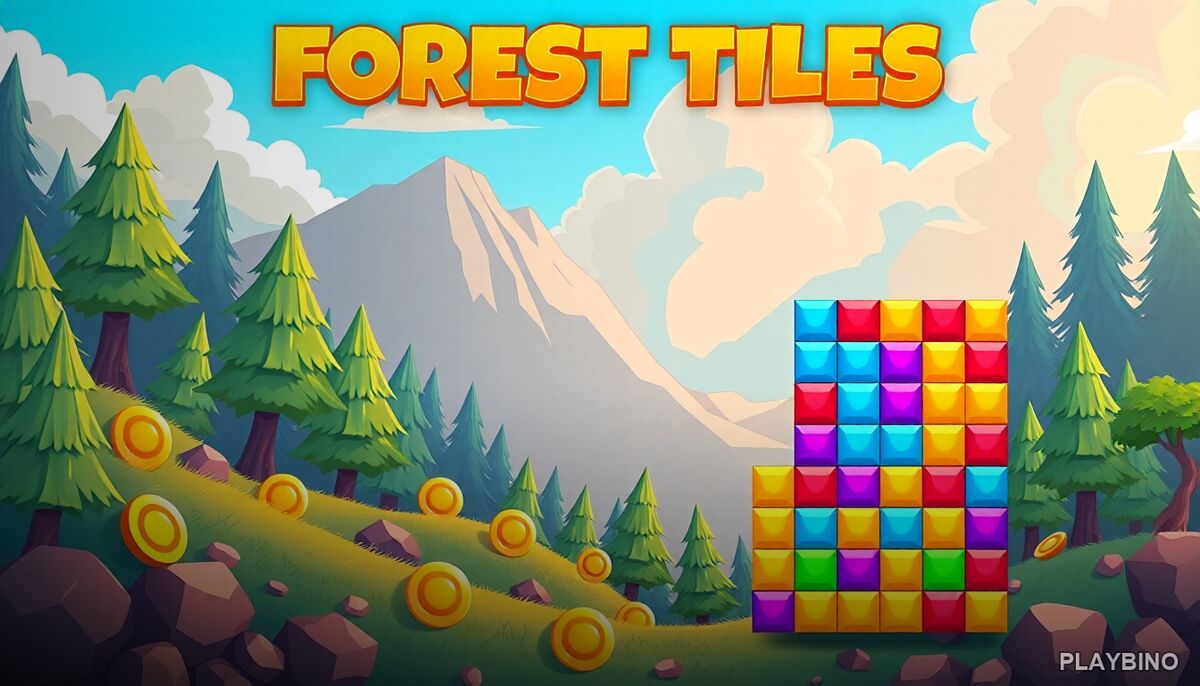
Forest Tiles is a single-player logic puzzle built around a compact 9x9 grid. Pieces fall in sequence, and your job is to place them so they form complete rows or columns. Finished lines vanish, points accumulate, and the board breathes again — at least temporarily. The forest backdrop keeps the atmosphere calm, which contrasts nicely with the growing pressure as the grid fills up. You can play the full browser version on PlayBino without any download or setup.
Grid Mechanics and Line Clearing
The core loop is straightforward: place a falling piece, watch for completed lines, earn points. But the 9x9 format is smaller than it sounds. Every misplaced block can cascade into a problem two or three turns later. Lines only clear when an entire row or column is filled without gaps, so partial progress offers no relief. That constraint pushes the puzzle difficulty up quickly, even if the early rounds feel manageable.
Piece Shapes and Spatial Planning
Pieces arrive in varying shapes, and the challenge is fitting them into positions that serve multiple future lines at once. A block that completes one row while also contributing to a nearby column is far more valuable than one dropped into empty space. Thinking two or three placements ahead separates a short run from a long, high-scoring one.
When the Board Gets Crowded
Once the grid reaches a critical density, options narrow fast. Certain piece shapes become nearly impossible to place cleanly, and a single awkward drop can trigger a chain of bad positions. Recognizing when the board is approaching that threshold — and acting before it does — is one of the more satisfying spatial skills the game develops.
The Gold Coin System
Gold coins appear during play and function as an emergency resource. Spend them to remove individual blocks that are blocking your line-clearing plans. This mechanic adds a genuine risk-reward layer: save coins for a real crisis, or spend one early to fix a placement that looks minor now but could cause problems later. Using coins reactively rather than proactively is a common mistake. The best runs tend to involve deliberate coin management, not panic spending.
Scoring and Progression
Points come from clearing lines, and clearing multiple lines in quick succession produces better scores. There is no level structure in the traditional sense — the game runs as a continuous session until the board fills completely with no valid placement remaining. That format makes each run feel like a personal challenge against your own previous best, which suits the single-player, logic-focused design well.
- Complete rows or columns to clear space and score points
- Multi-line clears in one move produce higher point totals
- Gold coins remove individual blocks when the board gets tight
- No time limit — the pressure comes entirely from spatial constraints
- Runs end when no valid piece placement exists
Strategy That Actually Helps
Keep the center of the grid as open as possible in the early game. Edge and corner placements feel safe but often block the flexible line combinations that produce big clears. Prioritize pieces that contribute to two potential lines simultaneously. And treat the coin reserve as a tool for extending a strong run, not for recovering from repeated careless placements.
Players who enjoy block-placement puzzles and want a comparable challenge with a different visual style might find this alternative grid puzzle worth exploring alongside Forest Tiles. The two games share similar logic demands but approach board management from slightly different angles.
Who This Game Suits
Forest Tiles works well for players who enjoy quiet, deliberate puzzle sessions without time pressure. The logic challenge is real but never frantic — you set the pace entirely. If you like games where spatial reasoning and forward planning matter more than reflexes, this grid puzzle delivers a satisfying loop that rewards patience over speed.