Fruit Merge Catalogue: Physics Puzzle Where Fruits Combine
What You're Actually Doing
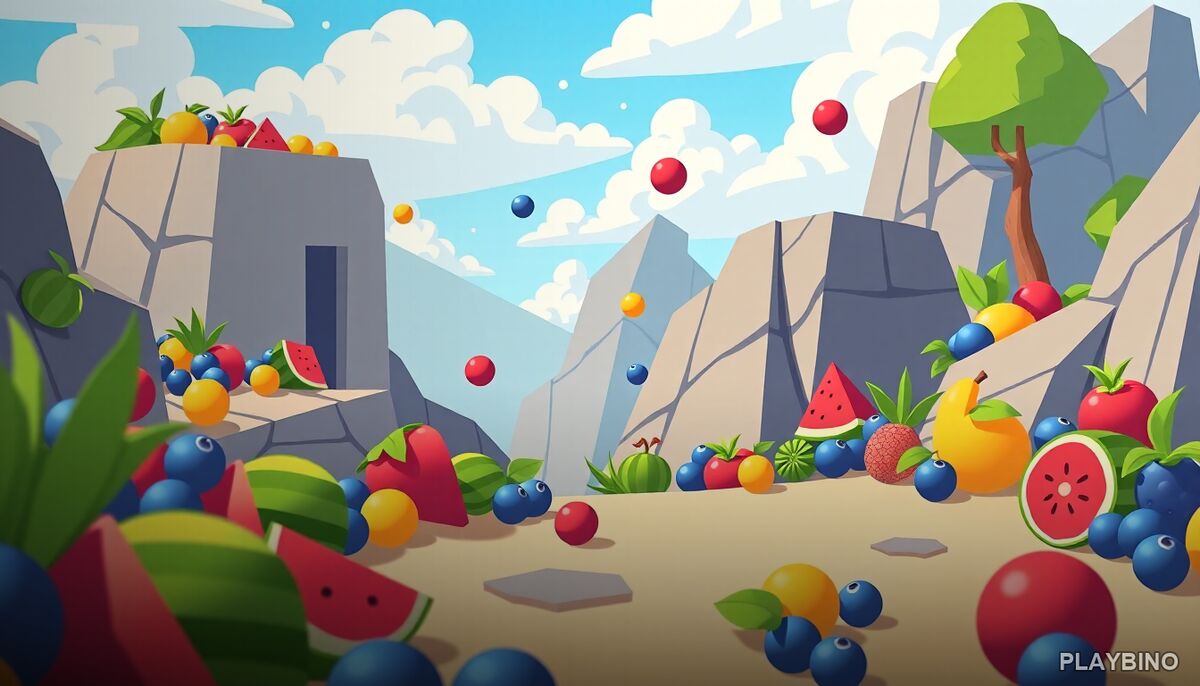
Fruit Merge Catalogue places you in front of a container and hands you a steady stream of fruits to drop. When two identical fruits touch, they merge into a larger variety. A cherry becomes a strawberry, a strawberry becomes a grape, and the chain continues upward through a colourful catalogue of fruits until you reach the watermelon at the top. The concept is simple, but the physics underneath it make every drop a small decision.
You can play Fruit Merge Catalogue on PlayBino directly in your browser, no download required. The game runs smoothly and loads fast, making it easy to pick up between other tasks or settle into for a longer session.
How the Physics Shape Every Drop
Unlike grid-based match-3 games, this one uses real gravity. Fruits roll, stack, and settle based on where they land and what's already in the container. A small fruit dropped near the edge might roll inward and trigger a merge you didn't plan. A larger fruit dropped carelessly in the centre can block several potential combinations at once.
This physics layer is what separates Fruit Merge Catalogue from simpler puzzle games. You're not just matching colours on a fixed board. You're predicting how a round object will behave when it lands on an uneven pile, and adjusting your aim accordingly.
Gravity and Rolling
Rounder fruits tend to drift toward gaps in the pile. If you drop a grape near a cluster of grapes, it may roll away before making contact. Learning to account for that drift is one of the first real skills the game teaches. Dropping slightly closer to your target than feels natural often produces better results.
Chain Reactions
When a merge produces a fruit that lands next to an identical one already in the container, a chain reaction fires. These moments clear significant space and push your score upward fast. Setting up chains intentionally requires thinking two or three moves ahead, keeping track of what's buried lower in the pile and what's likely to appear next.
Managing the Container
Space is the main resource in this game. The container fills steadily as you play, and if any fruit crosses the top boundary, the run ends. Keeping the pile low and even is harder than it sounds because merges don't always happen where you expect, and the next fruit in the queue isn't always what you need.
Prioritising merges on one side of the container before moving to the other is a common approach. It keeps at least part of the space manageable while you work through whatever the queue sends. Spreading fruits evenly across the container can feel safer early on, but it often creates a flat surface of mismatched fruits that becomes impossible to clear later.
Scoring and Progression
Points accumulate with each merge, and larger fruits produce bigger score jumps. Reaching the watermelon is the ultimate goal, but most sessions end well before that. The real progression happens in your own understanding of the game. Early runs feel chaotic. Later runs feel controlled, even when the container fills quickly, because you start reading the pile differently.
Personal records give the game its replay value. There's no level structure pushing you forward, just the container, the queue, and the score you're chasing.
Who This Game Suits
- Players who enjoy physics-based puzzles over grid-based ones
- Casual sessions that don't require long time commitments
- Anyone who finds satisfaction in chain reactions and clean merges
- Puzzle fans looking for something with a soft learning curve that rewards practice
The fruit theme keeps the visual side light and approachable. Nothing about the presentation feels demanding, which makes it easy to return to without pressure.
A Similar Merge Experience
If the watermelon goal is what draws you in, another merge puzzle built around the same concept is worth exploring. Watermelon Merge 3 shares the core mechanic of combining fruits upward through a hierarchy, but approaches the container and physics slightly differently. Comparing the two gives a good sense of how much variety exists within this small genre.
"