Funny Cubes: Match-3 Puzzle Game with 100+ Levels
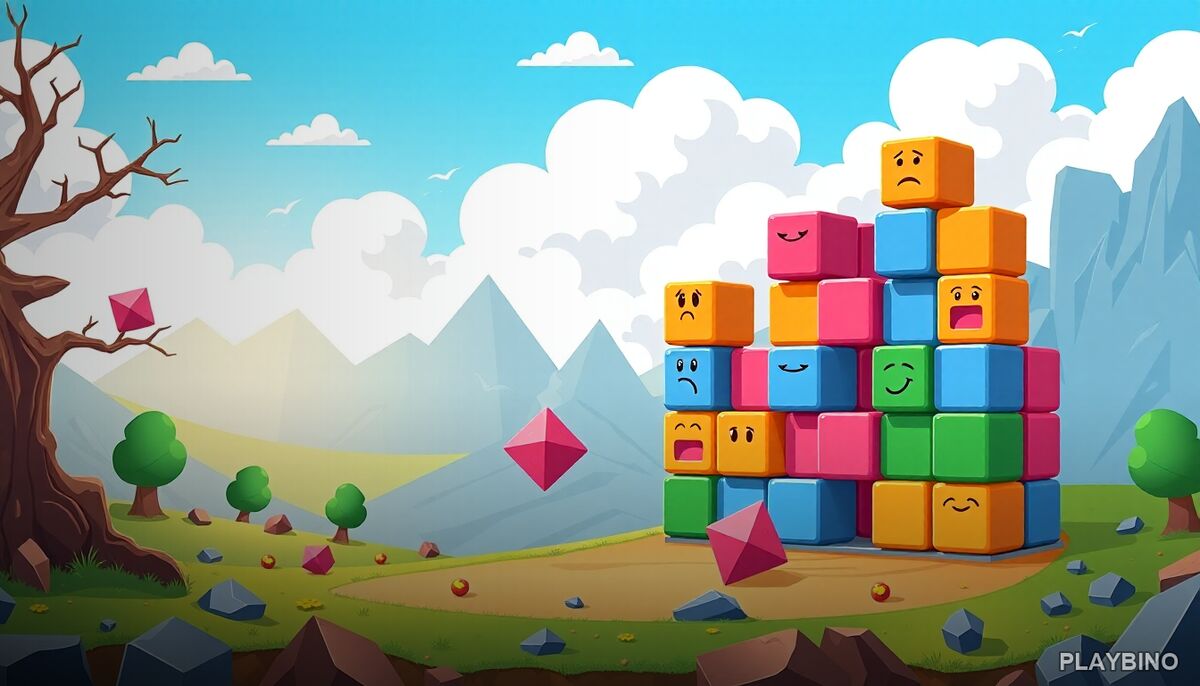
What Funny Cubes Actually Is
Most matching puzzles ask you to line up three or more pieces. Funny Cubes strips that down to just two — find two adjacent cubes of the same color and pair them. That single rule change makes the logic feel tighter and more deliberate than a standard match-3. You can play it directly in your browser without any download or account, and the 100-level progression means there's enough content to keep the challenge building for a long time.
How the Pairing Mechanic Works
Each level presents a grid of colorful cubes. Your job is to select matching adjacent pairs and clear them from the board. The mechanic is simple to understand in the first few stages, but the layouts grow more complex as the game progresses. Colors multiply, cubes stack in tighter arrangements, and the open paths to valid pairs shrink.
Move Limits
Some levels cap the number of moves you can make. This forces you to scan the full board before acting rather than clicking the first match you spot. Wasting moves on low-value pairs early in a stage can leave you stuck with no valid combinations later.
Time Pressure
Other stages introduce a countdown timer, shifting the game from careful planning to fast recognition. These levels reward players who can read color patterns quickly and commit without second-guessing. The contrast between timed and move-limited stages keeps the puzzle format from feeling repetitive across 100+ levels.
Power-Ups and When They Matter
Power-ups appear randomly during play and can clear problem areas or open up blocked sections of the board. They're useful, but the game doesn't hand them out generously enough to rely on. Most stages require you to solve the core layout through smart pairing choices rather than waiting for a power-up to bail you out. Treat them as a bonus when they arrive, not a strategy.
Level Design and Difficulty Curve
The early levels function as a comfortable introduction. Grids are small, color counts are low, and valid pairs are easy to find. Around the midpoint of the game, the board designs shift noticeably — more colors appear simultaneously, cube arrangements become denser, and some layouts have only one or two viable clearing sequences. Recognizing those sequences before you start moving is what separates a clean clear from a failed attempt.
- Early stages: open grids, few colors, low pressure
- Mid-game: denser layouts, more color variety, move limits introduced
- Later levels: complex patterns, time pressure, limited power-up windows
- Throughout: each level has its own visual pattern, avoiding repetition
Strategy That Actually Helps
The most consistent approach is to start from the edges or corners of the board where cubes have fewer neighbors. Clearing those first opens up the center and creates chain opportunities. On move-limited stages, count your available pairs before committing to any single match. On timed stages, prioritize clusters of the same color rather than isolated pairs — clearing a group quickly scores more progress per second than hunting for scattered matches.
If you enjoy block-based puzzles with a spatial element, the Tribal Tetris breakdown covers a different but related approach to grid-clearing logic that's worth reading alongside this one.
Who This Game Suits
Funny Cubes works well for players who like brain puzzles with clean rules and a clear sense of progression. The one-player format means there's no competitive pressure — just you, the board, and the problem in front of you. The colorful cube designs keep the visual side pleasant without being distracting. PlayBino hosts the full game with all 100+ levels available immediately, so there's no waiting or unlocking required before the difficulty ramps up.
"