Funny Noob 2 Player: Cooperative Chaos in a Colorful Forest
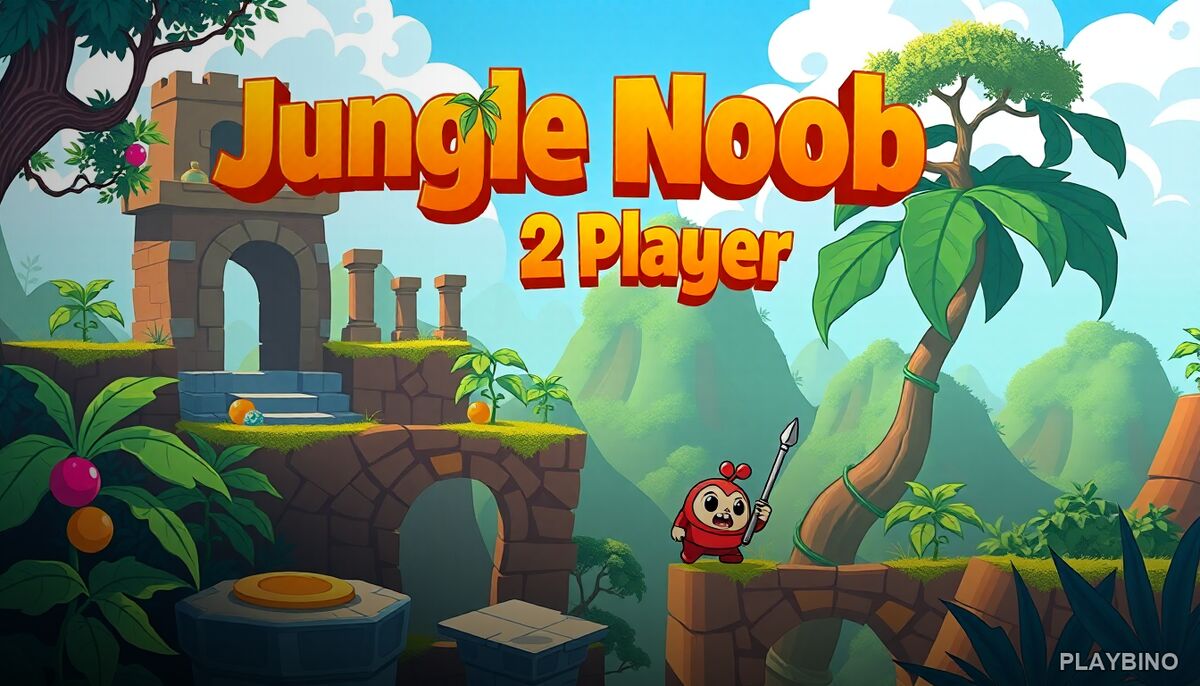
Two Brothers, One Chaotic Forest
Most two-player games reward individual skill. Funny Noob 2 Player takes a different approach — it punishes solo heroics and rewards genuine coordination. Two clumsy brothers stumble through colorful forest stages, and neither one can make it to the exit without the other. Play this cooperative browser challenge and you'll quickly realize that laughing at your partner's mistakes is half the experience.
The brothers' wobbly animations are intentional. Every slip, stumble, and collision lands with a cartoon bounce that keeps frustration low even when a level resets. The humor is built into the physics, not just the visuals.
How the Candy System Works
The central mechanic is simple but surprisingly demanding. Each level scatters blue and red candies across the platforms. Blue candies belong to one player, red candies to the other. Collecting the right combination unlocks a magical door that leads to the next stage.
Why Coordination Matters
The problem is that both players share the same screen and the same space. One brother rushing ahead can block the other's path, knock them into a hazard, or accidentally trigger a platform before the second player is ready. The candy system forces both players to communicate — either by voice or by watching each other's movements carefully.
Hazards Along the Way
Spinning blades and thorny obstacles are scattered throughout each level. They don't just damage one player; a poorly timed jump can send one brother flying into the other, creating a chain reaction that resets both. Obstacle placement becomes more demanding as levels progress, requiring tighter timing and cleaner movement from both sides.
Level Design and Progression
The forest setting gives the game a consistent visual identity across levels. Platforms vary in height, spacing, and stability. Some require both players to land simultaneously to activate a bridge. Others split the brothers into separate routes before reuniting them at a shared checkpoint.
Early levels function as a warm-up, letting players get used to the controls and the awkward movement style. Mid-game stages introduce more hazards and tighter candy placement, while later levels demand near-perfect sync between both players. The difficulty curve is gradual enough that new players won't feel overwhelmed immediately.
What Makes the Action-Puzzle Mix Click
Funny Noob 2 Player sits at the intersection of action and puzzle in a way that feels natural. The platforming provides the action — dodging blades, timing jumps, navigating moving platforms. The candy collection adds the puzzle layer — figuring out which player goes where, in what order, without creating a collision or missing a key pickup.
Neither element dominates. A level that looks like a straightforward platforming run often hides a candy routing problem underneath. Working out the most efficient path for both players is a small but satisfying puzzle that changes with every stage.
Playing Well Together
- Assign candy colors early so neither player chases the wrong pickups.
- Let the slower player lead on tight platform sections to avoid blocking.
- Watch for hazards that affect both players before committing to a jump.
- If one player reaches the door area early, wait rather than triggering any nearby mechanisms.
- On reset, take a moment to plan the route rather than repeating the same mistake.
A Similar Two-Player Experience
The cooperative format here shares DNA with other split-control browser games that demand spatial awareness and communication. Redpool Skyblock 2 Player takes a comparable two-player structure into a completely different environment — that skyblock challenge is worth a look if the cooperative format appeals to you. Both games reward players who communicate rather than compete.
Funny Noob 2 Player is available on PlayBino and runs directly in the browser without any downloads. It works best with two people sharing a keyboard or sitting side by side, which is exactly the kind of local multiplayer experience that's harder to find in browser gaming.