Grand Skibidi Town: Open-World Chaos and Skibidi Toilet Mayhem
What Is Grand Skibidi Town?
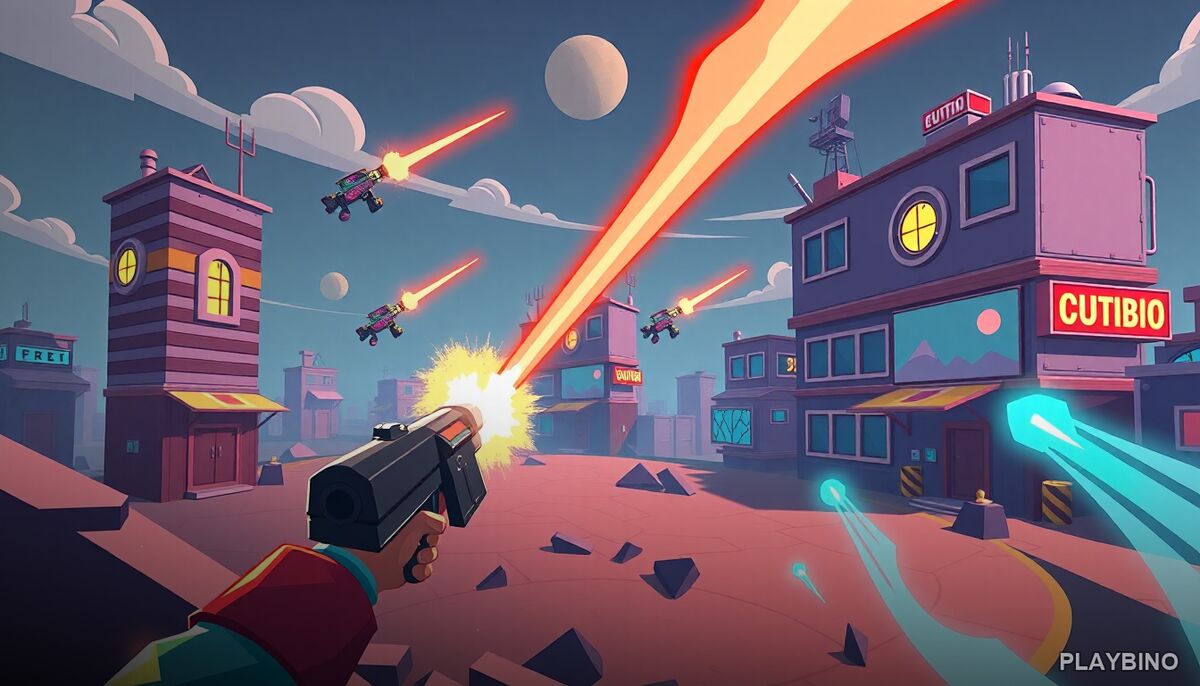
Not every game needs a serious premise to deliver real entertainment. Grand Skibidi Town leans fully into its ridiculous concept — a sprawling urban sandbox where your sole mission is hunting down and destroying Skibidi toilets that have taken over the city. The result is a chaotic, surprisingly playable action shooter that works because it never pretends to be anything other than what it is. Play it directly in your browser and the tone is immediately clear: this is sandbox mayhem built around a joke that somehow becomes a game.
Roaming the City
The open-world layout gives the game a distinct feel compared to linear action titles. You move through an expansive urban environment at your own pace, scanning streets and alleys for targets. Vehicles are scattered throughout the map, letting you cover ground faster or use them as tools during encounters. The city design encourages exploration rather than rushing, and finding shortcuts or weapon caches becomes part of the routine.
Mission Structure
Each level sets a target count — a specific number of Skibidi toilets that must be eliminated before you can advance. The objectives scale up in difficulty as you progress, introducing more enemies, tighter time pressure, or harder-to-reach targets. This mission-based layer keeps the sandbox from feeling aimless. You always have a clear goal, even while the open world invites detours.
Finding Weapons and Gear
Weapons aren't handed to you at the start. They're spread across the map, rewarding players who explore rather than sprint toward the nearest enemy cluster. Completing runs successfully unlocks new gear, which carries forward into subsequent missions. Building out your arsenal is one of the main progression hooks — better weapons make the tougher later encounters more manageable.
Combat Feel and Monster Variety
The shooting mechanics are straightforward, which fits the arcade tone. Aiming, firing, and switching weapons all respond quickly without demanding precision that would slow down the chaos. The Skibidi toilet enemies range from stationary targets to more aggressive variants that move unpredictably. Learning which weapon works best against different enemy types adds a small but meaningful layer of decision-making to what could otherwise feel like mindless blasting.
Sandbox Freedom vs. Focused Objectives
One of the more interesting design choices here is the balance between freedom and structure. The open world lets you approach missions however you want — on foot, in a vehicle, from a distance, or up close. But the kill-count objective keeps each session anchored. Players who enjoy pure sandbox exploration and players who prefer mission-driven action both get something from this setup. The game doesn't force a single playstyle, which extends its appeal across different types of action game fans.
Surreal Humor as a Design Choice
The Skibidi toilet concept originated in internet culture, and the game leans into that absurdity rather than explaining or justifying it. Enemies are visually bizarre, the city setting is played relatively straight, and the contrast between mundane urban environments and toilet-headed monsters creates a consistent comedic tension. It's a tone that works best when the game commits to it fully — and this one does. Monster-themed action games often rely on horror or intensity; Grand Skibidi Town goes the opposite direction and uses humor as its main atmosphere.
If the monster-themed angle interests you, Monster MakeOver takes a completely different approach — that game explores a creative, design-focused side of monster content worth comparing to the chaos here. Both live on PlayBino but feel nothing alike in execution.
Who This Game Suits
- Players who enjoy open-world action without heavy narrative
- Anyone drawn to absurd humor in game design
- Fans of arcade shooting with light progression mechanics
- Browser gamers looking for sessions that feel complete in 10-20 minutes
- People who enjoy sandbox freedom with structured mission goals
The game doesn't demand long sessions or deep strategy. It rewards quick thinking, map awareness, and a willingness to embrace the ridiculous premise. Run length is flexible, and the escalating difficulty means repeat plays feel progressively different rather than repetitive.