Grimage Wall Breaker: Momentum, Clicking, and Wall Destruction
What Kind of Game Is This?
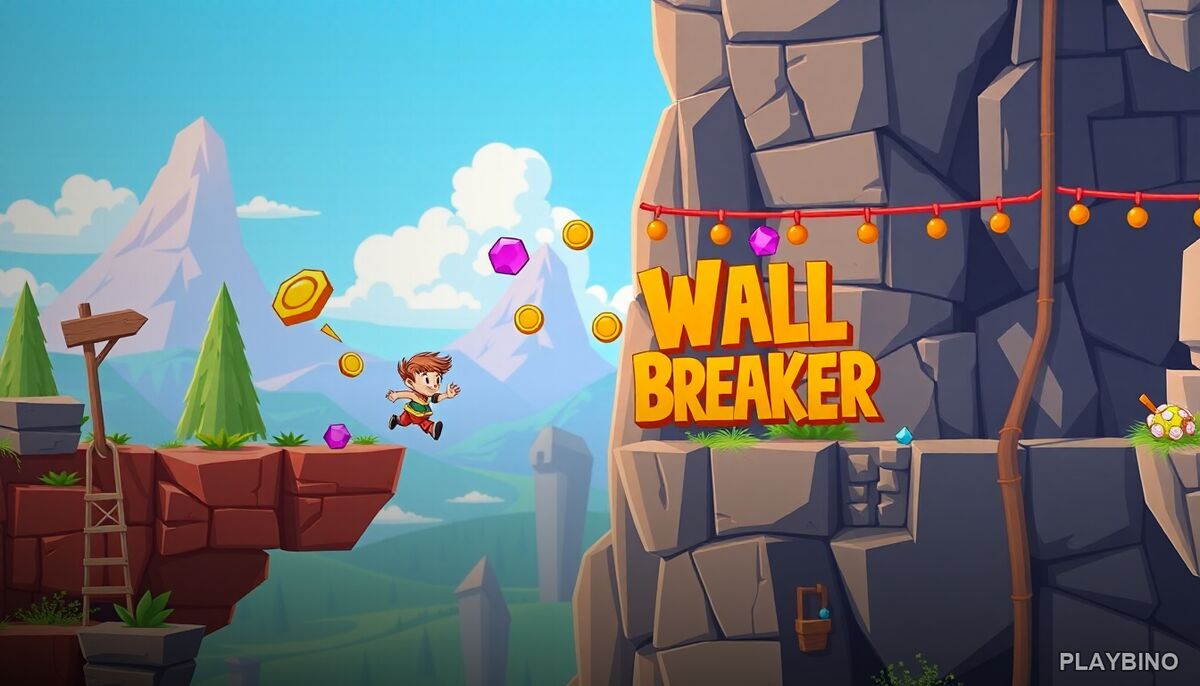
Grimage Wall Breaker sits at the crossroads of clicker mechanics and spatial puzzle design. You are not just clicking for numbers — every click builds momentum that physically propels your character into obstacles. The result is a one-player action experience where speed management and route planning matter as much as how fast your fingers move. The full challenge is playable directly in your browser, no downloads required.
Core Mechanic: Speed Through Clicking
The central loop is simple to understand but harder to execute cleanly. Rapid clicking accelerates your character, and once enough momentum builds, you launch into the nearest wall. A well-timed impact shatters the barrier and carries you forward. A mistimed one bleeds off speed and forces you to rebuild from a slower state.
This creates a rhythm that feels somewhere between an arcade clicker and a physics puzzle. You are always asking: do I have enough speed for this wall, or should I click more before committing? That question becomes the foundation of every decision in the game.
Wall Types and Resistance
Not every barrier behaves the same. Some walls crumble on a single solid hit. Others require multiple impacts before they give way. The game does not always signal this visually in advance, so part of learning each level is discovering which walls need one pass and which need repeated pressure. That discovery loop keeps stages feeling fresh even when the core mechanic stays consistent.
Level Design and Spatial Puzzles
Early stages give you wide spacing and forgiving layouts. As the game progresses, wall placement tightens and the gaps between obstacles shrink. You start needing to think about the order in which you break walls, since clearing one barrier too early can leave you without enough runway to build speed for the next.
Some layouts reward aggressive clicking from the start. Others punish that approach by placing walls close together, where excess speed sends you into a barrier before you have lined up the correct angle. The spatial puzzle element grows more prominent in later stages, shifting the game away from pure clicking reflex and toward deliberate route planning.
Route Choices
Certain stages offer more than one viable path to the exit. Choosing a longer route might let you build more momentum before hitting a dense cluster of walls. A shorter route might save time but demand precise timing on consecutive impacts. Neither approach is always correct, and experimenting with both is part of what makes the puzzle side of the game satisfying.
What Makes the Progression Work
The game advances at a pace that feels earned. Each cleared stage introduces a new spatial configuration rather than simply adding more walls to the same layout. That design choice keeps the challenge from feeling repetitive. You are solving a new spatial problem each time, even though the tool you use — momentum through clicking — never changes.
- Clicking speed builds launch momentum
- Wall resistance varies by stage and barrier type
- Route order affects how much speed carries between impacts
- Later levels require planning before committing to a direction
- Exit placement changes the optimal approach each stage
Who Will Enjoy This Game
If you like clicker games that have a mechanical purpose behind each click, Grimage Wall Breaker delivers that. The action tag is earned — there is genuine physical feedback in every wall impact. The puzzle tag is also accurate; later stages genuinely require thought rather than just speed. Players who enjoy single-player arcade challenges with a short learning curve but real depth in execution will find a lot to work through here.
Stunt Boxes is another browser game built around physics and spatial thinking — that one takes a different approach to the concept if you want to compare how two games handle momentum and obstacle interaction differently. Both are worth running through back to back.
Practical Tips Before You Start
Do not click at maximum speed from the very first moment of each stage. Take a half-second to look at the wall layout before committing to a direction. Identify which walls are clustered and which are isolated. Isolated walls are easy targets to build confidence and carry momentum. Clustered walls need a plan. On stages where you keep losing speed mid-run, try breaking the outermost wall first to create a longer open lane before tackling the interior barriers. PlayBino hosts the game with no setup needed, so you can jump straight into experimenting with these approaches.