GrowBall Feed to Grow: Space Devouring Arcade Game Guide
What Kind of Game Is This?
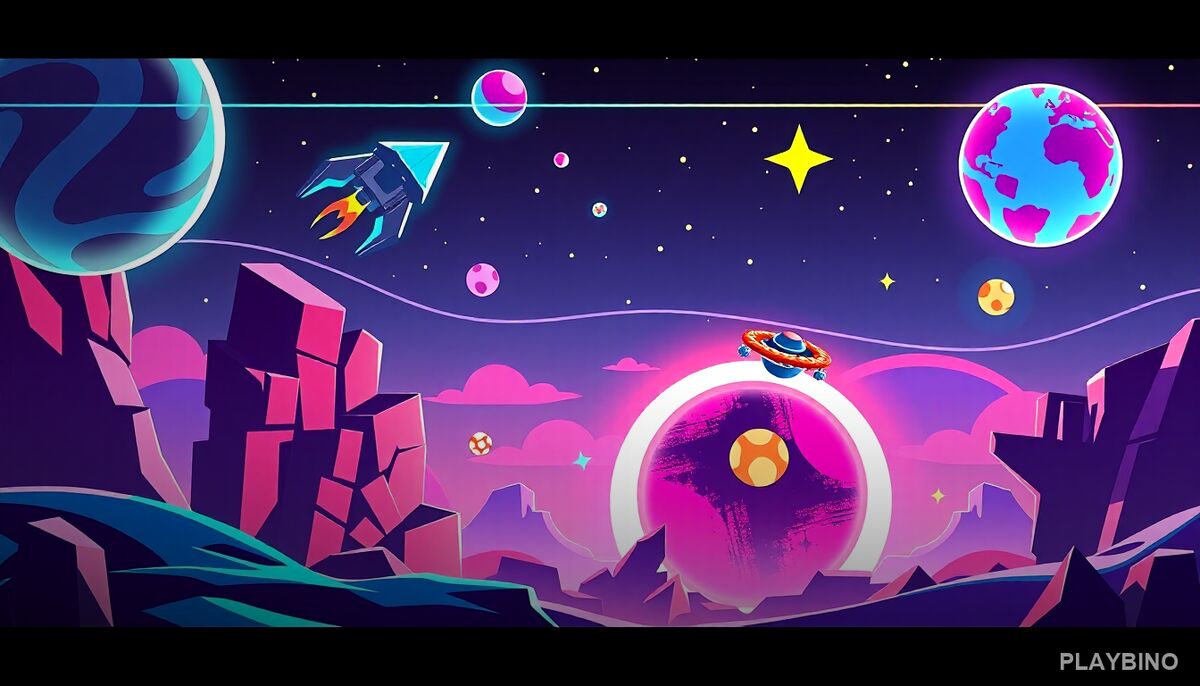
GrowBall Feed to Grow is a single-player arcade game built around one satisfying loop: eat what is smaller than you, avoid what is larger, and keep growing. The setting is a colorful cosmic environment filled with floating objects, and your job is to navigate it as a hungry sphere that expands with every successful bite. Play it directly in your browser and the concept clicks within seconds — but the depth reveals itself gradually as the stages get more crowded and your spatial awareness gets tested.
The Core Size Mechanic
Everything in GrowBall Feed to Grow revolves around relative size. What you can safely consume depends entirely on how large your ball currently is. A target that was off-limits two minutes ago becomes a meal once you have grown enough. This creates a constantly shifting map of opportunities and threats across the same screen.
The mechanic feels intuitive but demands attention. As your ball expands, it also becomes harder to steer through tight clusters of objects. The same growth that makes you powerful also makes you slower to react and easier to trap. That tension between size as an advantage and size as a liability is what keeps the gameplay interesting past the first few runs.
Collision and Risk
Hitting something larger than your current size ends the run. This means every approach toward a potential meal carries a judgment call. Is that object just barely smaller, or is it actually larger than it looks? The colorful visual design helps distinguish scale, but in busier stages the screen fills up fast and reading distances accurately becomes a real challenge.
Aggression vs. Patience
The game rewards players who find the right balance between pushing forward and holding back. Chasing large targets too early leads to fatal collisions. Staying too cautious means missing growth bursts that could have accelerated your size advantage significantly.
Smart play involves identifying clusters of small objects you can consume quickly, building mass efficiently before targeting mid-sized obstacles. Once your ball reaches a threshold where it dominates a large portion of the screen, the dynamic flips and the stage becomes more about navigation than survival.
Stage Density
Later stages introduce more objects packed into the same space. This increases both the opportunity to grow quickly and the risk of accidentally clipping something fatal. Reading the layout before committing to a direction becomes more important as the game progresses. Patience in dense stages often outperforms aggressive rushing.
What Makes the Progression Feel Satisfying
The transformation from a tiny speck to a dominant sphere is the emotional core of the game. Early in a run, almost everything on screen is a threat. By the midpoint, the same objects that forced you to dodge are now food. That shift in perspective — going from prey to predator — is something the game communicates purely through scale and movement, without needing complex systems or upgrades.
- Size determines both what you can eat and how easily you can maneuver
- Each stage gets more crowded, raising the difficulty of spatial decisions
- Growth is visible and immediate, making progress feel tangible
- Risk-reward decisions happen constantly, not just at key moments
- No upgrades or menus — the mechanic carries the entire experience
A Similar Concept Worth Exploring
The grow-by-eating format has a close relative in underwater settings. Fish Grow Eating Fish follows a comparable structure — that aquatic take on the same concept swaps the cosmic environment for an ocean filled with fish of varying sizes, which changes the feel of navigation and threat reading considerably. If the core loop of GrowBall appeals to you, the fish version offers a different visual context for the same kind of size-based decision making.
Who Will Enjoy This Game
GrowBall Feed to Grow suits players who enjoy arcade games with a clear, repeatable challenge and no complex menus. The action is immediate, the rules are simple to understand, and the difficulty comes from execution rather than memorization. On PlayBino it runs entirely in the browser with no downloads required, making it easy to pick up for a short session or a longer run when you want something focused and satisfying.
"