Guard The Baby 1: Reflexes, Fruit, and Fending Off Enemies
Two Jobs at Once
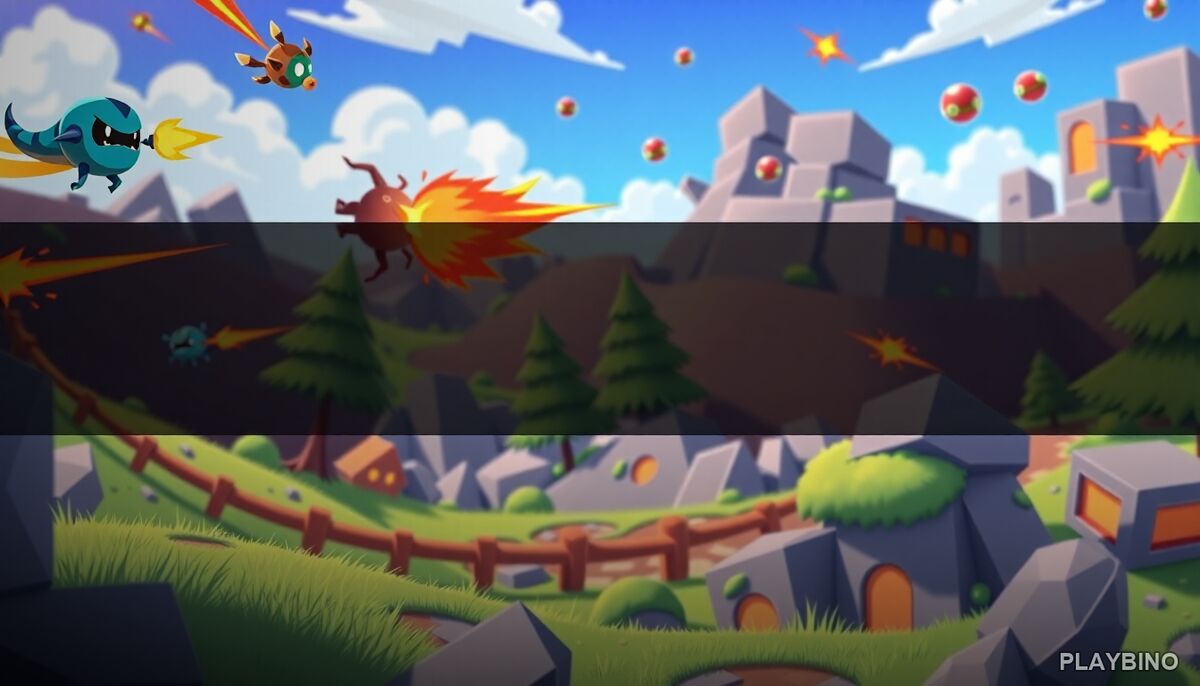
Most arcade games ask you to do one thing well. Guard The Baby 1 asks you to do two things simultaneously, and it never lets you forget either one. You control a young character who must catch nutritious fruits falling from above while clicking to shoot down waves of hostile creatures closing in from the sides. Miss too many fruits and the mission fails. Let the enemies through and it ends just as fast. The pressure of managing both objectives at the same time is what makes this game genuinely interesting rather than just another shooter.
You can play this browser arcade challenge on PlayBino without any downloads or setup. The action starts almost immediately, which suits the pick-up-and-play nature of the game perfectly.
How the Dual-Task Mechanic Feels
The core loop is simple to understand but hard to execute cleanly. Fruits rain down at intervals, and your character needs to be positioned underneath them to collect. At the same time, enemies approach and require clicks to eliminate before they reach you. Neither task pauses for the other.
What makes this feel genuinely difficult is that repositioning to catch fruit often pulls you away from a clean shooting angle. You are constantly making micro-decisions: do you move left to grab that apple, or hold your position to clear the incoming threat first? Those split-second choices define each round.
Positioning and Priority
Early rounds give you enough breathing room to find a rhythm. Enemies arrive in manageable waves, and fruit falls at a pace you can track. Once you settle into a pattern of movement and clicking, the game feels almost meditative. That comfort does not last long.
Escalating Pressure
As rounds progress, fruit falls faster and enemy waves grow denser. The game does not announce these changes with a warning screen. You simply notice that the gap between catching and shooting has narrowed to almost nothing. Surviving at that point requires genuine coordination, not just casual clicking.
Shooting Mechanics and Enemy Waves
The shooting side of Guard The Baby 1 sits firmly in arcade territory. Enemies move in predictable but accelerating patterns, and eliminating them requires accurate clicks rather than rapid spam. Timing matters more than volume. A well-placed shot that clears a cluster of threats buys you a second to reposition for the next fruit drop, and that second can be the difference between a high score and a failed run.
The action genre feel is present throughout. There is a satisfying snap to each successful elimination, and the visual feedback when enemies are cleared keeps the energy high even during chaotic moments.
Scoring and Progression
Every fruit collected and every enemy eliminated contributes to your score. The game rewards consistency over bursts of brilliance. A player who maintains steady collection and clean shooting across multiple rounds will outscore someone who briefly dominates one wave but collapses during the next.
- Fruit collection builds your score incrementally with each catch.
- Enemy eliminations add points and reduce incoming pressure.
- Letting enemies through or missing fruit creates compounding difficulty.
- High scores reflect sustained coordination rather than single lucky moments.
Who This Game Suits
Guard The Baby 1 works well for players who enjoy arcade action with a layer of multitasking strategy. The shooting mechanics keep it engaging for fans of fast-paced click-based games, while the collection element adds a spatial awareness component that pure shooters lack. If you like games that demand attention across multiple simultaneous objectives, this one delivers that tension consistently.
Players drawn to energetic, character-driven browser games might also enjoy another fast-paced arcade experience on PlayBino that leans into quick reflexes and unpredictable momentum. The two games share a chaotic energy that suits short, intense sessions.
What Keeps Players Coming Back
The appeal of Guard The Baby 1 is the honesty of its difficulty. When a run ends, it rarely feels unfair. You moved left when you should have stayed right, or you prioritized a fruit when the enemy cluster needed clearing first. That clarity of cause and effect makes the next attempt feel worth starting. Each high score is a small proof of improved coordination, and the game makes that progress feel earned.
"