Guard The Island: Build, Manage, and Expand Your Settlement
What You're Actually Doing
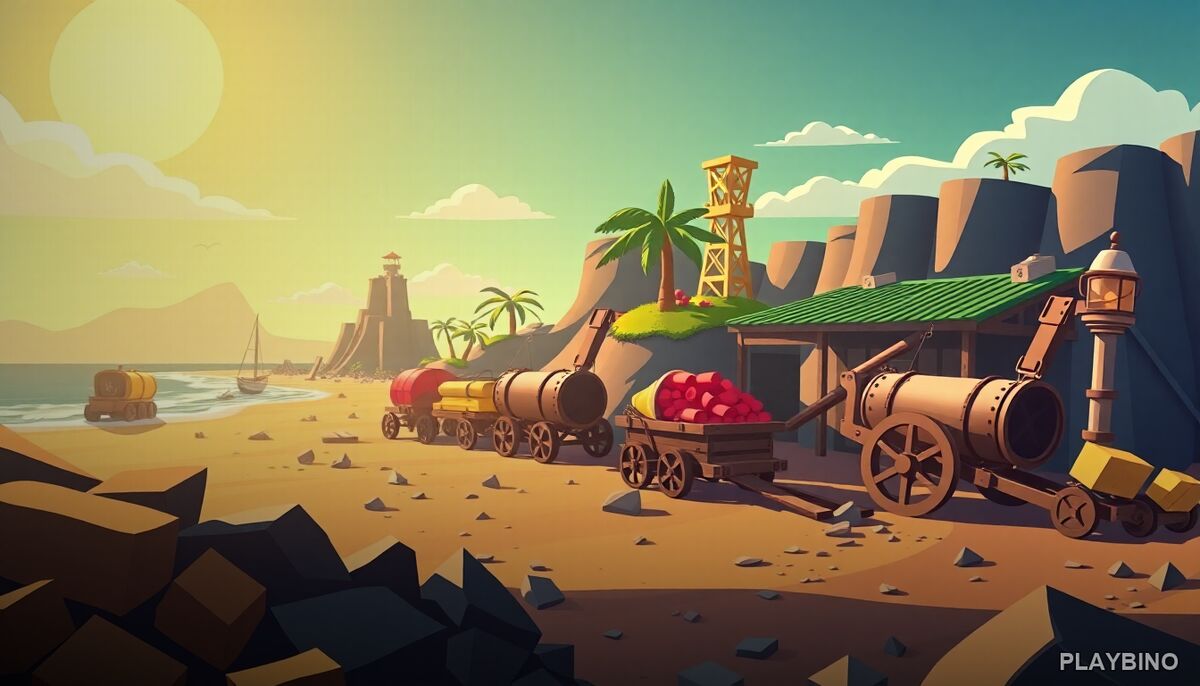
Guard The Island puts you in charge of a small island outpost with almost nothing to start. Your job is to gather raw materials, manage construction, and gradually turn a sparse patch of land into a self-sustaining settlement. It's a strategy and idle simulation that rewards patience and planning over quick reflexes. If you enjoy watching systems click into place as your decisions compound over time, this island-building simulation is worth your attention.
Resource Gathering and the Early Game
The first phase of the game is entirely manual. You chop forests for timber, break into stone quarries for building material, and dig into underground deposits for metal ore. Each resource type feeds into a different part of your construction chain, so you can't afford to ignore any of them early on.
The terrain varies across the island, which means you'll be moving between zones depending on what you need at any given moment. Stone might be abundant in one area while timber requires a longer trek. Learning the layout matters because inefficient routing wastes time that compounds badly in the early stages.
Refining and Combining Materials
Raw resources aren't the end goal. Timber, stone, and ore can be refined and combined into advanced building components. This adds a light crafting layer on top of the collection loop. You're not just stockpiling materials — you're deciding which components to prioritize based on what you want to build next.
Recruiting Workers and Going Idle
The game shifts significantly once you start recruiting workers. Lumberjacks automate timber collection. Miners handle ore extraction. Once these roles are filled, the idle layer kicks in and your settlement starts generating resources even when you're not actively clicking around the map.
Placement Strategy
Where you place workers matters. A lumberjack stationed near a dense forest will outperform one placed at the edge of the map. The same logic applies to miners. The game doesn't spell this out explicitly, so figuring out optimal placement is part of the strategic depth. Early mistakes here slow your progression noticeably, which makes getting it right feel rewarding.
Construction and Settlement Growth
Building structures is the main progression driver. Each new building unlocks something — more worker slots, faster refinement, access to new resource types, or expanded storage. The order in which you build matters because some structures are prerequisites for others. Rushing toward advanced buildings without the right resource base will stall your progress.
- Prioritize storage upgrades early to avoid resource caps
- Build worker housing before expanding extraction operations
- Refine ore before stockpiling raw metal — processed materials are more space-efficient
- Scout the full island terrain before committing to a worker placement layout
The Idle Loop and Long-Term Pacing
Guard The Island leans into idle mechanics in a way that feels earned rather than forced. The manual phase at the start gives you a clear sense of how much effort each resource requires. When automation kicks in, the relief is genuine. You shift from active collection to management and planning, checking back periodically to redirect workers, queue construction, and spend accumulated materials.
The pacing suits players who like to set things in motion and return to meaningful decisions rather than constant micromanagement. It's a single-player experience that doesn't punish short sessions.
A Similar Experience to Consider
If the resource management and settlement-building loop appeals to you, Misland Online covers similar ground with its own take on island survival and crafting mechanics. It's worth exploring alongside this one to see how different design choices shape the same core concept. Both games are available on PlayBino and share that satisfying loop of building something from almost nothing.