Gun Evolution: Weapon Merging Meets Endless Runner Action
What Kind of Game Is This?
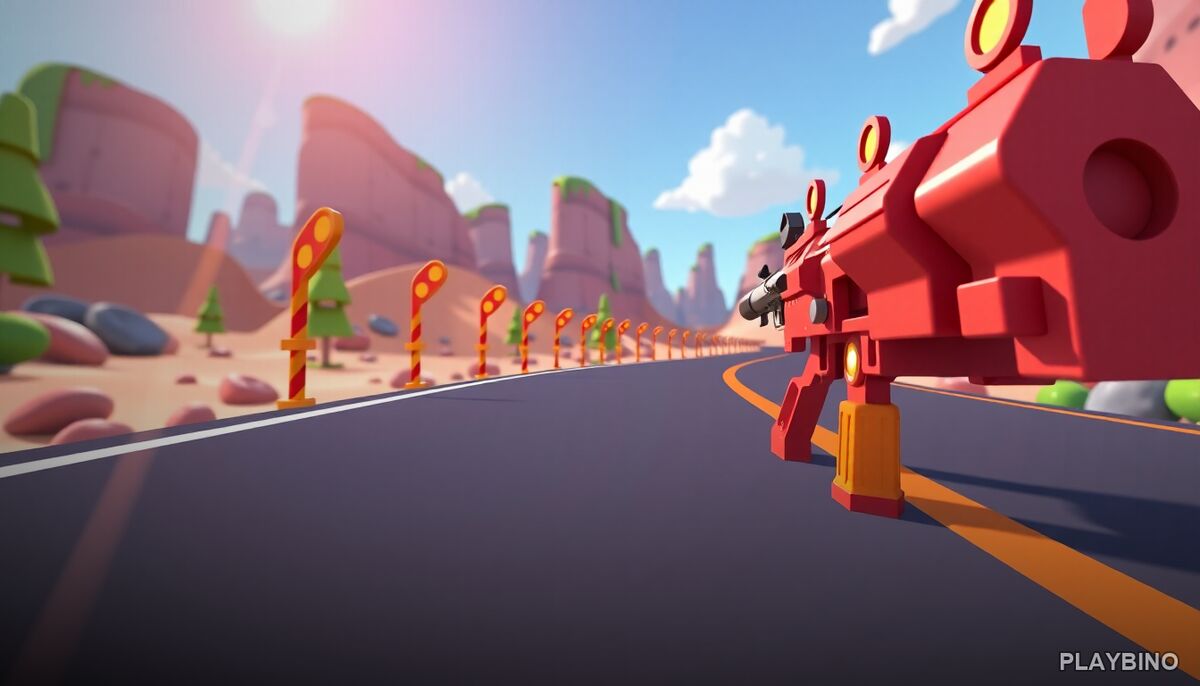
Gun Evolution sits at an interesting crossroads between endless runner and shooting arcade. The core loop is simple on the surface: race down a track, shoot numbered pillars, collect cash, and upgrade your weapon. But the deeper you go, the more the game reveals a rhythm that rewards both quick reactions and smart resource decisions. Play it directly in your browser and the mechanics click almost immediately — the challenge takes longer to master.
The Pillar System Explained
Every level is built around a track lined with numbered pillars. These aren't just obstacles — they're the engine of the entire progression system. Shooting a pillar destroys it and drops cash or items depending on its value. Higher-numbered pillars yield more rewards but require a stronger weapon to break efficiently.
This creates a constant tension: do you rush forward and shoot whatever you can, or do you slow your approach and focus fire on high-value targets? In early stages, almost any strategy works. Later courses place pillars in tighter patterns that punish sloppy shooting and reward deliberate aim.
Cash Flow and Upgrades
The money you collect from pillars feeds directly into two upgrade paths: attack power and firing speed. Attack power determines how quickly you chew through high-numbered pillars, while firing speed affects how many shots land before you pass a target. Neither upgrade is always the right choice — context matters. If pillars are dense and close together, firing speed pulls ahead. If a single high-value pillar dominates a stretch of track, raw attack power matters more.
Weapon Merging
Collecting firearms along the track lets you merge weapons into stronger variants. This is where the action-shooter side of the game really opens up. A merged weapon doesn't just deal more damage — it often changes the visual and audio feedback of each shot, making progression feel tangible rather than just numerical. The merge system ties neatly into the runner format: you're always moving, always collecting, always deciding whether to merge now or hold out for something better.
How the Runner Format Shapes Strategy
Most merge games let you pause and plan. Gun Evolution doesn't. The runner structure keeps the pace relentless, which means every upgrade decision happens under pressure. You can't stop to think — you act, then adjust on the next run. This is what separates it from slower strategy games in the same genre. The skill component is real: timing your shots, tracking which pillars are worth targeting, and managing your upgrade budget all happen simultaneously while the track scrolls forward.
What Changes in Later Levels
Early stages feel generous. Pillars are spaced out, cash is plentiful, and almost any weapon handles the job. As the game progresses, pillar arrangements grow denser and more complex. Some configurations punish a single upgrade path, forcing you to balance both attack and speed rather than maxing one stat. The colorful 3D visuals stay consistent throughout, but the course layouts shift enough to keep each run feeling distinct rather than repetitive.
Similar Games Worth Running
The merge-runner format has produced several solid browser games in recent years. Army Run Merge follows a comparable structure — that game's mechanics and strategy share enough DNA with Gun Evolution to appeal to the same type of player, though the setting and upgrade systems differ. If the loop of collecting, merging, and pushing through increasingly demanding levels appeals to you, both titles are worth time on PlayBino.
Who This Game Suits
Gun Evolution works well for players who like action games with a strategic layer underneath. The shooting and runner elements keep the pace high, but the upgrade economy adds enough decision-making to make each run feel purposeful. It's not a passive experience — you're always choosing, always reacting, always trying to find the most efficient path through the next set of pillars.
"